On the Dan Tian 丹田

Recently one of our new online Qigong class students posed a question about the Dan Tian. At the end of most all of our postures we do a maneuver called ‘collecting in the qi’ (my loose translation of 收功), in which, while moving the hands down in front of us and sinking, we visualize everything in the body returning down to the Dan Tian (丹田), the space in the abdomen between the navel and Ming Men (命門). As I frequently point out in class, our’s is the Neigong (i.e., Qigong) in the lineage/tradition of Hu Yaozhen (胡耀真), one of my great-grand teachers, and a key feature of this tradition is the almost constant focus on Dan Tian.

The Dan Tian, from a colorized version of the Diagram of the Inner Landscape 內經圖 found at the White Cloud Temple 白雲觀 in Beijing.

A common English translation for Dan Tian is the ‘elixir field.’ The word ‘tian’ (田) just means field. The word ‘dan’ (丹) is a bit more complicated. One meaning of the word is cinnabar, a scarlet-red mineral form of mercury sulfide (HgS) that is a common ore source used for refining pure liquid mercury. Since Daoists used mercury as one metaphor in their descriptions of the meditative processes used for transcendence or immortality (and in some unfortunately cases experimented with ingesting actual mercury while seeing the same), the term ‘dan’ became associated with the process of spiritual transformation. ‘Dan’ and the compound term ‘Dan Tian’ thus becomes a synecdoche - a stand in for the entire process of cultivation. It is the symbolic elixir that, when taken, confers a higher state. Hence, the translation of Dan Tian as ‘elixir field’ – the place that is used to create the elixir of immortality and transcendence.

In the body, the Dan Tian is conceived of as a physical location, although the physicality of Dan Tian is a topic of debate. For our purposes however, we will take it as a physical location. Properly speaking, there are three Dan Tian in the body: an upper (上丹田), middle (中丹田), and lower (下丹田). There are some slight variations on the locations of these three structures depending on the source. Most agree that the upper Dan Tian is located in the head. The middle Dan Tian is sometimes associated with the area of the chest, that location that in Chinese medicine is referred to as the Sea of Qi 氣之海 (not to be confused with the acupuncture point of the same name), or the Tan Zhong 壇中.  In Hu Yaozhen’s lineage, we located the middle Dan Tian not in the chest, but rather in the abdomen between the navel and Ming Men. Hu Yaozhen then places the lower Dan Tian at the base of the abdomen in the pelvic cavity, just above Hui Yin 會陰 – the perineum. While a large number of modern Qigong texts situate the middle Dan Tian in the chest, it is interesting to note that in some older texts it is located in the abdomen as Hu teaches. For example in the Yuji Qiqian (雲笈七籤), an anthology of the Daoist Canon written circa 1029, the middle Dan Tian is associated with the middle jiao, the abdomen, and the area ‘below the heart’ (心下).

Regardless of the variations, somewhere in the area of the abdomen seems to be the most important of the Dan Tian used in various schools of meditation, Qigong, martial arts, etc… But why is this? Why is it so important?

A large (about 4 inches from top to bottom) piece of Cinnabar ore 硃砂 in my private collection.

For Chinese medicine practitioners this is an interesting question. If we look at the earliest of Chinese medicine cannons, we can’t find the term ‘Dan Tian.’ For example, the only chapter of the Huangdi Neijing that mentions it is the Treatise on the Origin of Disease (本病論). Unfortunately, this is one of the two apocryphal chapters of the Su Wen. While it may have been in circulation for over 1000 years by now, it is most likely not original to the Han Dynasty version of the text and was not a chapter Wang Bing would have seen or worked with in writing his highly important and definitive edition of the Neijing. That said, the abdomen is an important location. Most of the Zang Fu are located there. Furthermore, highly important vessels originate in the abdomen. For example, according to the Treatise on Bone Hollows (SW60 骨空論), the Chong, Ren and Du all originate from a location in the abdomen. These are extremely important vessels, with the Ren and Du respectively being tied to the core Yin and Yang of the body. For example in the Song Dynasty text Xi Shang Fu Tan (席上腐談) the Ren and Du are called the Seas of Yin and Yang (陰陽之海). The Chong is associated with all the channels, and in the Treatise on the Seas (LS33 海倫) the Chong is said to be the Sea of the 12 Channels (衝脈者,為十二經之海) – i.e., all the channels. Clearly, even though the Dan Tian is not mentioned by name, the abdomen is tied to basically all the important structures of the body.

While the Nanjing (Classic of Difficulties) does not specifically mention the Dan Tian either, it does get a little closer in identifying the Kidneys and the Moving Qi between the Kidneys (i.e., the Ming Men) as being core aspects of our vitality. The idea of Ming Men the way we conceive of it today is absent from the Neijing, unless of course you are a creative reader in the way that Zhao Xianke was (there’s a good Chinese medicine inside reference for you!). This Moving Qi between the Kidneys, in addition to being associated with the Ming Men, have also been associated with the Dan Tian by some physicians. For example, the 66th Difficulty says that, “the Qi moving below the navel and between the Kidneys are a human’s life. They are the origin and root of the twelve channels, and thus are called source” (臍下腎間動氣者,人之生命也,十二經之根本也,故名曰原). Yang Xuancao, a commentator writing in the 7-8th c. CE said of this line that, “the Qi moving below the navel and between the Kidneys are the Dan Tian. The Dan Tian is a human’s origin and root” (臍下腎間動氣者,丹田也。丹田者,人之根本也). Yang continues with a beautiful description of the Dan Tian that is too long to quote in its entirety here, but, for example, he says that the Dan Tian is yellow in the center, green-blue on the left, white on the right, red on top, and black on the bottom. This of course is just metaphorical language that says the Dan Tian in the abdomen is connected to all of the Five Phases, and thus all the organs and all the channels.

It may very well be that this sort of medical theory that we see in the Nanjing, and not in the Neijing, arose because of the influence of people such as the inner alchemists and Daoists – an example of cultivational literature influencing medicine (we see many other examples of the opposite of course). Some of the more conservative medical commentators (i.e., the Neijing purists) have pointed this out as a criticism, and an example of adding theory to medicine that has no legitimate right being there. I’ll let my medical providing readers decide for themselves if they find these ideas relevant to their clinical practices.

Hua Tuo’s Chart of Neigong from the writings of Hu Yaozhen (who was probably the actual author of the chart). Notice the upper Dan Tian in the head, and the lower Dan Tian just above the perineum. The middle Dan Tian is located in the space level with the navel, although here called the ‘Entrance Hall’ - a Buddhist term.

Aside from our discussion of medicine, the Dan Tian is described extensively in the literature of internal alchemy and other aspects of Daoism (which in turn become some of the important sources from which Neigong/Qigong concepts of Dan Tian spring). For example, the Direct Pointers to the Great Elixir (大丹直指 DZ 244), a Quanzhen text attributed to the Daoist master Qiu Chuji (1148-1227 CE), discusses Dan Tian as a part of the process of cultivating transcendence. It says that the navel at the center of the body is the Central Palace (中宮), which it also identifies as an alternate name for the Dan Tian (但臍在人身之中,名曰中宮、命府、混沌、神室、黃庭、丹田). The Direct Pointers goes on to say that the Dan Tian stores essence and marrow, and connects the hundred channels and nourishes the entire body (此處包藏精髓,貫通百脈,滋養一身).

In Hu Yaozhen’s teaching, the meditative process of bringing attention down to the abdomen is called the Three Senses Return to the One (三性歸一). In reality the number three here is a symbol for all of the senses, not just literally three of them. By bringing the meditative focus to the interior we can induce a still calmness. I am not qualified to talk about this from a real internal alchemy or Daoist perspective, but certainly this inward focus can have a profound effect on centering the mind and pulling us back into a state of centered focus. In other words, it helps to tame the monkey mind that is our norm. Even in the clinic I will often ask patients undergoing acupuncture to simply bring their focus down to their abdomen and breathe deeply. In terms of Tung’s acupuncture this is another example of how we apply the Moving Qi (動氣) needling method that is a part of achieving De Qi (得氣 – for more on what De Qi really is please see my class on classical treatment strategies expressed in Tung’s acupuncture). But I digress…

Aside from inducing calm centeredness, the cultivation of Dan Tian, from both the alchemical and medical perspectives presented above, must also have a beneficial health effect on pretty much all the channels and organs. If the Dan Tian is connected to everything and nourishes the entire body, it means that a robust Dan Tian leads to robust health.

Hu Yaozhen may very well have focused heavily on the Dan Tian because one of his main teachers was a Daoist master and practitioner of inner alchemy by the name of Peng Tingjun (彭庭隽), and Peng in turn was a disciple of a Daoist hermit by the name of Huo Chengguang (霍成光). It is from Peng that most of Hu’s Neigong came down to us. To be honest, I think the better question is why don’t all schools of Neigong/Qigong focus more on the Dan Tian? It would seem natural to me that it be a major part of most every posture in one way or another.

I hope my short musings help stimulate more thought, as they have for me just sitting down, collecting my thoughts, and putting them to paper (or screen as the case may be). Whether you, the person reading this, are a physician, Qigong practitioner, or just someone interested in East Asian medicine or cultures, I hope thinking about the role of Dan Tian deepens your own practice.

Beginning of Autumn 立秋 Seasonal Node

As I’m sitting down to blog today, I write while sweating not inconsiderably. It is hot and there’s really no other way to put it. Here in the mid-Atlantic region we are in the middle of a heat wave, and a rainless one at that. While we’re supposed to get some rain later today and early this coming week, it has been a particularly dry (in terms of rain) summer, albeit humid.

Despite the heatwave, today, Sunday August 7th, is the beginning of Autumn (and the seasonal node of that same name - Li Qiu 立秋) in the traditional calendar. Although in the modern western world August is a summer month, the Chinese calendar is concerned with the relative balance of Yin and Yang in the natural environment over temperature as a marker of the seasons; this is closely tied to day length. Summer Solstice in June was the longest day of the year. By now the days are getting gradually shorter, and we are only 6 weeks away from the Autumnal Equinox, a day of balanced light and dark. Therefore, even though August weather can still be hot we are in the time of growing Yin and contraction in the natural environment.

In the Lü Shi Chun Qiu (The Spring and Autumn Annals of Lü Bowei; 呂氏春秋), the classic text of Chinese philosophy from the 3rd century BCE, it is said that the Emperor Shao Hao (少昊), and his son Ru Shou (蓐收) are the sovereigns associated with the three months of Autumn. This obscure statement sheds tremendous light on the essence of Autumn, and eventually allows us to understand how to stay healthy this season.

Emperor Shao Hao 少昊

According to some legends (since they do vary), Shao Hao was one of the Five Emperors (五帝) of ancient China. His mother was a weaver goddess who fell in love with the planet Venus, and the result of that union was Shao Hao. Together with his son Ru Shou, Shao Hao settled on Chang Liu Mountain where they ruled over the Western Heavens and controlled the setting of the sun. Remember, the west is associated with the Metal phase, and therefore Autumn. Certainly, Autumn is the time of year that corresponds to sunset during the day, and in Chinese astrology Venus is the planet of the Metal phase, and thus too corresponds with Autumn. Even the son’s name, Ru Shou, has the word “shou” (收) within – the word meaning “to harvest” or “to collect,” an attribute of Autumn. The Neijing says that when we move and behave in a way that allows us to resonate with Autumn, we are in the state of Nourishing the movement of Harvest (養收).

In early Autumn (August is the first month of the season) we experience the ongoing but very gradual shift to shorter days and, eventually, cooler temperatures. In other words, we are shifting more and more to the Yin phase of the year. Yet, August in particular can still be damp and humid. It is also the time of tropical storms which bring moisture and wind – an external event. In Chinese medicine, weakness in the Spleen and Stomach leads to damp accumulation – an internal event. In early Autumn we therefore should avoid dampness externally and simultaneously strengthen the digestive organs internally. One way to accomplish this is to eat light and clear foods, increase the amount of seasonal vegetables, and eat a little less meat. Vegetables can be consumed lightly steamed or stir-fried, or in the case of light salad greens, raw. In general avoid overly hot, spicy foods. Congees are appropriate to help strengthen the digestive organs and one traditional congee recipe for this seasonal node is Euryale Seed and Discorea Congee (Qian Shi Shan Yao Zhou 芡實山藥粥).


Euryale Seed and Discorea Congee (Qian Shi Shan Yao Zhou) 芡實山藥粥

Ingredients:

  • 1 cup rice (use glutinous rice if available)

  • 200g Euryale seed (Qian Shi )

  • 200g Discorea (Shan Yao )

  • 200 g sugar

 Directions:

  1. Grind rice, Euryale seed, and Discorea to a powder. Mix the three together with sugar and blend well so evenly mixed

  2. In a pan, add 50 – 100g of blended powder to cold water, enough to make a thick soupy consistency

  3. Put over medium flame and warm for several minutes, stirring occasionally

  4. Enjoy in the morning on an empty stomach (consume warm)


This congee strengthens the Spleen, stops diarrhea. However it is contraindicated for patients with diarrhea due to infections, or with damp heat type diarrhea.


In addition to dietary recommendations we perform acupressure on supplementing points such as Zu San Li ST-36 (or teach patients to do this on themselves). If patients tend to cold and vacuous patterns of the Spleen and Stomach, gentle direct thread moxa at Zu San Li is also applicable. According to the noted moxibustion scholar Lorraine Wilcox, the time around the beginning of Autumn is also a special time for applying prophylactic moxibustion in an effort to strengthen the body for the cold season to come. Those familiar with Tung’s acupuncture can needle the Zu San Tong (足三通) Dao Ma group, consisting of Tong Guan 88.01, Tong Shan 88.02 and Tong Tian 88.03. These points are the main Dao Ma group for Heart, but really they function like Pericardium channel points, which is why they are indicated for Spleen and Stomach problems. Furthermore, in terms of Five Phase theory, supplementing Heart will strengthen Spleen because of the engendering cycle relationship between Fire and Soil-Earth.

Autumn is the season associated with the Lungs, and thus even though we should avoid very spicy foods, mildly acrid foods are good this time of year for Lung function. These foods include ginger, scallion, leek, and black pepper. Mildly sweet and slightly sour fruits also help moisten and benefit the Lungs, including the now in-season stone fruits (i.e., plums and peaches). This recommendation however should be based on individual patient characteristics. For example, if patients have Spleen vacuity with dampness they should avoid overly sour foods.

As August continues through the rest of August and into September and the weather does become cooler, we need to be cautious of sudden returns of very hot and humid weather, a common weather pattern here in New Jersey. In Chinese this is called “The Old Tiger of Autumn” (Qiu Lao Hu 秋老虎). When the old tiger rears its head again Summerheat pathogens are a risk – symptoms of this include headache, dizziness, nausea or vomiting, poor appetite, stuffy chest, heavy or fatigued limbs, and possibly diarrhea. If intense hot and damp weather returns, focus the diet on foods that are cooling and moistening. Foods to consider adding on a daily basis include all sorts of sprouts (e.g., mung bean or alfalfa), cucumbers, muskmelon, winter melon, tomato, and loofah. Mung beans are very cooling, and in hot weather they can be made into a sweet dessert soup. For more serious conditions consider giving patients formulas such as Huo Xiang Zheng Qi San.

Here’s a formula from the Zun Sheng Ba Jian (遵生八箋) – the Eight Treatises on Following the Principles of Life. Written by a scholar by the name of Gao Lian at the end of the Ming Dynasty (1368-1644), the text is an almost encyclopedic collection of all manner of Nourishing Life (養生) recipes, techniques, theories, etc… One of the formulas specifically for Autumn is called Conserve the Spleen Pill (攝脾丸). It treats damage to the Spleen that happens during the Autumn months that leads to abdominal distension and diarrhea. The ingredients listed are Mu Xiang, He Zi, Hou Po (ginger fried), Wu Bei Zi (slightly toasted), and Bai Zhu (earth fried). These ingredients would be ground to a powder and made into pills the size of a Tung Tree seed, and 10 pills would be a daily dose.

I hope everyone is having a great end of Summer and start of Autumn. I’ll leave with the observation that COVID numbers are spiking again in my area (as they are in a lot of the US), so please continue to mask up in clinical spaces so as to protect the most vulnerable of our patients, and continue to take necessary infection control measures. Be safe, and be healthy!

Ghost Month 鬼月

Today, Friday July 29th, is the first day of the seventh lunar month this year. In the traditional Daoist calendar this is the day that Yama, the King of Hell, opens the gates of hell to allow all the spirits of the deceased to wander the earth – basically a one-month vacation for ghosts. This happens until the gates are once again closed at the end of the lunar month. The culmination of the month is the 15th lunar day (this year August 12), which is known as Zhong Yuan Jie (中元節).

Yama 閻王爺 - King of Hell

Throughout this month there are many taboos that Chinese culture observes. These include not allowing the elderly, the very young or generally physically weak people to do various activities outside at night. This is the time of day when ghosts are most active! Qigong should also not be practiced outside late at night during this time.

Whether or not we believe that this month is the time of ghosts, what this custom perhaps does is remind us of how the natural balance of Yin and Yang is shifting in a very real way this time of year. In just about a week on August 7 we will arrive at the beginning of Autumn. Even though days are still hot in August, it is true that we are in the beginning of the Yin portion of the year. After the Summer Solstice the days start to slowly get shorter. By August here in northern New Jersey plant growth is mostly over. Even the grass is growing more slowly than before. In the environment we are seeing a significant increase in dampness and humidity – water being a Yin substance. Now, one of the main pathological environmental factors our patients face is dampness, or summerheat-dampness (a combination of pathogenic Yin and Yang together).

When I look at customs like the ghost month, I see other interesting health recommendations. For example, I usually practice Qigong in the evening, but I typically practice some exercises less outside at night this month. Ghosts or not, there are so many mosquitoes and insects that there’s no way I can practice Zhan Zhuang (standing post) or other static postures outside! These types of insects, as vectors for disease, can cause serious problems in people who might be more vulnerable – such as the elderly, the young, or the sick. While most health people are fine after being bitten by ticks or mosquitoes, people who are weaker, or those with some sort of compromised immune function are at greater danger. Interestingly, modern research has shown that some traditional taboos during ghost month actually lower mortality rate for the month (click here for some research). 

Other health recommendations this time of year also focus on counteracting the growing Yin. In some parts of China around the time of Summer Solstice there is the custom of hanging herbs such as Ai Ye and Shi Chang Pu above doors. Both Ai Ye and Shi Chang Pu are aromatic, and the aromatic nature is Yang that can disperse Yin influences as well as ward off insects.  Some people will also put powdered Xiong Huang (realgar) at the bottoms of doors to keep bugs out of the house (realgar is a very toxic medicinal).

In terms of internal herbal medicine, this is the time of year when a lot of patients benefit from formulas such as Huo Xiang Zheng Qi Tang. This formula contains aromatic and Qi moving medicinals such as Huo Xiang, Hou Po, Chen Pi and Bai Zhi to transform damp. It also includes medicinals that likewise strengthen the Spleen so as to allow for normal movement and transformation (the Yang functions of the Spleen). This idea of expelling the Yin and supporting the Yang is the same principle underlying the use of San Fu moxa (see previous blog posts).

So, please be careful out there and avoid the Yin, ghosts or not. But, just to be sure, I for one will be burning some joss paper outside later today to appease some ghosts!

Great Heat 大暑 Seasonal Node

We are in the hottest time of the year according to the traditional Chinese calendar – the San Fu 三伏 period. Across the United States and Europe we are having a stretch of very hot and very humid weather. Europe in particular has seen an historic heat wave with record temperatures both in the UK and on the continent.  Appropriately, the name of the seasonal node that starts today, Saturday July 23rd, is Great Heat (Da Shu 大暑).

In some parts of the world this segment of the year can also be one of the dampest.  As we’ve discussed before, each of the 24 seasonal nodes (jie qi 節氣) can be further broken down into 3 five-day periods of time, known as the 72 Material Manifestations (wu hou 物候). The 3 periods within Great Heat are Decaying Grass Transforms into Fireflies (fucao hua wei ying 腐草化為螢), Earth Lies Wet Beneath Sweltering Heat (tu run ru shu 土潤溽暑), and Heavy Rains Fall Intermittently (da yu shi ying 大雨時行). The Japanese versions of the first of these is Paulownia Trees Produce Seeds (kiri hajimete hana o musubu桐始結花). In these rather poetic names we can see the images of plant life coming to an end of growth (in particular, delicate plants such as grasses), and we also see references to the combination of both dampness and heat in nature.

The health maintenance guidelines for Great Heat are to focus on clearing heat, boosting qi, and treating winter diseases ahead of time (冬病夏治).  Clearing heat seems to be intuitive – too much heat in the body needs to be removed to keep us in balance. But why should we also boost the qi? The Yin Yang Ying Xiang Da Lun (Su Wen Chapter 5) says, “the qi of strong fire weakens” (壯火之氣衰), “strong fire feeds on qi” (壯火食氣), and “a strong fire disperses qi” (壯火散氣). The reason we need to boost qi this time of year is because too much heat in the environment drains and weakens the qi internally. Likewise, excessive sweating damages both the qi and the fluids. One potential general maintenance herbal formula this time of year is Sheng Mai San, the combination of Ren Shen, Mai Men Dong and Wu Wei Zi. When giving this formula during Great Heat, my suggestion to use either plain Chinese white ginseng, or American ginseng, as Korean red ginseng will be too hot. Sheng Mai San in small doses builds qi, clears heat, and nourishes the fluids with herbs that are not so cloying that they would worsen internal dampness.

As already mentioned, now is the San Fu period. This time of year we have a tradition of applying mustard plasters to acupuncture points on the back, a practice known as San Fu moxibustion. While called a type of moxibustion, the heat source for this treatment is not burning mugwort, but the heat derived from the mustard (and other herbs) plasters that are placed on the skin.

In addition to San Fu moxa, we can also start utilizing regular moxibustion as well for disease prevention. The Bian Que Heart Classic (扁鵲心書) suggests that every year at the transition between summer and fall we should moxa Guan Yuan REN-4. As part of the recommendation the text suggests the application of 300 cones every 3 years for people over the age of 30, every 2 years for people over the age of 50, and yearly once age 60 is reached.  While 300 seems like a lot of cones, we don’t have to do them all in one sitting. Break up application of moxa into smaller amounts of cones and proceed daily for several weeks; in other words, we are looking for a total of 300 over time, not 300 all at once. Additional points to consider for moxibustion include Zu San Li ST-36, Shen Que REN-8 and Qi Hai REN-6.

The caution for Great Heat is to be on guard against damp-heat and its ability to damage the Spleen-Stomach, thereby hampering appetite and digestion.  One way to do this is through diet, which we discuss below. Another traditional recommendation to accomplish this during the current seasonal node is herbal foot bathing.  One effective Great Heat footbath recipe includes Pu Gong Ying 30g, Su Mu 30g, Gou Teng 25g, Fu Ling 25g, Bai Fan 15g, Fang Feng 15g, and Han Fang Ji 15g.  Boil these herbs in about ½ gallon of water for 20-30 minutes. Then, cool until able to be used as a warm soak, and soak feet for about 30-40 minutes. These herbs are also effective for treating athlete’s foot, a common problem of this time of year, and a very obvious manifestation of excess damp-heat. For this condition use the same soak frequently, at least twice daily, with 3 days (of twice daily) being one course of treatment.

For practitioners of Tung’s (Dong’s) acupuncture, we can apply these same principles for general maintenance or preventive treatments. Consider using points that have a general qi supplementing function such as Ling Gu 22.05 and Si Hua Shang 77.08. We also can choose points that generally clear heat such as Zhong Kui or the Wu Ling and Shuang Feng points along the back. In my bloodletting book I detail another Taiwanese method of treating excessive summerheat by bleeding. Click here for more information on the book. For patients who tend towards being deficient, after bloodletting in the clinic, administer one dose of Liu Wei Di Huang Wan in tablet form (this was Master Tung’s practice in his own practice).


Diet for Great Heat

Along with the guidelines described above, during Great Heat we should simultaneously clear heat and drain damp, while boosting the qi and protecting the Spleen and Stomach. Avoid overly spicy foods and foods that are overly heating. This is the time of year to eat in-season vegetables, especially those that clear heat and nourish fluids such as cucumber, raw tomato, and bitter melon. Gentle heat clearing herbs can be added to the diet such as mint and Huo Xiang (agastache), and this is the seasonal node when Huo Xiang congee is traditionally consumed.  In China people drink winter melon juice during Great Heat. I honestly don’t find this too appealing so I suggest in the west we drink watermelon juice instead.

One fun recipe for Great Heat is stir fried lotus root…


Stir Fried Lotus Root

Ingredients:

  • 1 lotus root (about ½ lb)

  • 1” piece of ginger, chopped

  • 1 cup roughly chopped scallion

  • 2 cloves garlic, peeled and chopped

  • 1 tablespoon sesame seeds

  • white vinegar

  • cooking oil (sesame)

  • soy sauce or tamari 

Instructions:

  1. Peel lotus root and cut into slices about ¼ inch thick, submerge in water with a small amount of white vinegar to prevent discoloration

  2. Heat some cooking oil in a large frying pan, add ginger and garlic and cook until fragrant

  3. Drain lotus root and place the slices in pan in a single layer; cook until they start to change color and become slightly translucent and then turn over and cook a few minutes longer

  4. Add in sesame seeds, a splash of soy sauce or tamari, and the scallions and fry a short while longer until the scallions start to wilt

  5. Remove from heat and enjoy


This recipe stops thirst, expels heat, and clears heat to engender fluids. Furthermore, it also supplements the center and nourishes the shen-spirit.

I hope everyone is staying cool and dry!

Preparing for the Seasons to Come – A Medicated Liquor

One of the maxims in Chinese medicine is that it is usually best to treat disease before it arises, and part of that is being well prepared ahead of time. The second chapter of the Su Wen says, “Thus, the Sages did not treat disease that were already manifest, they treated disease that had yet to arise. They did not treat what was already in a state of disorder, they treated before disorder arose” (是故聖人不治已病,治未病,不治已亂,治未亂). It goes on to explain that doing this was akin to digging a well after one is thirsty, or forging weapons after war has already broken out. Both are too late to do as much good as possible.

In this spirit we can use this time of year to start preparing formulas to use in a few months, once the weather becomes cold again. A very traditional format of herbal formulas that is particularly suited to the colder weather is medicated wines (also called medicated liquors since they are made with distilled spirits, not actual wines). Ethyl alcohol is warm, acrid and sweet. This combination means that it can warm and course the Qi and Blood, as well as supplement at the same time. When herbal formulas are prepared in alcohol (i.e., ethanol) the functions of the ingredients are amplified in this therapeutic direction.

One very useful formula that we can start preparing now for use in colder weather is Song Ling Tai Ping Chun Jiu (松齡太平春酒), a formula I will simply translate into English as Great Harmony Eternal Spring Wine. Here are the ingredients…


Great Harmony Eternal Spring Wine 松齡太平春酒

Ingredients:

  • Shu Di Huang 250g

  • Dang Gui 125g

  • Hong Hua 15g

  • Gou Qi Zi 125g

  • Fo Shou 15g

  • Gui Yan Rou (i.e., Long Yan Rou) 250g

  • Song Ren (pine nuts) 125g

  • Fu Shen 50g

  • Chen Pi 25g


Directions:

Choose as best quality possible for each of the above medicinals. Place in a clean wide-mouthed jar with about 2.5 liters of vodka, or another distilled spirit of similar alcohol content. Allow the medicinals to soak for at least a month (although up to three months is preferable). Periodically the mixture be stirred with a clean spoon, or simply shaken a little to agitate the liquid. Once ready, take one or two shots per day as a dosage (spread out if two).


This formula was a favorite of the Emperor Qianlong (1711 – 1799; r. 1735 – 1796), one of China’s most important Emperors and one of the longest reigning monarchs in world history. The formula, crafted by Imperial physicians, was one of the Emperor’s longevity tonics. While we find a few variations on the formula today, in general the major ingredients and thus therapeutic thrust of the formula is the same. Overall the formula strengthens the Spleen, benefits the Qi, and nourishes and quickens the Blood. It is contraindicated for patients with significant internal heat patterns, and for those who normally cannot consume alcohol.

The very interesting name of the formula is deserving of a short discussion. The first word Song (松) means a pine tree, and the second word Ling (齡) means years of age. At first glance this is an odd combination of words – age of a pine tree. Put together it is a reference though to long life. The pine, as an evergreen, is a symbol of enduring life and youth, which is why pine nuts are seen as a longevity food. These two words are also reminiscent of the Chinese phrase Song He Yan Ling (松鶴延齡) – “live as long as the pines and cranes.” Both of these are powerful symbols of longevity in Chinese culture. Finally, going back even to the works of Confucius, in the Analects there is a passage that says, “The Master said, "When the year becomes cold, then we know how the pine and the cypress are the last to lose their leaves” (子曰:歲寒,然後知松柏之後彫也). Thus, in old age (when the year becomes cold) it will be apparent who maintains youthful vigor. We know from history that Emperor Qianlong certainly did!

I hope everyone is staying cool and dry, and that we are all thinking of how we can start preparing for the colder months a little ways off in the future.

Minor Heat 小暑 Seasonal Node

This past Monday was the Independence Day holiday in the United States. Unfortunately, with the recent rulings by the US Supreme Court which dismantled over 100 years of gun safety legislation, and the abomination that was the reversing of 50 years of legal precedent for personal privacy and legal access to essential women’s health services, my family was feeling less than patriotic.  Despite that, the weather was just perfect for Summer, although earlier last week the weather was very, very hot, and quite humid. Even indoors in air conditioning there was an oppressive feeling. The heat of Summer has definitely arrived and it is right on time, as today July 7th, starts the next seasonal node of 2022 - Minor Heat (Xiao Shu 小暑).

The Minor Heat seasonal node marks an important change in the movement of Qi in the natural world. Summer Solstice (Xia Zhi 夏至) began the transition from Yang-expansion to Yin-contraction in the environment. Therefore, Minor Heat is the first seasonal node in the nascent Yin time of the year. However, although we are transitioning into the Yin time of the year, it is still hot and getting hotter. Weather change happens slowly. Think of it like a train barreling ahead at high speed. Once the conductor decides to stop the train and put it in reverse, she first puts on the breaks. Even though the breaks are applied, it takes several hundred feet before the train actually stops. Only then will it very slowly start moving in reverse. The movement of the seasons is just like this. Once we have flipped the switch from Yang to Yin, the weather still continues to warm for some time before the very slow movement in the opposite direction begins.

The smaller segments of the seasons for this Node are Warm Winds Arrive (温風至), First Lotuses Blossom (蓮始開), and Hawks Learn to Fly (鷹乃学習).  These three are the traditional Japanese version of the mini-seasons. The Chinese version is slightly different, with the second being called Crickets Take Up Residence in Walls (蟋蟀居壁).  Personally, I’d rather have lotuses rather than crickets invading my house!

The most important “to do” recommendation during this time is to nourish the Heart by maintaining an optimistic outlook – something I’m personally trying to do despite what I mentioned in the introduction above. Why is this? June and July are the months associated with the Fire phase. Also, if we overlay the 12 time periods of the day with the 12 months of the year (i.e., the 12 two-hour periods of the day that each correspond to one of the primary channels), June is the time of the Heart channel and July the Small Intestine channel - both are Fire. Since this is the Fire Phase time of year, it is the time of the Heart Zang. We nourish the Heart by keeping a calm mind and being optimistic. Pessimism or other negative emotional states can lead to patterns such as Liver stagnation, which in turn can transform into heat and harass the Heart. We can also nourish the Heart and regulate the Fire phases by doing some specific Qigong exercises. Over the last few weeks in our online Qigong classes we have been doing exercises for the Fire channels in the body (if readers are interested in joining our online pandemic Qigong classes that are still ongoing, please contact me).

As mentioned above, the first 5-day period of Minor Heat is known as Wen Feng Zhi (溫風至), - Warm Winds Arrive. This certainly describes what is happening in the weather right now, especially in the Northeastern United States! The weather has been hot and humid. Therefore, we need to be careful about environmental dampness damaging the body. As clinicians we should instruct patients who are prone to damp patterns on how to eat, dress, etc… In this light the main “to avoid” this time period is undue exposure to cold and excessive consumption of cold items (both cold temperature and cold thermal nature). While it may seem logical to be in cold places in cold weather, there is certainly a problem in the west with using air conditioners to cool rooms to temperatures lower than we’d feel comfortable with in winter! Furthermore, the overconsumption of cold (and especially cold and sweet) food and drink damages the Spleen leading to more damp accumulation. Instead, we should drink beverages that are cooling, as well as either bitter (to drain), or acrid (to move). This will cool the body without developing damp stagnation. Examples include green teas, or chrysanthemum and mint herbal teas. In China summer is the season to drink green teas such as the famous Dragon Well – Long Jing Cha 龍井茶.


Diet for Minor Heat

Because now is the time of significant dampness and heat, in general we should consume foods that are cooling and either bitter or acrid (which can drain damp). For example, this is the time of year to consume in-season fresh greens. In addition to chrysanthemum and mint we can also consume lotus leaf tea; lotus is a plant with a summerheat cooling nature that is also slightly bitter to drain heat and dampness. Advise patients to sip fluids throughout the day so they don’t dehydrate rather than drinking copious amounts of iced beverages all at once that may exacerbate damp conditions. If patients have damaged fluids, they can consume cooling and moist vegetables (such as cucumber) or fruits (such as watermelon).

One traditional recipe for this time of year is congee made from Yi Yi Ren (pearl barley) and adzuki beans. This basic combination is mild and neutral in temperature, and both the Yi Yi Ren and adzuki beans drain dampness. Yi Yi Ren strengthens the Spleen and adzuki beans clear heat as well.

This time of year it is also a great idea to start preparing herbal formulas that will be used in the colder weather. My next blog post coming soon will discuss making a medicated wine for the cold seasons to come.

Summer Solstice 2022 夏至

The months seem as if they are flying by. We are over two years into the global COVID pandemic, and hopefully now at the tail end. In New Jersey that means the continued daily use of masking in the clinic along with other basic enhanced safety and cleaning measures. But outside of medical facilities life seems to be normalizing slowly. This past weekend was Father’s Day in the United States (happy Father’s Day to all of you out there!), and this week also marks the second year Juneteenth is a federal holiday in the Unites States! Aside from all this, June is Pride Month. My hope is that over time our societies continue to become more accepting of all the people and voices that comprise them, and that equality someday will truly be a reality instead of an ideal.

But, let’s get back to the seasons… Earlier today at exactly 5:14 a.m. Eastern Daylight Time, the Northern Hemisphere reached the astronomical Summer Solstice. At that moment the North Pole will be at its maximum tilt (about 23.5 degrees) toward the Sun, resulting in the longest day and shortest night of the year. This means that tomorrow the days will slowly start getting shorter, heralding the cosmic transformation from Yang to Yin that has just been triggered.

In addition to being one very important moment in time, the Summer Solstice (Xia Zhi 夏至) is also the name of the seasonal node that starts today, Tuesday June 21st. This node marks the apex of Yang in the natural world as well as the rebirth of Yin that will eventually culminate with the longest night on the Winter Solstice in December. In relationship to the times of day, Summer Solstice corresponds to high noon, the Wu (午) hour, and is the time of the Heart channel. When we break down Summer Solstice into the smaller five-day periods of time, it includes the time periods know as Deer Shed Antlers (Lu Jiao Jie 鹿角解), Cicadas Begin Singing (Tiao Shi Ming 蜩始鳴), and Pinellia Grows (Ban Xia Sheng 半夏生) In Japan the names for the 72 Material Manifestations (七十二物候) differ slightly. The names of these three mini seasons for the Japanese are Prunella Dries (乃東枯), Irises Bloom (菖蒲華), and Pinellia Grows (半夏生 - this one is the same as the Chinese calendar). Notice that this time is when Ban Xia is growing, the king of drying damp and getting rid of phlegm turbidity (a Yang herb to treat a Yin pathology). Likewise, in China this is the time of year to harvest Aconite (Fu Zi 附子) to enhance its Yang nature.

In Yijing (I Ching) symbolism, this time period is represented by hexagram 44, made up of Qian-Heaven trigram (3 solid yang lines) over Xun-Wind trigram (1 broken yin line under 2 solid yang lines). Thus, the complete hexagram is 5 solid Yang lines over one broken Yin line at the bottom – Yin is being birthed once again. One of the translations for the name of Hexagram 44 is “The Queen,” also showing that this time of year begins the transition towards returning inward to the hidden, the Yin, the Blood, and the Dark Mother that is referred to in the first chapter of the Dao De Jing.

Practically speaking, although this is a time of transition to Yin, this is still a hot and damp season. Thus, the first health recommendation for Summer Solstice is to focus on clearing summerheat and draining dampness. For example, various skin problems due to external contraction of summerheat damp are commonly seen now. It is also common to see other symptoms of summerheat strike such as malaise, fatigue, low-grade fever or heat effusion, low-grade headache, nausea, etc… There are several ways we can help ourselves as well as our patients when they present with summerheat damp symptoms. First, is to regulate diet, which we will discuss more below. We can also counsel basic lifestyle recommendations, such as dressing appropriately to the weather (such as wearing light clothes made of natural materials that breathe well), staying in shade in the midday when temperatures are highest, and drinking plenty of light and clear fluids. This is especially important for our older patients, since as we age we lose the normal ability to adapt to more extremes in temperature. Furthermore, seniors are more likely to be on prescription medications or may have chronic medical problems that inhibit perspiration or make extremes of temperature less tolerable. Some medications also increase sensitivity to sun raising risk of sunburns (examples include tetracyclines, quinolones such as Cipro, Celebrex, and some chemotherapeutic agents).

The next recommended “to do” during Summer Solstice is Shui Hao Zi Wu Jiao 睡好子午交. This means sleep well during both the Zi and Wu hours. Certainly, sleeping well is something we should be doing all year long. Zi and Wu refer to the time periods of midday and midnight, with Zi being the 11pm – 1am hour, and Wu being the 11am – 1pm hour (to be adjusted for standard time in locations that observe daylight savings time). In general it is important to get into bed before the Zi hour. Remember, the Zi hour is the time of transition from Yin to Yang, representative of the Winter Solstice. After this time period our bodies are already in a state of Yang expansion, the movement contrary to good sleep. Getting to bed and sleeping through this hour ensures that we really rest, that we really go into the state of storage that replenishes our vital substances.

The Wu hour is also a time of transition, and like the Summer Solstice, represents the change from Yang to Yin. The traditional recommendation is to take a short nap during this time to harmonize the body with this movement of Yang to Yin. That said, the recommendation is just a short nap of maybe only 30 minutes time (this is just the beginning of Yin after all). After that, don’t linger. Get up and back to normal activity.


Diet for Summer Solstice

As already mentioned, Summer Solstice is the time of transition from Yang to Yin in the natural world. That said, Summer Solstice is still a time of damp and heat in many places. Therefore, the basic strategy of clearing heat and draining dampness can help guide us in our diet strategy. It is important to keep in mind that during summer over-sweating and prolonged exposure to heat can deplete the Qi and fluids of the body. So, once we are clear of heat and damp, if there is vacuity we can focus on supplementation. However, since this is a hot time of year, cool supplementation is best.

In summary we can generalize this is the time to eat foods that clear heat (especially summerheat), drain dampness, nourish the Qi and boost fluids. Examples include cucumber, winter melon, luffa, tomato, honeydew melon, star fruit, peach, plumb, and mung beans. This is also a good time to eat bitter melon (ku gua 苦瓜). When I lived in Okinawa as a graduate student, bitter melon was a basic staple of food since Okinawa is a very hot and damp climate. 

Here’s a formula from the Zun Sheng Ba Jian (遵生八箋) – the Eight Treatises on Following the Principles of Life. Written by a scholar by the name of Gao Lian at the end of the Ming Dynasty (1368-1644), the text is an almost encyclopedic collection of all manner of Nourishing Life (養生) recipes, techniques, theories, etc… This is a seasonal formula for summer from this text.


 Cardamom Powder 豆蔻散

Ingredients:

  • Cao Dou Kou 草豆蔻 120g (toast until yellow together with 120g of fresh ginger, then remove the peel for use)

  • Mai Ya 麥芽 300g (dry fry until yellow)

  • Shen Qu 神曲 120g (dry fry until yellow)

  • Zhi Gan Cao 炙甘草 120g

  • Pao Jiang 炮薑 30g


Grind all ingredients to a fine powder. Take a small amount daily with water or tea. During summer as heat and dampness increases, occasionally this will negatively affect people’s digestive function and appetite. This formula opens the Stomach, increases appetite, treats abdominal distention and is particularly useful if weather is cooler or damper than usual.


I hope everyone is staying cool and dry. For those who would like to read more about Summer seasonal recommendations in general, please click here.

I also have a more comprehensive course on acupuncture and the seasons, including how to use diet, acupuncture (even Tung’s acupuncture) and other lifestyle recommendations to harmonize with all the seasonal nodes. For more information on that class, click here. 

I hope everyone is having a great Summer and staying healthy!

Minor Fullness 小滿 Seasonal Node

It looks like I haven’t posted anything on this current seasonal node in about 5 years! So, even though I’m a day late I figured I should really post something this year.

The new seasonal node that started yesterday, Saturday May 21st, is called Minor Fullness – Xiao Man 小滿. It is the second segment of Summer, and the eighth segment of the year. The name “Minor Fullness” is an agricultural reference, and in particular, to the harvesting of winter wheat. Winter wheat is usually planted in late Autumn, and then harvested around May or June. Thus “Minor Fullness” refers to the fullness of plants at this time, as well as the fullness of wheat as it approaches harvest. The three smaller periods contained in Minor Fullness are: Sow Thistles in Seed (Ku Cai Xiu 苦菜秀), Shepherd’s Purse Dies (Mi Cao Si 靡草死), and Minor Summer Heat Arrives (Xiao Shu Zhi 小暑至). The alternate name for the last of these three time periods is Wheat Harvest Arrives (Mai Qiu Zhi 麥秋至). In Japan these smaller segments are called Silkworms Begin Eating Mulberry (Kaiko okite kuwa o hamu 蚕起食桑), Safflower Blooms (紅花栄 Benihana sakau), and, the same as in China, Wheat Harvest Arrives (in Japanese pronunciation, Mugi no toki itaru 麥秋至).

Typically, during Minor Fullness there is more dampness and heat in the environment. This weekend in northern New Jersey we are suddenly having very hot and very humid weather. In many parts of Asia, Minor Fullness is the middle of rainy season, and even here in the northeastern United States early June is the traditional beginning of hurricane season. Thus, in Chinese there is a folk saying that goes “Xiao Man, Xiao Man, Jiang Man, He Man 小滿小滿,江滿河滿” – Minor Fullness, Minor Fullness, the rivers and streams are full. Since this time of year sees increased dampness and eventually heat the appropriate thing to focus on in order to stay healthy is preventing the build up of internal heat, and expelling disease evils such as dampness.

Although we are beginning to see dampness and heat increase, we are not yet in the middle of Summer when heat is clearly the consistently dominant weather pattern. During this Seasonal Node we still have a mix of hot and cold days, and evenings in particular can be chilly. Later this week daytime temperatures here are expected to drop some 20 degrees, with evening temperatures expected to drop into the 50s°F. Cold, being Yin, invades the lower extremities and so our wind-damp-bi patients may notice ups and downs in pain levels.  As we discussed in the previous post on Beginning of Summer, May is associated with the Spleen. During Minor Fullness, when cold from below mixes with damp and heat from above, these evils may all bind in the middle burner leading to digestive disorders. Lately in the clinic I’ve been seeing quite a lot of digestive disorders along these lines with patients complaining of intermittent and ongoing diarrhea, nausea, poor appetite, and fatigue.

The traditional “to avoid” during Minor Fullness is widely fluctuating emotions/moods. As we move into Summer, the time of the Heart, it is important to maintain a happy but stable mood. We should all try to engage in more leisure activities, especially outdoor activities, while the weather is good.

In terms of diet, we can focus on foods that percolate dampness and gently clear heat. These include corn, adzuki bean, mung bean, winter melon, celery, cilantro, lily bulbs and osmanthus. Along those same lines, a basic dietary recommendation for early Summer is to decrease the amount of oil in foods and increase water consumption. If patients present more with cold and vacuous middle burners then these foods are still permissible in conjunction with foods that gently supplement the Spleen such as yams, sweet potatoes, and small amounts of beef or beef broth. An excellent daily food for Minor Fullness is Job’s Tear Barley made into congee. This can be taken as breakfast as it strengthens the Spleen and percolates damp, and is mild enough for just about any constitution. The foods to avoid during Minor Fullness are foods that are very warm and damp forming such as deep-fried foods, warmer meats such as lamb, or other greasy meats such as goose.

One of this year’s tree peonies from my yard

In terms of acupuncture my recommendation is to consider focusing on Spleen and Stomach. Points that generally regulate the Spleen and Stomach and thus can assist in dealing with dampness in the environment include Ling Gu 22.05, Si Hua Shang 77.08, and Men Jin 66.05. For patients who have poor appetite you can have them use acupressure on Kai Pi 開脾穴. You can also needle this point, but it is a bit painful! Lastly, if patients are experiencing acute diarrhea due to weather change and dampness, needle Shou Wu Jin 33.08 and Shou Qian Jin 33.09. For those unfamiliar with Tung points such as these, they are all found in the Practical Atlas I wrote along with Dr. Hans-Georg Ross - click here for more information.

Lastly I’ll mention that another fantastic thing about this seasonal node is that it is tree peony 牡丹花 season. This is one of my favorite flowers, and blooms before the regular herbaceous peonies 芍藥花.  Unfortunately, like cherry blossoms, the tree peonies are very fleeting – so if you’re nearby any go out and enjoy them while you can. Stay cool and dry!

Beginning of Summer 立夏 Seasonal Node

I’ve been behind on my seasonal nodes posts lately. We’ve had a relatively cold Spring here in the northeastern US and, happily, I’ve been busy with clinic and teaching. I also realized that for some reason I haven’t posted this current seasonal node since before the pandemic started.

Qian 乾 Gua

It may be hard to believe given the really cold March, and somewhat cold April we’ve had here in the northeast, but earlier this week on May 5th we reached the beginning of Summer in the traditional Chinese calendar, and thus the start of the Beginning of Summer (立夏 lì xià) seasonal node. By now the days are getting significantly longer, and the bursting out of life in nature is incredibly palpable. I’m eagerly waiting my tree peonies – it looks like they’ll be opening up soon with some impressive buds already there! At this point in time (I know it’s a horrible thought), in only about 6 weeks the days will start getting shorter again. Right now the Yang of the natural world is close to its fullest, and correspondingly the hexagram that represents this time of year is Qian Gua (乾卦) – six solid-Yang lines.

Summer is associated with the Fire phase, although the 4th month belongs to the Spleen (the 4th month in the Chinese calendar is May, since February is the first month). This is interesting as in ancient times the Heart was associated with both the Earth phase and the Fire phase. For example, in the Shuo Wen Jie Zi, the Han Dynasty dictionary that gives the etymology of ancient characters, the definition of Heart is 人心土藏 – “human Heart, the Earth zang-viscera.” The Spleen channel also has a direct connection to the Heart Zang. Many of you who practice Tung’s acupuncture will notice that the main Heart Dao Ma group is located in the space between the Spleen and Stomach Channels; this Dao Ma group is the Zu San Tong consisting of Tong Guan 88.01, Tong Shan 88.02 and Tong Tian 88.03. In Tung’s acupuncture all of the major Heart points have some relationship with Pericardium channel, the original Heart channel from the Neijing (e.g., the Source point of Heart in the Ling Shu is Da Ling PC-7, not Shen Men HT-7). One needling technique we can use during this time of year with otherwise healthy patients is to incorporate Pericardium channel points (such as Nei Guan PC-6) or the Zu San Tong Dao Ma group into point prescriptions. These points help the body harmonize with the movement of the season right now.

This year one thing to keep in mind (for those of you on the East Coast of the US) is that the weather has been particularly cold, and recently more wet. Normally this is the time of rising Yang in the natural world, although I can say that it seems to be lagging behind a bit. The second chapter of the Su Wen says that when we don’t follow the guidelines of Spring then there is change to cold in the season that follows. Zhang Zhicong interprets this as the development of cold diseases (i.e., cold patterns). This is also the case though when the weather doesn’t behave – not just we humans not behaving. The continued cold and damp (both Yin evils) effectively restrict the Yang movement in our bodies. Thus, clinically I’ve been seeing a lot more joint pain, general aching, fatigue, digestive weakness, and diarrhea. For these patients consider doing moxa on points such as Zu San Li ST-36, or needling points such as Zhong Jiu Li 88.25 for general joint pain. Encourage patients to dress adequately for the weather on days where cold lingers.

To remind everyone, each of the 24 Seasonal Nodes has a traditional set of health guidelines where we should focus on certain things and avoid others. For Beginning of Summer the traditional things we focus on are preserving a good mood, nourishing the Heart, and thereby entering stillness (保持良好情緒,養心入靜). The things to avoid are allowing Heart fire to become too exuberant and intemperance in food and drink (心火過旺,飲食沒有節制).

As we just mentioned, the Heart is the fire organ. This means that occasionally it is prone to excess heat, signs of which include insomnia, irritability, dry and hard stool, red eyes, and thirst for cold beverages. One way to avoid excess Heart Fire is to dress appropriately for the warmer weather as it starts to come. Avoid strenuous work in direct midday sun, instead taking advantage of the slightly cooler temperatures in the early morning or later afternoon. Be sure to consume plenty of clear fluids such as water or herbal teas. Mint tea and chrysanthemum tea are both gently cooling to the body, and additionally they help with allergies that are so prevalent right now in northern New Jersey. These days I’m drinking my daily Pu Er tea mixed with organic Ju Hua flowers.

Another way to avoid problems of Heart Fire is closely tied in with traditional meditation and body cultivation practices (such as Neidan, or in modern terms, Qigong). Early medical texts such as the Ma Wang Dui manuscripts taught the importance of sinking the Qi down to the lower part of the body, a place in cultivation literature known as the Dan Tian (丹田; Tanden たんでん in Japanese). This idea later became vitally important in meditation schools such as those of Internal Alchemy, and then was inherited by modern Qigong practitioners. The flaring up of fire is seen to be an extremely harmful problem, and one of the main ways to counteract this is by focusing on the space in the abdomen – the Dan Tian.  This can be done during standing meditations, such as standing post (站樁), or in seated meditations (坐禪). Doing these types of practices regularly is perhaps one of the best ways to deal with the upflaring of Heart Fire. For those in New Jersey or New York, we discuss these techniques frequently in our weekly Neigong/Qigong and Taijiquan classes (and we do the same in our online pandemic Qigong classes, which are still ongoing).

Diet for Beginning of Summer

With the new seasonal node come new dietary suggestions. One of the first is to avoid intemperance in food and drink. Overeating, especially of very heavy, sweet or greasy foods, places a burden on the Spleen. Overeating these foods, and overconsumption in general, also create internal heat that can worsen Heart Fire. If patients experience digestive upset, as a temporary measure we can needle points such as Ling Gu 22.05, Si Hua Shang 77.08 and Men Jin 66.05. If there is Heart Fire bleed the ear apex.

In terms of flavors, this time of year we should focus on eating slightly more sour, a little more bitter, and light or gently cooling foods. Eating sour foods helps build fluids and blood so as to nourish the Heart, and bitter can drain fire. As heat in the environment increases it is understandably important to eat more light / fresh vegetables and other foods that will gently cool the body. Specific foods to consider this Seasonal Node include bananas, peaches, plums, umeboshi (Japanese salted plums), asparagus, cucumber and corn. Since this time of year is associated with Fire and Heart, red foods are also good to incorporate – think of strawberries, tomatoes and hawthorn berries.

It is appropriate to increase slightly intake of water or herbal teas. Patients who tend towards excess heat can drink chrysanthemum tea. Even though the beginning of Summer means more heat, some patients still may be cold and vacuous internally. Since Summer in many places also has increased environmental dampness, these people can drink a very light ginger tea or fennel seed tea, sweetened if desired local honey. Allergy sufferers (right now in New Jersey we are in the middle of a allergy season) can take mint tea with local honey, as local honey is used as a traditional allergy remedy.

Two traditional Beginning of Summer recipes are Celery Congee (芹菜粥) and Suan Zao Ren Congee (酸棗仁粥). For Celery Congee take several stalks of celery, remove the leaves, clean and cut into small pieces. Take an appropriate amount of white rice and cook in water to make a porridge (i.e., congee), and then add celery for the last 10-15 minutes of cooking. Add salt and pepper to taste. This recipe clears heat and extinguishes fire, reduces blood pressure, and eliminates vexation. However, it should be avoided by those with Spleen-Stomach vacuity cold patterns. Celery Congee can be taken daily in the morning as a warm breakfast. This recipe originally comes from the Ben Cao Gang Mu.

For the second recipe, Suan Zao Ren Congee, use about 50g of Suan Zao Ren 酸棗仁 to about 100g of white rice. Add an appropriate amount of water and boil until you have congee. At the end, add a small amount of sugar or honey to taste. This recipe can be taken as an evening snack as it can treat Heart vacuity and vexation to help sleep.

And one last recipe for Beginning of Summer


Pickled Cold Lotus Root

Ingredients:

  • 1 lb. lotus root

  • 3 cups rice vinegar (or white vinegar)

  • ½ cup sugar

  • ½ tsp salt

  • 1 small red chili pepper

Directions:

  1. Peel lotus root and then slice into VERY thin slices; soak for a few minutes in a bowl of cold water with a little white vinegar to keep from discoloring

  2. Slice red chili pepper in to very thin slices, or julienne; if whole pepper is not available then substitute with red pepper flakes if desired

  3. Combine vinegar, sugar and salt in a small saucepan, bring to a simmer for just one minute, and stir to be sure salt and sugar have completely dissolved

  4. Bring another pot of water to boil and parboil lotus root for several minutes; then drain in colander and cool with cold running water

  5. Put cool lotus root and sliced chili pepper in a clean bowl and cover with the vinegar solution; cover and then refrigerate at least overnight or up to a few days before eating; to eat, remove from liquid and serve chilled


This recipe nourishes yin, clears heat, supplements vacuity and awakens the Spleen. It is good for those with poor digestion as well as those with dryness symptoms.

I hope you are all enjoying the gradually improving weather. Happy Summer!

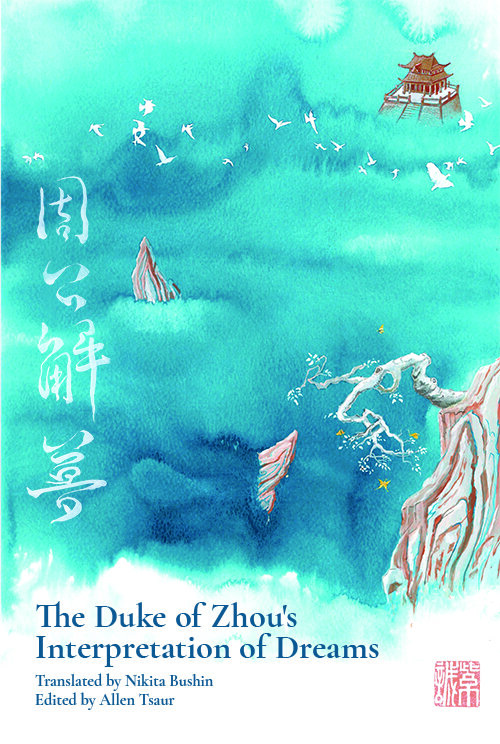
The Duke of Zhou's Interpretation of Dreams 周公解夢 - A Review

Not too long ago I received my copy of The Duke of Zhou’s Interpretation of Dreams, one of the most recent books published by Purple Cloud Press. Over the last few years I’ve been rather impressed by books from this small publishing company. In my opinion their books are significant assets to the profession of East Asian medicine and related fields such as Daoist studies. This book is somewhat different as it is not specifically an East Asian medicine text, nor a book on Daoist arts. Instead it is a translation of an important dream interpretation manual. Yet, even though not a clinical manual, this book deserves a reading by all of us who practice East Asian medicine.

The subject of dreams is something that I suspect interests many East Asian medicine practitioners. Yet, the topic is barely explored in medical classics. The most notable examples I can think of are the discussions in the Mai Yao Jing Wei Lun (Treatise on the Essentials of the Pulse and the Subtleties of the Essence; Su Wen 17) and in the Fang Sheng Shuai Lun (Treatise on Comparing Abundance and Depletion; Su Wen 80). However, the discussions of dreams in these chapters are relatively short, based mostly on simplistic Five Phase or Yin-Yang breakdowns, with some other material added. As such, those clinicians interested in dream analysis supplement these discussions (when they’re even aware that there is some material in the Su Wen, albeit minimal), with dream interpretation based on modern western models. While this in and of itself may not be horrible, I think as practitioners of East Asian medicine it is by far preferable to understand the tradition as it was originally practiced, and the culture that was the soil in which the medicine grew. Once we understand how doctors in East Asia saw dreams, then we can better create a newer model to analyze dreams in our own times and cultures.

The Duke of Zhou’s Interpretation of Dreams (周公解夢) steps in to help fill those gaps. The book starts off with a very useful foreword that helps situate dream interpretation in history and culture. It turns out that dream interpretation and divination was an important topic in pre-modern China, and in the later imperial period dream interpretation books were popular and widely read. Following the foreword, Purple Cloud Press’ editor Johan Hausen gives readers a detailed presentation of who exactly was this character, the Duke of Zhou. Just like the Huang Di, the eponymous Duke of Zhou is a cultural hero in China and his association with this text is something important to consider. Hausen’s introduction continues by investigating the association between the Duke of Zhou and dream analysis. Throughout all of these sections there are copious endnotes that cite scholarly sources both in Chinese and European languages, and do things such as analyze individual Chinese characters to better elucidate topics being presented. Overall, I estimate that the introductory materials before the actual translation is about a quarter of the entire printed book. In my opinion, this material alone is worth the purchase of the book. There was quite a bit of information on the place of dreams in Chinese culture and history that I had never before read, even with my 30 plus years of involvement with East Asian Studies and Chinese medicine.

After the introductory material we get the actual translations – in this case two versions of the original text, one of which was found in the Dunhuang Caves. Each book is separated into thematic chapters that provide analyses of those dreams. Such chapters include, for example, “Heaven and Earth, Sun, Moon and Stellar Constellations,” “Spouses, Childbirth, Pregnancies and Sex,” Food and Drink,” and “Dragons and Snakes.” What I also particularly appreciate about the book is that it is bilingual, containing the original Chinese text with Nikita Bushin’s excellent translations. As time goes by more East Asian medicine professionals are embarking on the study of Chinese, and bilingual editions allow individual readers the ability to see the original text, and interact with the translation in a way that an English only edition does not allow.

Another feature I found very interesting is the presence of some chapters in the original texts on interpreting dreams based on the Twelve Earthy Branches, and dreams appearing during the Twelve Watches (i.e., the double-hours). The theories of Ten Stems and Twelve Branches are essential to the practice of East Asian medicine, yet scarcely covered in our entry-level degrees. There is also a chapter on the use of talismans to treat nightmares. Talismans (符) are an esoteric approach to medicine that I find particularly interesting, and also something completely absent from western discussions of East Asian medicine.  

When I first got this book I decided to simply read it from cover to cover, however I quickly realized this was not the best way to approach it (as the introduction actually tells us). Instead, I decided to use what the Duke of Zhou gave us in its intended manner. Over the last month each night when I could remember my dreams, I would try to find something similar in the text. Reading the interpretation was then a meditation for me that day. Given the fact that much of the text describes a society quite different from the modern day, sometimes I could not find something directly on point. But what I did find was that I was starting to remember my dreams more often. The act of interacting with them on a more regular basis with as illustrious a guide as the Duke of Zhou himself opened up a new window on my dreams that I can say is both fascinating and useful. I will keep the content and interpretation of my own dreams to myself, but it seems clear that this is the very intended and original use of the book: opening up a window on our dreams and encouraging us to analyze their meanings to help us with our daily waking life.

Overall the only complaint or suggestion I have is that an index would be very useful since the book is designed to be a reference that is consulted over and over again. Since however the chapters are relatively short and arranged by topic, this is not a huge problem. But, if there is a second edition, an index would be a great addition. Aside from that this is an excellent book of Chinese culture and folklore that can give East Asian medicine practitioners deeper insight into the time, place and people that created our medicine. Happy dreaming!

Vernal Equinox 春分 Seasonal Node

Today, Sunday March 20th is the Vernal Equinox. At exactly 11:33am Eastern Time the sun will be at an exact vertical angle to the equator. Over the next few months the sun will continue angling more and more towards the Tropic of Cancer meaning the days for us in the Northern Hemisphere will continue lengthening until reaching an apex at the Summer Solstice. This day is also the beginning of the next 15 day seasonal node, also named Vernal Equinox.

At this point, in the Chinese calendar we are in the middle of Spring, but in the western calendar we celebrate Vernal Equinox as the beginning of Spring. In Persia this day was traditionally revered as the beginning of the year (called Nowruz), and Rosicrucian mystics count Vernal Equinox as the New Year as well. Why then does the Chinese calendar regard Vernal Equinox as the midpoint of Spring? Because we are now at the balance point of Yin and Yang. If the height of Yang is the longest day (Summer Solstice), and the height of Yin is the longest night (Winter Solstice), then the midpoints and thus points of balance are the Equinoxes. Even though the weather is still cold and there is snow on the ground, the gradual awakening of all life in nature is clear.

The three 5-day periods in this seasonal node are Swallows Arrive (xuanniao zhi 玄鳥至), Thunder Starts Resounding (lei nai fasheng 雷乃發聲), and Beginning of Lightning (shi dian 始電). In Yijing (I Ching) theory the Thunder Trigram (Zhen Gua 震掛) is a Wood trigram, linking thunder and lightning, yang activities of the heavens, with Spring. Zhen Gua is composed of one solid yang line on the bottom, with 2 yin (broken) lines above. This is the image of Yang emerging from underneath, continuing to grow up and out. Spring is exactly that time of year – the time when Yang of the natural world is slowly starting to push itself up and out of the Yin of Winter.

The main thing to focus on during this 15-day period is “Nourishing the Liver” (yang gan 養肝). One of the ways we nourish the Liver is to ensure normal Liver function. For example, this is the time of year to really ensure our patients' Qi is freely coursing (one of the main functions of Liver is to ensure normal coursing of Qi). The second “to do” during this time is to “both Clear and Supplement.” This means that when the Liver is hot or hyperactive, clear and sedate. When it is vacuous (e.g., has Blood vacuity), then supplement. Since any pattern of disharmony in Liver will impair some of its major functions, when we see Liver patterns during this seasonal node they must be treated. That said, this year, at least here where I am located, the weather is still chilly, especially in the mornings. As such we may have to protect the warm-Yang in the body at the same time we clear Liver or supplement the Yin-Blood. A beautiful example of this is harmonizing formulas such as Xiao Chai Hu Tang, or even Xiao Yao Wan. Both contain herbs that strengthen and supplement (e.g., Ren Shen, Bai Zhu) alongside herbs that course or clear Liver. We can also consider giving our vacuous patients pill-form warming and supplementing formulas together with powders or decoctions that have a more Liver coursing or clearing function.

As mentioned already, the Vernal Equinox is the time of balanced Yin and Yang. It is appropriate at this time to also have balanced mind states. Thus, one of the “avoids” during the Vernal Equinox is extremes of the Seven Affects. Chapter two of the Su Wen says that Spring is the time to not be angry. We should try to relax, and not allow our emotions to run too far in any direction. The second thing to avoid during this seasonal node is overdoing “bedroom activity.” Since sex stirs the Yang to mobilize Jing-essence, to keep an overall balance in health we need to seek a balance in sex. As this time of year is a time of balance, too much sex may deplete the Yin-Jing. That said, no sex at all can lead to stagnation in the circulation of Qi and Blood.


Diet for Vernal Equinox

Diet for the Vernal equinox should mimic the balance that is present in nature at this time. In general, the continued use of mildly acrid foods such as ginger and scallions help ensures normal coursing of Liver qi. This is especially useful for patients with Liver depression patterns. Patients who tend more towards vacuity patterns, especially Liver blood insufficiency, can increase consumption of sour foods such as pickles or vinegar. This year since the weather is cold though, we should continue to eat slightly warming foods. However, it is best to avoid very greasy or cloying warm foods (such as an overconsumption of very fatty meats), or very salty meals. While salty and more greasy is ok in the cold of Winter, right now in Spring we need to be concerned with the normal and smooth movement of Qi and Blood in the body. The basic combination then is warming and acrid, such as the aforementioned ginger.  

A simple tea most patients can consume during this time is rose bud tea. This tea is made by steeping Mei Gui Hua 玫瑰花 in hot water. Mei Gui Hua is warm and sweet and is found in the Qi regulating chapter of the Materia Medica. It courses Liver as well as gently quickens the blood. It is especially useful for our female patients who have menstrual irregularities due to Liver stagnation. In the Baijiquan 八極拳 system of Chinese marital arts, Mei Gui Hua tea is used as a general Qi and Blood moving tea for injury. For patients who suffer from more internal cold, Mei Gui Hua can be combined with Gui Zhi (cinnamon twig) or Sheng Jiang (fresh ginger).

One traditional dish for Vernal Equinox is Stir Fried Pig Kidney with Eucommia (杜仲豬花). Here’s the recipe:


Ingredients:

  • Organic pig kidney ¾ to 1 lb

  • Eucommia bark (Du Zhong 杜仲) 6-9g

  • 1 scallion, 1 piece of ginger (about the size of your thumb or a little larger), 1-2 cloves of garlic

  • Cooking oil, salt, soy sauce

 Instructions:

  • Cook Du Zhong in about 1 cup of water by bringing to a boil and then simmering until only about ½ cup of liquid is left

  • Cut kidneys into thin slices and then score one side of each slice; peel and slice the ginger, slice the garlic, and slice the scallion

  • In a pan, add a small amount of cooling oil, and start by cooking the garlic and ginger just until fragrant and / or the garlic is transparent. Add in the kidney slices and cook for several minutes. Then add a small amount of salt and soy sauce.

  • Add in the Du Zhong liquid, and cook down in the pan with the kidney. Add scallions. Cook until kidneys are thoroughly cooked through.

  • Optionally can add Gou Qi Zi (i.e., Goji berries) at end as well before liquid has cooked down, cooking until slightly plump.


This recipe supplements the Kidney, boosts essence, and nourishes the Liver blood. It is good for lower back pain, knee pain, declining visual acuity, or other symptoms of Liver and Kidney vacuity. Because it is warming it is especially useful this year!


Acupuncture for Equinox

When considering acupuncture recommendations, first we should think about how Wood phase (for Spring) is functioning in our patients. Ideally, we should all be in a state of balance, neither in a state of insufficiency nor of repletion. Relative repletion, especially during the time of transition into warmer weather, frequently manifests as stasis. This is because the Qi of the body, as the time of year is becoming more Yang, wants to move. But since cold weather is still lingering, Qi has trouble moving and stagnation is the result. Another possible reason for stagnation is a failure to increase physical movement this time of year. If this is the case then points that course Qi and Blood throughout the body should be chosen. My recommendation is to consider the Metacarpal Three Needles (掌三針) consisting of Ling Gu 22.05, Da Bai 22.04 and Zhong Kui. On the lower extremities we can add Ren Huang 77.21. If the repletion also manifests with some internal heat, consider bleeding the apex of the ear.

The opposite situation is having a patient with insufficiency of Wood, either in the case of Liver Vacuity (especially patterns of Liver Blood vacuity), or of general vacuity of the Yang. For Liver vacuity we can consider points such as the Upper Three Yellows (上三黃; 88.12, 13, 14). Alternately, we can choose the Lower Three Emperors (下三皇; 77.17, 19, 21), one main Dao Ma group for the Kidney. Why the Kidney Dao Ma group? Because strengthening Water-Kidney automatically strengthens Wood-Liver because of the Five Phase engendering cycle relationship.

I hope everyone will have a great Equinox!

Principle in Taijiquan and Medicine

Today was one of those perfect early spring days with plenty of sun but still cool early morning temperatures that eventually rose to the mid-60s (about 18 ℃). I’m also hopeful that we are in the tail end of the pandemic and may eventually enter the endemic phase of COVID. While we are still masked in medical offices here in NJ, society is slowly feeling a bit more “normal.” In that light I’ve also been returning to one of my weekly rituals that has been going on for the last decade or so, minus some time at the height of the pandemic – weekly visits with my Taijiquan shifu, Wang Fengming.  

Wang Fenming with Taiji Mace 太極鐧

When we practice together, we usually will work on some form (Tao Lu 套路) or other set exercise, and then practice Push Hands, the partnered exercises of Taijiquan. The last few weeks I’ve been working on the Chen Taiji Single Jian form. This is one of my favorite traditional weapons in the Chen repertoire, and something I suspect most people would not associate with Taijiquan. The word Jian (鐧) is usually translated as a mace, but it’s a bit different from the western versions of this weapon. Basically, it is a short baton of about 29 inches (74cm) made entirely of steel. The “blade” part, which is not sharp, is either traditionally rounded, or fashioned in a shape with angular edges. And, it’s heavy. The Jian I work with is about 3lbs 8oz (1.6kg). Compare that to my full weight traditional straight sword which weighs in at 1lb 15oz. A standard modern Taiji practice sword usually weighs about 1lb 3oz, and a modern wushu straight sword only about 1lb.

 During the pandemic when I was unable to visit Master Wang I spent some time learning the Single Jian form from a video. Compared to most of the Chen style weapons forms the Single Jian is relatively short. Consider also that the main thing that you do with a Jian is simply bludgeon your opponent with it. It’s not what I would call a subtle weapon! Yet, when I meet with Master Wang we take one or two movements at a time and drill down on them for about an hour at a time, going into far more detail than I can absorb just from the video. What seems at first to be a rather inelegant club thus transforms itself into a tool to explore deep Taiji principles.

As I’m frequently reminded by one of my own students, when we practice and form or any weapon, it’s all Taiji. Over the last decade that I’ve trained with Master Wang I’ve heard him impart so many small detailed corrections that there is no way I could remember them all. However, on a deeper but still very real and practical level, he’s constantly imparting the same basic principles over and over again (perhaps I’m just too poor a student to internalize them in everything I do!). Taijiquan then reveals its true nature – it isn’t about specific techniques or forms, but core principles that are embodied in every form, weapon, or partnered exercise we do.

While the principles of Taiji are interesting, most of my readers here are Chinese medicine practitioners. Yet, the reason I bring up this story is because at a fundamental level Chinese medicine is the same. The medicine we practice is not about doing acupuncture, or prescribing herbs, but rather the basic principles that govern the way we see the world, and therefore approach patient care. Qi Bo tells us as much in the very first discussion he has with the Huang Di. Remember, the very first question in the Neijing is one of longevity. Huang Di asks why is it that people of ancient times lived easily to 100 with their full health, while people of today are falling apart at half that age? This question really gets to the heart of the matter in that he is really asking how can we understand and stave off disease.

What does Qi Bo answer? He never once says, “Oh, they like to do acupuncture.” Or, that they take natural medicines instead of pharmaceutical products. Qi Bo knows better, because he knows that medicine is not defined by technique, but rather principle, what in Chinese is known as Li 理. So, what Qi Bo says is:

The people of very ancient times knew the Way (Dao). They followed the pattern of Yin and Yang, and complied with the Arts and Calculations.

上古之人,其知道者,法於陰陽,和於術數

Only after this does Qi Bo give us some simple examples such as in how we should eat, work or rest. But fundamentally, Qi Bo tells us that Yin-Yang, and other theories such as Five Phases, Stems-Branches, etc… are the way we understand the Dao. Understanding the Dao and understanding the body are the same, since, as Zhang Jiebin said, the human body is a small Heaven and Earth. Looking at the body then is more than just knowing where the points are supposed to be, or what herb treats what specific disease. It is seeing the body as a manifestation of the constant expanding and contracting of the universe, albeit in smaller form.

As a martial artist (Taijiquan is a martial art), once we internalize principles there are no set forms. Likewise, in Chinese medicine, once we internalize principle then we are free from one dogmatic way of approaching diagnosis and treatment. As I’ve said in my classes before, if you are really good at TCM acupuncture, you should be able to look at a Tung protocol, or a Japanese acupuncture protocol, and understand what they are trying to do. Likewise, if you are good at Tung’s acupuncture and internalized its basic principles, you should be able to understand other acupuncture systems’ treatments and approaches. When a TCM acupuncturist looks at a Tung point and has no idea why it does what it does, then they can’t say they really understand TCM acupuncture, their own system. In the end we can have differences of opinions as to what is the best way to approach acupuncture in general, or some patient in specific, but the principles are always still there and fundamentally the same. This is why there are also no real secret techniques!

All of this of course is easier said than done, and I cannot say I am a true master of anything. But I know that the quest for deeper understanding is done by going back to what Qi Bo said: knowing the Dao is knowing the basic core principles. My hope is that we all take this admonition seriously.

A pair of maces 雙鐧

Tung Family Bi Syndrome Wine

The use of medicated wines (also known as medicated liquors) has a long history in China and is an important part of the Nourishing Life (Yang Sheng 養生) tradition. Medicated wines are a convenient way to take a mild yet effective dose of herbs on a daily basis. Alcohol is also a preservative, meaning that expensive or hard to get herbs can be used for a longer periods of time than they would otherwise be.

According to Chinese medical theory alcohol by itself is warm, acrid and sweet. Thus, it has the dual function of both supplementing and moving the Qi and Blood. When combined with herbs it is therefore an excellent treatment method for the cold and damp of winter. Here is a simple and effective medicated wine recipe from the Tung (Dong) lineage of medicine. While the last practicing member of the Tung family, Tung Ching Ch’ang, was primarily known for his skills with the needle, he was also familiar with basic herbal and dietary therapy protocols. This medicated liquor is based on a Tung family recipe with modifications to make it more appropriate for cold weather and to substitute now endangered species.


Tung Family Bi Syndrome Wine 

  • Huang Qi 30g

  • Wu Jia Pi 15g

  • Gou Qi Zi 15g

  • Ge Jie (Gecko) 1 whole piece

  • Chuan Niu Xi 9g


Place all the above herbs in 500ml of high proof distilled liquor (usually about 80 proof; e.g., vodka or brandy). Let sit for at least 2 weeks but 1 month is preferable. After that drink 1 shot glass (about 40ml) per day. This formula is appropriate for anyone with general Qi and Blood vacuity pattern who tends to feel cold. It also can be used for people with general back or limb pain, and is especially useful in chronic cases. Caution should be exercised with people who tend to full heat conditions. It is contraindicated for patients using pharmaceutical products that cannot be taken with alcohol.

Awakening of Insects 驚蟄 Seasonal Node

Yesterday, Saturday March 5th was the start of the Awakening of Insects seasonal node (jing zhe 驚蟄), the third node of the year. This is the next segment of Spring, and although over the last two weeks weather has been particularly chilly, I’m starting to see buds setting on trees. Also, many mornings as I walk outside the house the birds are singing so loud it is hard to ignore them. The earth is slowly waking from Winter’s sleep. In China the three 5-day periods in this seasonal node are Peach Trees Begin to Blossom (tao shi hua 桃始華), Orioles Sing (canggeng ming 倉庚鳴), and Hawks Transform into Cuckcoos (ying hua weijiu 鷹化爲鳩). These Japanese versions of these smaller segments are Hibernating Insects Come Out (蟄虫啓戸 sugomori mushito o hiraku), Peach Trees Begin to Blossom (桃始笑 momo hajimete saku), and Caterpillars Transform to Butterflies (菜虫化蝶 namushi chō to naru).

The first ‘to do’ for this period of time is to guard and protect the Yang qi. Even though we are in Spring, this early part of the season, especially this year, can be cold. Continue to dress appropriately, especially since there can be wide fluctuations in temperatures from day to day. As Yang qi continues to grow in the natural environment, now is the time to start doing more gentle exercise. This recommendation comes from the second chapter of the Neijing Su Wen, the The Great Treatise on Regulating the Spirit with the Four Seasons (Si Qi Tiao Shen Da Lun). There Qi Bo recommends that during Spring we should “upon waking take a walk in the courtyard, loosen the hair and relax the body, thus focusing the will on life.” Movement, especially in the morning, is a Yang activity. The Neijing recommends that “in Spring and Summer nourish Yang, and in Autumn and Winter nourish Yin (春夏養陽,秋冬養陰).”

The ‘to avoid’ during Awakening of Insects is undo stress and strain. As Chinese medicine practitioners we all know the mental pattern associated with Wood phase, and thus Spring, is anger. Patients who are prone to Liver depression or Liver repletion patterns should be monitored during this time period to be sure qi is circulating smoothly. This is the time when formulas in the Chai Hu family are appropriate for many people. For patients prone to resentment and anger, contemplative practices such as Japanese Naikan are appropriate.

Diet for this time of year should help protect the Yang qi as well. I generally recommend that people eat warming foods such as leeks, chives, and scallions. Likewise, it is appropriate to drink a little alcohol, provided the patient does not have specific sensitivities, morbidities, or medications that require abstinence. All of these foods, including alcohol, are warm and acrid, and thus course and warm the qi. I also suggest that everyone consume slightly more white noodles. In general, wheat husk (bran) is cooling, while the endosperm (inner white portion) is warming. White noodles, especially in soups, have the function of warming and supplementing the qi.

One traditional dish for Awakening of Insects is Schizonepeta and Mint Congee (荊芥薄荷粥). Congees are simply rice porridges. To make this congee start with 10g Jing Jie, 6g Bo He, and 10g Dan Dou Chi. First, place the Dan Dou Chi in about 5 cups of water, bring to a boil and simmer on low for 30 minutes. Then, add the Jing Jie and Bo He, simmering only for 5 minutes. After this, strain out the herbs and retain the liquid. Place the liquid back in the pot and bring to a simmer again. Lastly, add in about ½ cup of rice and cook until the rice breaks apart and becomes porridge-like (this can take 30-45 more minutes of cooking). Add in extra hot water as necessary if the congee becomes too thick. Schizonepeta and Mint Congee expels wind, resoles the surface, clears heat and eliminates toxins. It is useful for treating early stage colds, seasonal allergies, or just as a daily early Spring food.

The last recommendation I’ll offer for Awakening of Insects is the traditional Chinese practice of Pai Da – stimulating acupuncture points and channels by patting. As mentioned above, Spring is the time to increase movement. Liver (the organ of Spring) ensures the free coursing of Qi and Blood in the body. Thus, any exercise or practice that opens and circulates the channels of the body will have a beneficial effect on the Liver. One basic Pai Da technique is to use the hands held in loose fists to pat acupuncture points on the upper limbs. Start by patting the shoulders – the area of Jian Jing GB-21. Alternate right and left while patting. Then, continue with patting the sides of the elbows at Qu Chi LI-11. Finish with tapping the He Gu LI-4 area. For the lower extremities start with tapping at Huan Tiao GB-30, moving down then to Zu San Li ST-36, and finally Cheng Shan BL-57. For the lower extremities, both sides of the body can be tapped at the same time. 

In the Hunyuan system of Qigong and Taiji I teach there is also a much more involved set of exercises that incorporate Paida. In this series we have a standing and moving posture for each of the 12 primary channels as well as some of the extraordinary vessels. Then, in addition to the postures, we use a special sack filled with rice and a Daoist lineage herbal formula that contains herbs to move Qi and soften the sinews (for example, the formula contains Ji Xue Teng and Shen Jin Cao); this sack is used to pat and tap along the channels. The combination of physical movement, breathing, visualization, and then mechanical stimulation of the channels is a very effective way of moving the Qi and Blood internally to balance the channel system.

Next installment we reach the Vernal Equinox!

Rain Water 雨水 Seasonal Node

Today, Saturday February 19th, is the beginning of the second seasonal node of the new-year and the new Spring – 雨水 Yu Shui, “Rain Water.”  Here in northern New Jersey we’ve recently been having significant fluctuations of weather. Monday morning when we left to bring my son to school it was 9 degrees Fahrenheit outside, but over the last week the temperatures have ranged from that to up to 60 degrees! We’ve also been having rain on and off this week, which is good considering we’ve had a dry winter overall. One characteristic of this time of year, as the name of the node suggests (and as the local weather here has brought us), is a gradual increase in moisture.

During Rain Water the expansion of Yang in the natural environment continues. So, while days can still be cold, we are definitely going to continue experiencing the ups and downs in temperatures that we saw here this week. The three smaller periods of Rain Water are “Otters Sacrifice Fish” (ta ji yu 獺祭魚), “Swan Geese Appear” (hong yan lai 鴻雁來), and “Vegetation Sprouts” (caomu mengdong 草木萌動). The swan goose is a rare large goose native to northern China. While we don’t have them here in the US, we do have other species of geese, and here in New Jersey we are seeing flocks of geese flying north again heralding the warmer Spring weather to come. The Japanese versions of these smaller nodes are different: Rain Moistens the Soil (土脉潤起 tsuchi no shō uruoi okoru), Dew Begins Lingering (霞始靆 kasumi hajimete tanabiku), and Grass Sprouts, Trees Bud (草木萌動 sōmoku mebae izuru).

One of the statements in Chinese related to Rain Water says, “Yu shui lai lin shi qi zhong, dang xin pi wei shou shang hai” 雨水來臨濕氣重,當心脾胃受傷害 – “as Rain Water arrives damp qi is heavy, be careful not to damage the Spleen and Stomach.” When walking around outside, I’m struck by a palpable shift. On slightly warmer days, the ground is becoming moist with the release of water that was trapped in frozen form. This increased dampness outside in nature is attested to by my dog’s muddy paws as we come back in after evening walks. The point Xuan Shu DU-5 (懸樞穴) is located at L1, the vertebra associated with Rain Water. While this point treats the spine as a local or adjacent treatment, one of the other most important classical indications for Xuan Shu is undigested food in the stool. This point, located at the vertebra associated with Rain Water, thus treats manifestations of vacuity in the middle jiao, the very thing we need to be wary of this Seasonal Node. Thus needling or applying moxa at this point is appropriate in the clinic during this time.

The basic “to do” recommendation for Rain Water is to supplement the Kidney and strengthen the Spleen. We do this because the weather is still chilly and can tax the Kidney as the viscera of cold and Winter. In addition we need to protect the Spleen because of increased environmental dampness. At the same time, the Spleen is the viscera associated with transformation and transition, and even though we are in Spring we are in a period of weather transition. Thus, another reason Xuan Shu is important this time of year is because, in addition to its ability to supplement the middle jiao, being a point on the lower portion of the Du Mai it also can strengthen the Kidney.

Other points to consider in the clinic are Si Hua Shang 77.08 (i.e., Zu San Li ST36) in combination with Ling Gu 22.05 and Da Bai 22.04. Ling Gu and Da Bai have the ability to course Qi and Blood, regulate the Kidney (because of the connection between the Large Intestine and Kidney channels mediated through relationships on the diurnal circulation of Qi through the channels), and expel external cold. Si Hua Shang supplements the middle burner, especially when treated with direct moxibustion.

The second “to do” for Rain Water is eat congee! Honestly, is there a season when congee is bad? For those not in the know, congee is a type of rice porridge or soup (depending on how thickly you prepare it). And why eat congee now? Because it dovetails with the other recommendations for Rain Water. First, congee is warming and supplements the Spleen. Furthermore, congee is mildly damp draining so it protects the body against the increase in dampness in the environment. Congee is incredibly easy to make, and in China it is a common breakfast or brunch food. People of all levels of health can benefit from being taught to make and eat congee.

The base recipe for congee is to add 1 part rice to 6 to 10 parts water. For example, we can cook ½ cup rice in 5 cups of water. This is cooked until the rice basically starts falling apart so that the resulting product is creamy white. Depending on the type of rice you use, this can take anywhere form 45 minutes to 2 hours of cooking. What I do at home and what I recommend to patients is that they put all the ingredients into a slow cooker overnight on low heat, and by morning perfect congee is done.

Just about any ingredient can be added into this basic congee. For patients with weak Spleens and damp accumulation, a basic congee starts with rice as described above. After that, add in several slices of fresh ginger, a handful of Yi Yi Ren 薏苡仁, and several Dang Shen 黨蔘 roots. Season with soy sauce to taste when finished. This basic Spleen-strengthening and damp-percolating dish can be eaten daily for breakfast.

During Rain Water, since it is a time period of early spring, we also need to stay warm and guard against Wind. As such, the basic “avoid” during Rain Water is “don’t rush to put away winter clothes.” The northeastern US is slowly starting to warm. But, we are early enough in the year that we will see more cold, and the increased dampness in the environment makes the temperature feel a little chillier than it actually may be. Stay warm, and remember to use moxabustion as necessary on yourself and on your patients.

Here is a basic tea recipe associated with the current seasonal node. Its function is to warm and resolve the exterior, strengthen the Spleen, and guard against Wind.


Five Sprits Tea (Wu Shen Tang 五神湯)

Ingredients:

  • Jing Jie 荊芥 9g

  • Zi Su Ye 紫蘇葉 9g

  • Sheng Jiang (i.e., fresh ginger root) 生薑 9g

  • Tealeaf (green or oolong) 6g

  • Brown sugar 30g

 Cooking Instructions:

  1. Place the herbs in a pot with 3 cups of cold water. Let soak for several minutes. 

  2. Bring water and herbs to a rapid boil over a high flame. Then, reduce and simmer for 10 minutes uncovered.

  3. Strain out herbs and add in the tea leaf, letting the tea steep in the hot liquid for several minutes.

  4. Strain out the tea. Stir in brown sugar and drink warm throughout the day. Molasses or honey can be substituted for brown sugar (use to taste).

Here’s another recipe, this time a soup…


Job’s Tear and Lily Pork Soup (Yi Mi Bai He Shou Rou Tang) 薏米百合瘦肉湯

Ingredients:

  • ½ lb. lean pork

  • 1 large carrot

  • 1 oz. Job’s Tear barley 薏苡仁

  • 1 oz. Lily Bulb herb 百合

  • ¼ cup (or a little more) of corn (or about ½ ear fresh corn)

  • Ginger

  • Salt

Cooking Instructions:

  1. Rinse Job’s Tear and Lily Bulb; place in a pan with about 4 cups of water and bring to a boil, then simmer for about 30 minutes on low heat

  2. While cooking, prepare other ingredients by cutting up carrot and pork into bite-sized chunks; remove corn from cob if using fresh corn; peel and slice ginger (an appropriate amount to taste)

  3. Add carrot, pork and ginger to the soup (add a little more water if necessary); simmer on very low heat for about 2 hours; add salt to taste

  4. This recipe removes phlegm, strengthens the Lungs, expels dampness and opens the Spleen. Moreover, this is a light soup that won’t create internal dampness or damage the digestive function. It is also not overly warming.

Happy February!

Online Intro to Tung's Acupuncture

Tung’s acupuncture is an approach to acupuncture that focuses on distant needling based on the innate interconnectedness of channels. While mostly known for its unique points, the teaching of Tung’s system opens up a deeper understanding of all approaches to acupuncture and challenges some of our basic beliefs about how acupuncture works. Join us for this short ONLINE introduction to Tung based around cases from Dr. McCann’s clinical practice.

Click here for more information: https://www.meetup.com/chinesemed-62/events/283858741/

Beginning of Spring 立春 Seasonal Node

Today is turning out to be an icy one here in New Jersey. January was quite cold throughout most of the month and in my clinic it’s clear that people are experiencing some cabin fever due to the combined effects of the weather and the (hopefully) tail-end of the Omicron wave.  Even my dog has adopted the habit of waiting to coming downstairs in the early morning hours when we wake. Instead he’s been opting to stay in front of a radiator before he’s willing to go outside for his morning constitutional. Yet, something is changing in the air. Albeit cold, we are in a time of seasonal transition, with the promise of warmer weather to come. Earlier this week on Groundhog Day, Staten Island Chuck predicted an early Spring (although Punxsutawny Phil disagreed). However, despite contrary predictions, in the Chinese calendar today, February 4th, is the beginning of Spring.

While westerners are accustomed to placing the beginning of Spring in March, the Chinese calendar marks seasonal change by position of the sun and relative daylight. As the days are now getting longer, we are in the time of everything waking from Winter’s slumber. The darkest and longest nights are now 6 weeks behind us, and in only another 6 weeks we will be at the Equinox – half way to when the days will get shorter again.

The Chinese use both a lunar and a solar calendar to mark time, and because of this there are two dates that are considered the beginning of Spring. One is called Li Chun (立春) – the “Beginning of Spring,” which is one of the twenty four seasonal nodes. The solar beginning of Spring happens every year in early February and this year it starts today (February 4th). The other beginning of Spring is the lunar, also known as Chun Jie (春節), the Spring Festival. This day is the Chinese Lunar New Year, and it falls on the second new moon following the Winter Solstice (with the rare possibility of it falling on the third new moon in some years with an intercalary month). The Lunar New Year is one of the most important traditional holidays in China, and is a time for people to visit with family and friends.  The lunar festivals traditionally last about 2 weeks until the full moon. This year the Lunar new year started earlier this week on February 1st.  

During the Beginning of Spring seasonal node the Yang influences are growing in the natural world. As mentioned already, we are only about 6 weeks away from the Vernal Equinox (Chun Fen 春分), one of the two times of year when the Yang and Yin are most balanced and we have more equal day and night. Even with cooler weather lingering the days are getting longer and in northern New Jersey where I am, in the morning I am hearing some songbirds starting to return.  The increased activity in the natural world is also reflected in the names of the shorter 5 day segments (the 72 Material Manifestations of the year) that make up Beginning of Spring – Dong Feng Jie Dong 東風解凍 (The East Wind Liberates From Icy Shackles), Zhe Chong Shi Zhen 蟄蟲始振 (Hibernating Insects Begin to Stir), and Yu Shang Bing 魚上冰 (Fish Rise Up to the Ice).

Beginning of Spring is the time of year for new beginnings. It is also time to continue growing the ever-expanding Yang in our bodies so as to mimic the expanding Yang in the natural world. One of the basic health exercise recommendations for Beginning of Spring is to frequently comb the hair (or head if there is no hair). In Chinese, this is called Shu Fa 梳法, or “combing therapy.” Combing therapy has been around since at least the Sui dynasty, and is found in both Yang Sheng texts as well as Tuina manuals.

To apply Combing Therapy comb the hair (or scalp) daily, 100 times each sitting. This can be done either in the morning upon waking or in the evening before bed, and the traditional recommendation is to use a comb of either bone or wood. That said, simply combing with the fingers is even more effective since the fingers are living and contain Qi, which bone and wood do not. This is such a simple exercise that anyone can be taught to do it.

Combing has several functions. By stimulating the head we are stimulating the top of the body, meaning the most Yang area of the body. Since Spring is a time of Yang growth and expansion, stimulating the Yang area of the body is appropriate. Gently working the surface of the body also stimulates Wei Qi movement in the head and channels of the head. This in turn helps expel wind, and avoiding wind is one of the basic “avoids” for the Beginning of Spring. Furthermore, the scalp is a microsystem of the entire body, so stimulating the channels on the scalp mobilizes Qi and Blood in the entire body.

Spring is the time associated with the Wood phase and the Liver, and the Liver is a Yang viscera (with Heart being the other Yang viscera). A traditional saying for Beginning of Spring is “Li chun yang gan shun tian shi, qu chu ji bing bao jian kang” – “At the beginning of Spring nourishing the Liver means to following the timing of Heaven, expel and rid yourself of disease and protect your health.” Diet recommendations at the Beginning of Spring then are designed to help and nourish Liver.

As a general rule this is the time to consume foods that help maintain normal Liver function, especially the Yang of Liver. Since the Liver governs free coursing, eating mildly acrid and warm foods will support this function. For example, appropriate foods this time of year include scallions, leeks, chives, cilantro, and garlic.  Here is another phrase for this time of year: “Duo chi jiu cai chao rou si, yang hu gan yang zhu sheng fa” – “Eat a lot of leeks and pork to nourish and protect the Liver yang and develop the nature of birth.”  In the Huang Di Nei Jing the Spring is associated with the term sheng 生 or “birth.” This is the same sheng as in, for example, Sheng Jiang 生薑 – fresh (or living) ginger. Tung recommended eating beef stewed with garlic for the treatment of Liver Vacuity (Tung, 1973). While he didn’t mention it specifically for Beginning of Spring, we can say that this recipe is perfect for the warming and strengthening of the Liver Yang that is now appropriate.

Patients with chronic Liver fire should take care this seasonal node as Yang is on the rise everywhere. A traditional Beginning of Spring drink for these patients is Yin Chen Da Zao Tang. For this drink take 20g of Yin Chen Hao and 30g of Da Zao. Place in a pot with about 2 ½ cups water. Bring to a rapid boil then reduce and simmer for 30 minutes. Separate into 2 doses and drink in the morning and evening. This formula benefits qi, generates fluids, and protects the Liver. In the clinic we can mimic this basic formula with points such as Mu Yan 11.20 or Gan Men 33.11.

One more traditional dish for Beginning of Spring is Pork Bone Red Date Soup. Yes, even before bone broth became the latest health trend here in the US, it was considered an important food for health the world around. This dish can be taken daily; it builds blood, warms the interior without being too warming or drying, and can be taken both to prevent and treat colds.


Pork Bone Red Date Soup 豬骨紅棗湯

Ingredients:

  • Pork bone, about 3 lbs

  • Chinese dried red dates (Hong Zao, or Da Zao), about 6 pieces

  • Ginger

  • 1 Large scallion white

  • Salt

Instructions:

  1. Place washed pork bones into a slow cooker and add enough water to cover bones (about 2 quarts)

  2. Cut ginger and scallion into large pieces, place in slow cooker with bones; add dates as well to slow cooker

  3. Cook on low for 8 hours or more (the prep can be done in the evening and left to cook overnight)

  4. Drink broth daily


Other vegetables or ingredients can be added to this soup as desired. To read more about general Spring health care please click here.  

Happy Spring and happy year of the Water Tiger!

Great Cold 大寒 Seasonal Node

Today, January 20th is the start of the Great Cold (da han 大寒) Seasonal Node. While we had a relatively warm December, this month has been much colder. In the last two weeks we’ve had quite a few days below freezing, with some in the teens and single digits (Fahrenheit). That’s cold! The Great Cold seasonal node this year is thus true to its name. Unfortunately, this means more people indoors with windows closed which is contributing to the relentless spread of the Omicron strain of COVID-19.

Despite the cold however, the promise of this time of year is the slowly returning Yang. The days are getting longer and even by now we are seeing some migratory birds on the move. All of this is a reminder that Great Cold is the last seasonal node of Winter. In just about 2 weeks both the lunar and solar beginning of Spring arrives.

The three material manifestations of Great Cold are Hens Begin to Breed (Ji Shi Ru 雞始乳), Birds of Prey Act Fierce and Swift (Zhi Niao Li Ji 鷙鳥厲疾), and Rivers and Lakes are Frozen Within (Shui Ze Fu Jian 水澤腹堅). Notice here imagery of the impending Spring. In Five Phase theory the domestic animal associated with Spring is the chicken, and during Great Cold hens are getting ready to become pregnant with baby chicks that will hatch in Spring. Thus, even though the weather outside is still very cold, Yang is definitely on its way back as the gradually lengthening of the days attests to.

As the name suggests, the Great Cold Seasonal Node is the time of the year when the main environmental factor we contend with is cold. The first thing that Chinese medicine recommends for this time is to eat clear and easily digested foods (qing dan shi wu 清淡食物). Why is this? The Spleen and Stomach are the roots of Latter Heaven Qi. During the end of Winter even though the time of the year is still predominantly Yin, the Yang qi is being birthed. Eating clear and easily digested foods allows the Spleen and Stomach to move and transform appropriately, and to build Latter Heaven Qi. If foods are too heavy, overly greasy or overly sweet, then the ability of the Spleen and Stomach to move and transform is impaired. Easy to digest foods ensures that we continue to build Latter Heaven Yang Qi to get ready for the upcoming spring.

In addition to cold, the other main environmental pattern seen during Great Cold is dryness. Even with some wet snow and sleet on the ground this morning, lately my patients have been complaining of dry skin on an almost daily basis (this is even more so this year because during the ongoing pandemic we are all washing our hands more than usual). However, much of the environmental water is now bound up in snow or ice, making the air dry. Knowing this, the second recommendation this time of year is to stay warm but also be sure to not be too dry. Staying warm is obviously important in this time of greatest cold. But since certain organs are harmed by excessive dryness, such as the Lungs, we need to be vigilant there. For example, for those with forced hot air heating systems, it may be prudent to run a humidifier periodically. Sipping warm liquids such as herbal teas throughout the day can also keep our internal environment appropriately moist. Interestingly, too dry of an environment can also be tied to increased COVID-19 transmission. As a lipid-enveloped virus (like most respiratory viruses including other coronaviruses, influenza, and respiratory syncytial virus) it survives longer at a lower relative humidity.

With patients who are cold, or have Spleen or Kidney vacuity patterns, continue to warm and supplement. Moxibustion, especially at points like Zu San Li ST-36, Qi Hai REN-6 or Guan Yuan REN-4 is still appropriate. Acupuncturists can include Tung’s point San Cha San 三叉三穴 frequently in point prescriptions. This point has the ability to warm yang and supplement the Kidney. Furthermore, since it pierces through Ye Men SJ-2, “Fluids Gate,” it benefits fluids, particularly of the upper orifices.

As already mentioned, during Great Cold we should emphasize consuming easily digested foods that protect internal warmth and strengthen the middle. Foods that satisfy this requirement include, for example, rice, glutinous rice (in moderation), yams (including nagaimo), peanuts, clear soups like chicken soup, and cooked vegetables. In general avoid raw vegetables, cooling fruits, very greasy meats, and very sweet deserts. When cooking make frequent use of fresh ginger, and other mildly warming spices like nutmeg.

In addition to protecting the Spleen with food, during Great Cold it is also important to consume foods that guard against dryness, and in particular Lung dryness. To this end traditional recommendations for food include consuming white wood ear mushrooms (Yin Er 銀耳) and pears, especially Asian pears.  A great traditional tea for Great Cold is Goji Berry and Red Date Tea (枸杞大棗茶). To prepare, take about 1 teaspoon Goji Berries (Gou Qi Zi) and 3 small red dates and place in a large mug. Cover with boiling hot water and let steep at least 5 minutes. After drinking about ½ the mug, refill once or twice more with boiling hot water. This tea supplements and moistens the Kidney and Liver, nourishes blood and supplements the Spleen.

Another good recipe for Great Cold comes directly from Tung’s writing. In his 1973 book on Tung’s Acupuncture he includes a chapter on dietary therapy. While not specifically listed for Great Cold, one of the recipes he gives is for pork kidney steamed with ginger strips. This simple dish treats kidney vacuity with dryness, manifesting for example with dry mouth.

As I’ve mentioned in some previous posts, since I do so much acupuncture in my clinical practice and I teach Qigong regularly, I really like channel based Yang Sheng practices in addition to lifestyle and diet that we usually discuss. One traditional recommendation for Great Cold is foot soaking and acupressure to support some of the goals we’ve already described above. The time of day associated with Great Cold is the Chou 丑 hour (1-3am). While I don’t recommend staying up too late, this practice can be done before bed, as close to that time as possible while still getting to sleep at a reasonable hour. Start by soaking feet in hot/warm water for 10-15 minutes, and Epsom salts can also be added to the water if desired. After that follow the soaking with acupressure on Yong Quan KD-1, Tai Bai SP-3 and Tai Yuan LU-9. This helps warm and strengthen the Kidney channel, and supplement the Spleen and Lung channels thus corresponding to some of the basic recommendations discussed above.

The last recommendation I’ll offer is gentle massage of the lower back. We all know that the low back is the abode of the Kidney, and gentle stimulation of the low back can thus relax and warm the Kidney. Furthermore, Great Cold is specifically associated with the 3rd lumbar vertebra. There are 24 total vertebrae corresponding one to each of the seasonal nodes, and this association is well known in esoteric Daoist circles. In the White Cloud temple in Beijing there is a diagram of the body carved in stone on the side of one of the walls that maps out the associations of the vertebrae with the nodes. So, in light of that correspondence, one great Yang Sheng practice for Great Cold is to sit quietly, starting with vigorously rubbing the palms together to get them as warm as possible. Then, place the hands on the low back in the area of L-3 feeling the warmth of the hands penetrating the back. After that rub the back to warm the area, or gently tap the low back.

I hope everyone is staying warm - I’ll be back blogging next when Spring arrives. Continue wearing your mask when around others, get vaccinated and boosted, and stay safe!

Cold Season Blue Garlic 臘八蒜 (repost)

This was one of the last blog posts I did in the “before times.” It was also one of the last times I saw my Shifu before taking quite a long hiatus from the weekly visits I had become accustomed to over the last decade. This year the Laba festival happened earlier this week on January 10th. Please enjoy this repost, and enjoy the recipe if you make it!

Anyone reading this blog knows that seasonal foods are a big thing in China. Actually, seasonal foods are a big thing in all cultures except for the modern west where we can have anything we want at any time of year. Today I thought I’d talk about a simple and delicious traditional side dish.

Drinking tea with Master Wang, our regular pre- and post- training ritual.

Most Fridays I visit with my Taiji Shifu 師父, Wang Fengming, and we train together. Last week after training I stayed for dinner and had my first experience with cold season blue garlic that was made by my Shimu 師母, Mrs. Feng (she is one of Grandmaster Feng Zhiqiang’s daughters).

I had never seen this food before, but it is commonly made in the north of China during the cold season. It is a type of pickled garlic that actually turns bluish (see the photo below), and in Chinese is known as Laba Garlic (là bā suàn 臘八蒜). Laba is a traditional holiday on the 8th day of the 12th lunar month, celebrating the date of the Buddha’s enlightenment. Being in the 12th lunar month it usually falls around the Minor or Major Cold Seasonal Nodes, in other words, one of the most Yin times of the year.

As a food, garlic is quite warming. Its flavor is acrid and sweet, representing the dual functions of being able to move and supplement Qi. It has a Spleen and Stomach strengthening and warming effect, and it moves stagnation to aid the digestive process. The time we are in now is a transition between Winter and Spring (which starts in less than a month from now), and the transition times are associated with the Soil/Earth phase – thus the Spleen and Stomach. However, the weather is clearly still cold, with the exception of the unseasonal warmer temperatures predicted in New Jersey this weekend. Our general dietary strategy this time of year therefore should be to warm and protect the Spleen and Stomach. We can also do this with acupuncture, moxibustion, or herbs as I’ve described in other posts recently.

Raw garlic is too harsh for most people to want to eat. Cold Season Garlic is a type of pickled food that becomes mild enough to be eaten as a side dish, often traditionally with dumplings. The vinegar used to make it can also be eaten on dumplings, or just about anything else that uses vinegar.

Finished Cold Season Garlic with some of its pickling vinegar.

To make, start by taking a desired amount of garlic, and separate and peel to cloves. Place in a clean jar and simply cover the garlic with good quality aged Chinese vinegar (some recipes add sugar, but it is unnecessary). Let sit either at room temperature or in a refrigerator for at least 3 days, although longer storage in the garlic is fine. Within several days the garlic will start turning blue-green, and after that it can be eaten at any time. And the flavor is fantastic! Use as a side dish to dumplings, meats, any type of vegetable, or with morning congee.

I’ll be blogging about the Major Cold Seasonal node sometime soon.