Great Snow 大雪 Seasonal Node

The Great Snow seasonal node starts today, Friday December 6th. While we don’t have snow right now here in New Jersey, I think the best way we should look at the names of this and the last seasonal node is figuratively. Certainly, in some places by now there is snow, but most of the snowiest weather in the Northeast US will likely come later in the season. What we do have now is a dramatic turn towards much colder weather, and because of that we are in the time of year with the potential for real snow. Tonight in New Jersey the temperatures are going to dip into the low 20s (that is well below 0 Celsius). In my opinion, this is the best way we can think of the nodes’ names – the potential for snow as a symbol for the seasonal change we are witnessing.

Great Snow is the last Seasonal Node before Winter Solstice, representing the final stage of the most Yin time of year and symbolized by the hexagram Kun 坤, composed entirely of Yin (broken) lines. The two weeks of Great Snow are the longest nights of the year, culminating with the Solstice after which days will slowly grow longer again. The Material Manifestations for Great Snow are Spangled Drongos Cease to Sing (He Dan Bu Ming 鶡旦不鳴), Tigers Begin to Mate (Hu Shi Jiao 虎始交), and Water Irises Grow (Li Ting Sheng 荔挺生).

Great Snow Daoyin Posture

The main way to guard health in this period is to focus on warm supplementation, while at the same time avoiding exposure to cold. Thus, the Neijing tells us during Winter it is appropriate to “avoid the cold and seek warmth” 去寒就溫.  Along these lines we can continue practices such as preventive moxibustion on points like Qi Hai REN-6, Guan Yuan REN-4 and Zu San Li ST-36. Another guideline from the Huang Di Nei Jing for the Winter is to “Nourish Yin” 秋冬養陰. While this may seem counterintuitive for the cold time of year, the meaning of ‘Yin’ in this passage refers to the body’s ability to store, and thereby regenerate, its vitality. Yin means being able to be in a state of quite, rest and solitude. Therefore, during this Seasonal Node try to get more sleep, attempting to get into bed earlier. Sleep is one of the best Chinese medical prescriptions for supplementing the Qi and strengthening the Kidney!

In terms of Tung’s acupuncture, Nourishing Yin (in other words, nourishing consolidation and containment) means we should focus on Zones 7 and 8 on the legs. The point groups that will focus on Kidneys, the organ of the season, are the Lower Three Emperors (Xia San Huang 下三皇), and the Penetrate Kidney Three Needles (Shen Tong San Zhen 腎通三針). These points are easily and quite effectively combined with the moxibustion suggested above.

Aside from acupuncture and moxibustion, in the colder seasons medicated wines have a long tradition of use in Chinese medicine. They are a cost effective way of taking small doses of expensive or hard to find herbs, and alcohol itself is a preservative to stretch the shelf life of medicinal products. Since alcohol is warm, acrid and sweet by nature, it has the ability to warm and expel cold, and supplement the Qi and Blood while also circulating them. Thus, medicated wines are appropriate for Winter. One traditional medicated wine that is prepared during Great Snow is Gecko Wine (Ge Jie Jiu 蛤蚧酒). To prepare, soak one pair of Gecko (ge jie 蛤蚧) obtained from a Chinese pharmacy in 1000ml of grain alcohol of at least 80 proof (vodka is a good choice). Let sit for at least 1 month, and then take 1 small shot glass daily in the evening. Gecko has a Yang warming and Kidney supplementing effect. While we’re on the topic, here’s a quiz for readers… What Tung point mimics the function of Ge Jie? We can discuss this in our Facebook group.

In addition to medicated wines this is the time of year to eat warming, and especially Kidney supplementing, foods. Although many people think of Chinese herbs as the main way to supplement Kidneys, in Chinese there is a saying, “medicinal supplementation cannot be as good as supplementing with food” (cao bu bu ru shi bu 藥補不如食補). Foods appropriate for Great Snow include lamb, beef, chicken, venison, shrimp, and mussels. In addition to these animal products, foods to emphasize this Seasonal Node are walnuts, almonds, or other nuts, and warming spices such as ginger and cinnamon. Since this time of year can be cold and dry it is appropriate to cook soups or stews as they are both warming and moistening. Sipping warm water throughout the day is also an excellent recommendation for people who feel dry (i.e., our patients with Blood or Yin vacuity). Now is the time of year to continue using root vegetables such as yams or turnips that traditionally could be kept in cold storage for Winter consumption.

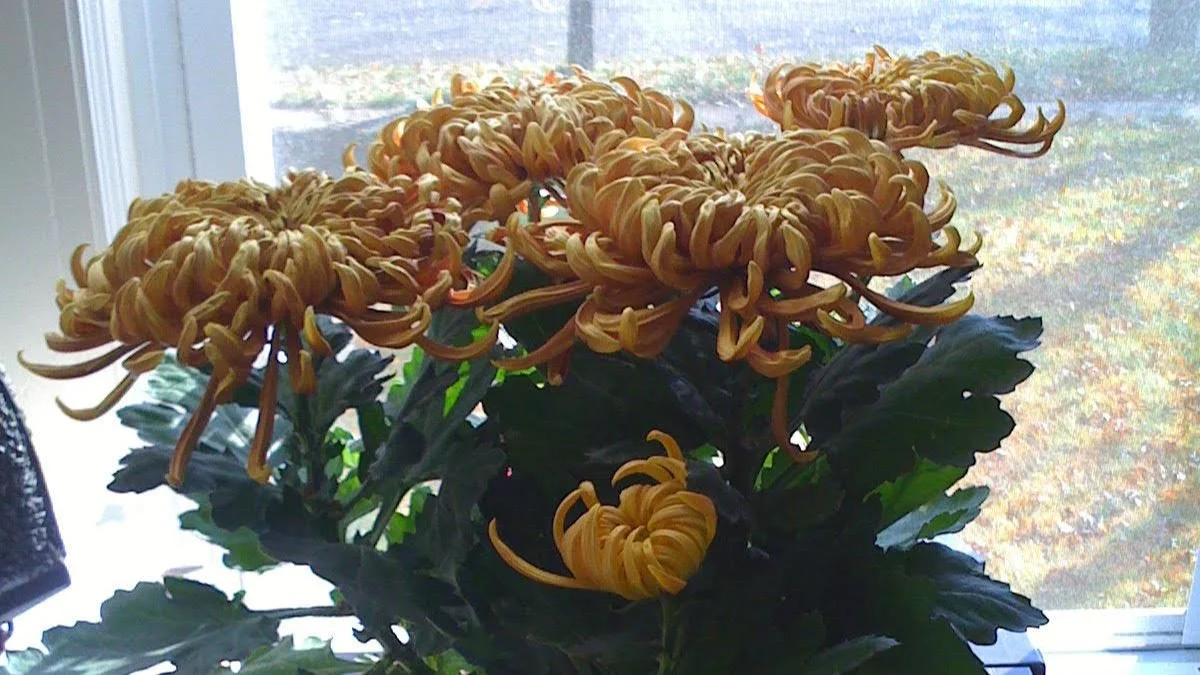
Chrysanthemum Greens 茼蒿

While warming foods are good for the season, the pitfall is overconsumption creating too much heat and stagnation in the digestive system. As such, if possible, this time of year we should also occasionally consume some foods that help very gently clear heat, open the Stomach, and descend yang (to consolidate it).  In that vein, one traditional vegetarian recipe for Great Snow is Garlic Chrysanthemum Greens. This is one of my favorite veggies, and the nice thing about this recipe is that it combines greens, which are gently cooling, with the warmth of garlic to support the Yang.

Garlic Chrysanthemum Greens 蒜泥茼蒿 

Ingredients:

  • Edible chrysanthemum greens (Tong Hao 茼蒿) ½ lb.

  • 1 small garlic bulb

  • Sesame oil

  • Salt and pepper to taste

 Directions:

  1. Rinse chrysanthemum greens and chop into 1 inch pieces

  2. Peel, crush then chop garlic

  3. Bring a pot of salted water to boil, then blanch chrysanthemum greens by immersing in water for about 3 minutes; then drain

  4. Mix greens with chopped garlic, and a small amount of salt, pepper and sesame oil to taste; serve slightly warm or room temperature

This recipe loosens the center, rectifies Qi, disperses accumulated food and opens the Stomach.

Later today in our online Qigong practice we will also start practicing the Great Snow Daoyin posture. Stay warm, and happy Winter!

Small Snow 小雪 Seasonal Node

Today as I woke, I looked outside and saw a wintry mix of snow and light rain – the first snow of any sort here this season. This is welcomed, as in New Jersey the last month has been particularly dry, and even in the suburbs there have been small fires in wooded areas. This first glimpse of snow in my area is right on time as today, Friday November 22nd, starts the Small Snow (xiǎo xuě 小雪) seasonal node. Since it seems that I haven’t posted about this seasonal node in a few years, I made it my task to do it first thing when I came into my clinic this morning.

This time of year the evenings temperatures are just above the freezing mark. Sundown is early, and by the time I head home most nights after seeing patients, it is well past dark. We are heading into the most Yin and the darkest time of year. The three smaller segments of Small Snow allude to the gradual unfolding of the new, Yin, Winter season – Rainbows Stay Hidden Out of Sight (虹藏不見), Heaven Qi Ascends While Earth Qi Descends (天氣上騰,地氣下降), and All is Blocked Up and Has Completed Winter (閉塞而成冬).

Daoyin Posture for Small Snow

Preventive health guidelines for Small Snow are similar to immediately previous seasonal nodes. The thing to focus on this segment of early Winter is to nourish the Kidneys and protect the Yang Qi. During winter we need to get a little more sleep, getting into bed a little earlier and ideally sleeping past sunrise. The Neijing tells us to, “not disturb the yang - go to bed early and rise late. You must wait for the shining of the sun (無擾乎陽,早臥晚起,必待日光).” Since at a fundamental level Kidney represents the Water phase, it is just a symbol in the body for the movement of Winter – quiescence and storage. Being a little more quiet, a little more rested, and a little more inward-directed puts us in resonance with the Qi of Winter.

Environmental cold is the main Qi for the time period from Small Snow to Small Cold (just after New Year). Cold easily harms the Kidneys, and thus nourishing Kidney and protecting the Yang (against Cold) are more or less two sides of the same coin. Trying to stay warm is one way to protect the Yang. Be sure to dress appropriately for the temperature, and avoid unnecessary exposure to cold. Moxabustion can be continued on points such as Guan Yuan REN-4 or Qi Hai REN-6. If appropriate, some patients can take small regular doses of herbs like Jin Gui Shen Qi Wan in pill form.

As the weather gets colder another pitfall is stagnation of Qi and Blood. As a result, lately in my clinic many patients have been complaining of an increase in pain and stiffness. One of the best formulas for moving Qi and Blood is to increase movement (which is why in some systems of acupuncture, such as Tung’s, we combine movement with needling). Encourage patients to engage in some regular movement activity or exercise. If the weather allows, walking outside is great, or if the weather is bad then doing some easy exercise inside is a good substitute.

Diet should also be modified to match the Small Snow node. A very simple recommendation is to take a small amount of fresh ginger every morning just before breakfast, or alternately start the morning with a light ginger tea. Ginger warms and protects the Yang, and circulates Qi and Blood internally, thus satisfying the basic recommendations previously mentioned.

Another easy idea to follow for diet is to avoid foods that create internal heat rising, and incorporate foods that are gently heat clearing and Qi descending. This may sound contradictory, but the ancient Chinese realized this time of year people are prone to eating more meat. Before refrigeration in Winter there would be less access to fresh fruits and vegetables. If people consume more meat than usual over the next few weeks (think Thanksgiving with lots of turkey and heavy desserts), they may be prone to internal heat from dietary causes. The way to counteract this is consuming just a little heat clearing and Qi descending foods. One traditional food for Small Snow that does this is daikon radish. Small amounts of bitter greens, or more salty foods are also appropriate.

Here is a traditional recipe for Small Snow…


Lamb and Daikon Soup 羊肉白蘿蔔湯

Ingredients:

  • Lamb ½ lb. (boneless)

  • Daikon ½ lb.

  • ¼ large onion

  • Ginger, cilantro, salt and pepper

Directions:

  1. Blanch lamb, drain away water and then cut lamb into cubes

  2. Place blanched lamb back into pot, add ginger and sliced onion. Cover with an appropriate amount of water and bring to a boil Simmer for around another hour.

  3. Cut daikon into cubes and add to pot, cook for another 10 minutes until daikon are translucent

  4. Remove from heat, garnish with fresh cilantro and add salt/pepper to taste


This recipe warms the stomach, supplements Qi, protects the Yang and restores vigor to a weak body.


This is the last seasonal node post before Thanksgiving here in the Unites States next week. In the spirit of this holiday, I want to express my gratitude for all of you reading this blog who form a community of medicine that I think continues each day to make a tremendous difference in people’s lives. In my opinion the world today is in a state of sickness (as we’ve seen from earlier events this month). My wish this Thanksgiving week is that we all continue to try healing the world. It is a tall order, but I think this is our task. And the task is healing on a physical level, emotional level, social level, and political level. The immenseness of this job reminds me of this quote from The Analects of Master Kong:

曾子曰:士不可以不弘毅,任重而道遠。仁以為己任,不亦重乎?死而後已,不亦遠乎?

Zeng Zi said, “a scholar-official must be determined and strong as his burden is heavy and the path long. Benevolence [towards all people] is the burden he considers as his to sustain – is it not heavy? Only with death does this burden end – is that not long?”


My wishes to everyone for a happy Thanksgiving and peaceful Winter.

Beginning of Winter 立冬 Seasonal Node

It is ironic that as we enter the dark time of the year, we are about to enter a dark time in US and world history. I hope everyone reading this is taking time to move inward to recharge and regroup. We’re all going to need it going forward.

Nelson and Enzo - Yin and Yang

This time of year is also probably the one where I feel the seasonal shift most. In the northern hemisphere the world is slowing down, darkening, and entering a stage of hibernation. All I seem to want to do is sleep a little more, walk with Nelson and Enzo my dogs, and practice Taijiquan. I also think more of family, and of the past. The inward turn of the season is something I feel viscerally.

This makes sense to me as today, Thursday November 7th we enter the Beginning of Winter (立冬) seasonal node. As of today we are only about 6 weeks away from the longest night of the year, the Winter Solstice – also aptly called the hibernal solstice. While in the modern American calendar we think of Winter Solstice as the start of Winter, in Asia the seasons are calculated by the balance of Yin and Yang in the natural environment as evidenced by the relative balance of day and night. Since Winter Solstice is the darkest time of year, it is the apex of Yin, and hence mid-winter. Therefore, the early part of November is the beginning of Winter, the time of year moving into the darkest and most Yin. It is interesting to note that in many European traditions, the Winter Solstice was also celebrated as Midwinter.

Chapter 2 of the Huang Di Nei Jing says Winter is the time of “closing and storage” (閉藏). It is the season of hibernation and represents the death phase. However, this should not be construed as a bad thing. We need to enter the phase of ultimate silence and stillness, in other words the death phase, so that Yang (and Yang is life) can be reborn again. The organ associated with the Winter is the Kidney, and the phase is Water. Keeping this in mind will help us understand the basic health recommendations of this seasonal node. 

The three Material Manifestations that make up the Beginning of Winter Seasonal Node are Water Begins to Freeze (Shui Shi Bing 水始冰), Earth Begins to Harden (Di Shi Dong 地始凍), and Pheasants Dive into the Watery Abyss to Become Giant Clams (Zhi Ru Da Shui Wei Shen 雉入大水為蜃). All three contain striking Yin images, specifically images of water, of earth, and of moving deep to a hidden and quiet place. The main environmental manifestation of Winter is cold, and East Asian medicine teaches that cold creates hardness and stagnation. Thus, as expressed in these names, both water and the soil of Earth become hard and impenetrable. 

The first suggestion for this seasonal node is to nourish and protect the Yang, or warmth of the body (養陽護陽). This is especially true for seniors, since as we age the body become less tolerant of temperature extremes. Be sure to dress appropriately for the cooler temperatures. Likewise, foods should be cooked or warmed when eating. This is not the time for copious amounts of raw vegetables, juices, or chilled foods and beverages. Soups and stews are winter foods! While in some seasons eating too many warming foods can trigger internal heat, this is less so in Winter. Why? For one, Winter is cold. Eating warming foods is necessary to counteract the exterior temperatures as they drop. Second, the natural Qi movement in Winter is inward and downward. As already mentioned, this is the time of “closing and storage.” Eating more warming foods in the Winter allows the body to secure and store that warm vitality, thereby strengthening the body for the seasons to come afterwards. Thus, eating more warming foods in Winter has fewer side effects than doing so in other seasons.

Another recommendation for Beginning of Winter is the consumption of tonics. These are East Asian herbal formulas, often in pill form, that have an overall strengthening effect on the body. The specific tonic should be determined based on individual need, but in general formulas such as Jin Gui Shen Qi Wan can be taken in small but regular doses. Additionally, in terms of Tung’s Acupuncture, we can utilize the Lower Three Emperor’s 下三皇 Dao Ma group frequently with patients, either remedially or in a Nourishing Life capacity.

Since Winter is the season of the Kidney, the third recommendation for Beginning of Winter is to safeguard the Kidney and the Jing-essence. According to East Asian medicine there are three things that really deplete the Kidney and the Jing: (1) excessive sex, (2) staying up late and getting too little sleep, and (3) losing one’s temper. Excessive sex is something that varies greatly from person to person. The question to ask patients is does sexual activity leave one feeling refreshed, or tired and worn out. If the latter, then it may be excessive. Staying up late goes directly against the movement of Winter, which is the movement of hibernation; Su Wen chapter 2 tells us that in Winter we need to get to bed a little earlier and sleep a little later, waiting until well after sunrise to get out of bed (早臥晚起,必待日光). Lastly, losing temper or having a generally angry disposition harms the Kidney. In the 39th chapter of the Su Wen it says that anger causes the Qi to rise (怒則氣上). Since the movement of Kidney is a movement of downward storage, anger forcing the Qi to rise depletes Kidney (i.e., it is the opposite movement of Kidney) and impairs the storage of Qi that is the natural and essential movement of Winter.

As more people move indoors this is the time of year for upper respiratory tract infections. Allergies are still plaguing some as well. In East Asian medicine this means that the exterior layers of the body are being challenged. A great basic acupressure to teach patients to help both expel and protect against wind evils is stimulation of Feng Chi GB-20. Massaging this point on a daily basis can help ward off colds and relax stiffness of the next and back that is a main characteristic of Taiyang patterns. If there is concurrent nasal congestion, they can also include acupressure on Ying Xiang LI-20. For this, have them hold Feng Chi on one side of the head while simultaneously pressing into Ying Xiang on the other (for example, their right hand presses right Feng Chi, while the left hand presses left Ying Xiang). Hold until there is a sensation of clearing in the sinuses, and then switch sides. Here’s a video I did of this for my own patients.


Diet for Beginning of Winter

The basic idea for Beginning of Winter diet is to focus on foods that are nourishing and supplementing agents. In general then we want to focus on foods that are warming and nourishing, usually meaning more animal products. We can incorporate foods that are slightly oilier, while still consuming in season fruits and vegetables while they last (we are in the very tail end of apple season here in New Jersey). Foods to incorporate more regularly include lamb, beef, chicken, sparrow, soybeans, sesame, wood ear mushrooms, peanuts, sweet potato, and persimmon (fresh or dried). Warming spices to use include ginger or cinnamon. And patients who are dry or have Yin insufficiency can take either cow or goat milk.

China is a land of multiple culinary traditions and thus seasonal eating recommendations vary from place to place. In the north of China people eat dumplings (jiaozi 餃子), especially those made of lamb and scallion (we’ll discuss a dumpling legend below). In the west of China where it is particularly cold people commonly eat more beef and lamb often in hot pots. In the areas of the high plateaus and mountains the weather is very dry and as such more fruits and vegetables that are still in season are consumed. In the south of China, where it is still relatively more warm even though it is Winter, duck, chicken and various types of fish are traditionally eaten now (i.e., foods that are supplementing but not overly warming). 

One simple traditional recipe for Beginning of Winter is Ginseng Congee. To make this simply put 1 cup of rice in with about 8-10 cups water (increase or decrease based on how watery you like your congee), and 9-12g of high quality sliced and dried ginseng root. Bring to a boil and then simmer for at least 40 minutes, or until the rice starts to break up to make a porridge like soup.  Another idea that is easy to implement is adding Gou Qi Zi (Goji berries; 枸杞子) to a favorite chicken soup recipe. Doing so focuses the recipe on building the blood, and strengthening the Liver and Kidney.


Zhang Zhong Jing and the legend of dumplings…

Did you know that one of our most famous historical doctors, Zhang Zhong Jing, was not only a master of herbal medicine but also a culinary innovator? According to popular Chinese legend, Zhang was the inventor of the dumpling – jiao zi (餃子). Zhang held a mid-level government position in Changsha. The year he retired from political life he did so around the Beginning of Winter seasonal node. On his travels back to his hometown he came across many people who had suffered frostbite, and as a result had lost parts of their ears. This touched Zhang deeply as he felt sorrow for the suffering of those poor folk.

Once home he found his hometown suffering from an infectious epidemic. The people were starving from lack of food, and also suffering from frostbite. To remedy this he had his assistants set up a large pot on a public square to cook up a remedy. The formula he decided on was a combination of mutton with a number of very warm cold expelling herbs known as Qu Han Jiao Er Tang (去寒嬌耳湯) – Delicate Ears Expelling the Cold Decoction. After cooking the meat was chopped up and wrapped in small wheat flour skins in the shape of ears, and then cooked more and served to the people together with some of the soup. And thus, the dumpling was born, as well as the tradition of eating them around the Beginning of Winter!

Hoarfrost Descends 霜降 Seasonal Node

I just returned yesterday afternoon from Australia where we had another fantastic class. I thought the students were all great, and I hope we were all engaged enough that I’ll return in the next year or so for more lectures. Returning home the weather was surprisingly warm for this time of year. However, although today is also unseasonably warm, starting tomorrow the temperatures here are going to drop, and at night it will be just barely above the freezing mark. This is just in time, as today, Wednesday, October 23rd, starts the next seasonal node - Hoarfrost Descends (Shuang Jiang 霜降).  

Hoarfrost Descends Daoyin Posture

We are now in the last segment of Autumn as the next seasonal node is the beginning of Winter. The days are clearly getting shorter and darker and soon here in most of the United States we go off Daylight Saving Time. When that happens the sun will be setting much earlier. The name Hoarfrost Descends refers to the frost that happens early morning when we have much colder overnight temperatures, and is derived from the Old English meaning of frost resembling an old man's beard. Anyone who lives in colder climates will know that this looks like, and this is the time of year when we start seeing it. 

The shorter 5-day segments of Hoarfrost Descends are Chai nai ji shou 犲乃祭獸 (Dholes Start to Sacrifice Beasts), Caomu huangluo 草木黃落 (Vegetation Withers and Defoliates), and Zhechong xianfu 蟄蟲咸附 (Hibernating Insects Stop Up Their Burrows). A dhole is a type of wild dog native to many parts of Asia, and the image of them sacrificing beasts is an image of the harvesting of food. Autumn is harvest time, which is why the Neijing says in many chapters that Spring Engenders, Summer Flourishes, Autumn Harvest, and Winter Stores (春生,夏長,秋收,冬藏). Interestingly, in Chinese astrology, the dog is associated with the Earthly Branch Xu (戌), which goes with the 9th lunar month (i.e., October in the solar calendar). The other two segments of Hoarfrost Descends offer additional images of the closing down and increasing Yin of the season.

The ancient text Yue Jin Qi Shi Er Hou Ji Jie says, “the Qi is solemn during Hoarfrost Descends. It is when the Yin starts to condense.” Since we are moving into the Yin and colder part of the year, the first traditional recommendation for Hoarfrost Descends is to protect against the cold and preserve internal warmth. Be sure to dress appropriately for the weather on any given day. When eating, keeping the Spleen and Stomach warm helps warm the entire body. Traditional Chinese foods for Autumn include lamb and rabbit, and this is the time to eat more stews and soups. Spices such as ginger and cinnamon can also warm the body. Hoarfrost Descends is a traditional time to take tonics. Therefore, this time of year most people can take small doses of Spleen and Stomach tonics such as the Four Gentlemen (Si Jun Zi Tang), or other similar formulas. Generally speaking, for asymptomatic people, taking tonics in pill form at a lower but consistent dose is beneficial.

While it is important to keep the Spleen and Stomach warm, since Autumn is the Metal and therefore Lung season, supplementing the Lungs and preventing upper respiratory tract infections is a key seasonal strategy. One of the traditional teas for late Autumn is called Jin Qi Hua Cha (金芪花茶). To make this tea take 5g Huang Qi and 3g Jin Yin Hua and simmer in 1 cup of boiling water for 5-10 minutes. When finished, remove the herbs and let cool to just below boiling. Add 3g of good quality Jasmine Tea and let steep for only about 2 minutes. Strain and enjoy! Alternately, this can be made with granular concentrates that approximate the same dosage of raw herbs. Jin Qi Hua Cha gently clears heat and drains fire, but at the same time it supplements and rectifies the Qi, and harmonizes the center.

In addition to herbal teas or other formulas we can continue thinking of what acupuncture points or protocols would be appropriate for this time of year. Since Autumn is still the Metal time associated with the Lungs, for generally healthy patients we can needle the Zu Si Ma (Leg Four Horses 足駟馬) Dao Ma group. This is the main group of points in Tung’s acupuncture for the Lungs. It also can treat chronic sinus congestion or nasal dryness associated with seasonal allergies. For other allergy patients (a common complaint still) consider adding in point such as San Jian LI-3 or Mu (木穴11.07).

One traditional recipe for Hoarfrost Descends is Angelica and Ginger Lamb Stew (Dang Gui Sheng Jiang Dun Yang Rou 當歸生薑燉羊肉).


Angelica and Ginger Lamb Stew

Ingredients: 

  • 1lb. Boneless lamb meat, cut into cubes

  • 6-8 cups water, vegetable stock, or chicken broth

  • 20g Chinese Angelica (Dang Gui 當歸)

  • 15g Fresh ginger root (peeled and sliced)

  • Cooking oil (peanut oil is traditional)

  • Black pepper

 Directions:

  1. Coat a thick metal pot with some cooking oil and heat over medium flame. Place cubed lamb meat in the pot and brown.

  2. Add water (or broth), angelica and ginger. Bring to a boil and then reduce to a medium simmer (other vegetables can be added as desired).

  3. Cover part way with a lid and simmer for about 90 minutes. Add black pepper and salt to taste.

  4. Remove Angelica before eating (or just eat around it!). Ginger can be eaten.


This dish warms the yang and scatters cold, moves Qi and quickens the Blood – the perfect recipe for the season!

Stay warm and stay healthy. Next blog posts will be for Winter…

Chong Yang Festival 重陽節

Although I usually blog about seasonal shift, sometimes it’s interesting to look at traditional Chinese festivals. Chong Yang Festival 重陽節, also known as the Double Ninth Festival, is celebrated on the 9th day of the 9th lunar month. This year, 2024, that falls on today, Friday October 11th. This is also a great reminder that the Chinese calendar is both a lunar and a solar calendar. For example, traditional holidays such as Double Ninth Festival and the Lunar New Year are celebrated on days of the lunar cycle. However, seasonal changes, such as the 24 Seasonal Nodes, are calculated based on the solar calendar.

The Double Ninth festival has its roots in traditions that date back over 2,000 years. It's a time for people to celebrate longevity and pay respects to the elderly, as the festival has come to symbolize good health, long life, and respect for the aged. Traditional activities include:

  • Climbing mountains: This is the most iconic custom. Climbing is symbolic of warding off disease and seeking higher aspirations.

  • Drinking chrysanthemum wine: Chrysanthemum flowers are considered to have cleansing and health-boosting properties. Like other medicated liquors, chrysanthemum flowers are steeped in some sort of grain alcohol to produce this drink.

  • Wearing Shan Zhu Yu 山茱萸 leaves: Shan Zhu Yu (Cornus; Japanese dogwood) was believed to have protective powers against illness and evil spirits.

  • Visiting graves: Double Ninth is also a time to remember and honor deceased ancestors, much like the Qingming Festival 清明節 in spring.

Relationship Between Chong Yang Festival and East Asian Medicine

Chong Yang Festival is closely linked with East Asian medical principles that emphasize balance and health maintenance. The autumn season, when the festival is held, marks a transitional period in nature, which according to traditional medicine, is a critical time to focus on strengthening the body and preventing illness.

  1. Climbing mountains reflects the belief in promoting physical health and the prevention of ailments through exercise.

  2. Chrysanthemum: The consumption of chrysanthemum wine during the festival is significant as chrysanthemum is known to have cooling, anti-inflammatory, and detoxifying properties. It is often used in formulas to treat colds, fever, and eye disorders.

  3. Shan Zhu Yu (Cornus officinalis): The practice of carrying or wearing Shan Zhu Yu leaves also reflects East Asian medicine’s preventive approach to health. Shan Zhu Yu is used for treating Kidney and Liver vacuity, strengthening yang, and warming the body to guard against autumn-related ailments.

These traditions emphasize the broader East Asian medical approach to seasonal health, prevention, and maintaining a harmonious balance between the body and the environment.

Cold Dew 寒露 Seasonal Node

This fall I’ve been back to teaching and we’ve run some great classes first in Ireland, and then later for ASNY in New York City. It’s really great getting back to in-person classes. Our next European class is planned for February where we will be doing a look at Tung’s acupuncture for reproductive health and a look at Neijing and Nanjing treatment strategies in Tung. More details to come soon on those classes.

Right about now, here in the Northeastern United States fall is definitely underway. The leaves are slowly starting to change color and the evening temperatures are steadily dropping. This is right on time as yesterday, Tuesday October 8th, was the start of the Cold Dew (Han Lu 寒露) Seasonal Node. The smaller segments of Cold Dew are Hongyan lai bin 鴻雁來賓 (Swan Geese Come and Stay), Jue ru dashui wei ge 爵入 大水爲蛤 (Siskins Dive Into the Watery Abyss to Become Clams), Ju you huanghua 菊有黃華 (Chrysanthemums Display Yellow Flowers).

Characteristic of Cold Dew is the significant difference between day and night temperatures. For example, lately the daily highs in northern New Jersey have been hovering near 70 degrees, while evening temperatures are dropping to the 40s. That’s about a 30 degree temperature difference! This time of year people have a hard time dressing appropriately for the temperature because what we feel in the morning is not the same as what we feel in the afternoon. The best solution is layering so that one can adapt to the changing thermometer as the day progresses. This is especially important for the elderly, or for other people who, because of either constitution or illness, have diminished toleration for extremes of temperature.

Because of the gradually cooling temperatures, one of the recommendations for Cold Dew is to avoid overconsumption of cold foods, including for example raw vegetables, iced beverages, or foods eaten right out of the refrigerator. Overconsumption of cold foods, especially in patients with weak Spleen/Stomachs, easily leads to abdominal discomfort or diarrhea. These people should drink warm beverages including for example ginger tea (adding honey to protect against Autumn dryness).

For acupuncturists, this is the time of year to do direct moxa on Zu San Li ST36 for patients in order to warm the center. In my clinic I prefer direct Japanese style rice grain moxa, and I believe that clinically this is the most effective way to do moxibustion on Zu San Li. Alternately, direct moxa can be applied at Huo Fu Hai 33.07. If patients are particularly sensitive to exterior cold, or if they are prone to seasonal allergies and upper respiratory problems, then adopt the strategy of warming the surface. For this needle points such as Ling Gu 22.05 and Dai Bai 22.04, in combination with direct moxibustion at Da Zhui DU14.

One of my favorite things this time of year is apples! All sorts of varieties are now commonly available. According to Chinese medicine apples are sweet and sour and have a slightly cold nature. Therefore, regular consumption helps generate fluids, stop thirst, and moisten the Lungs. Since dryness is the seasonal characteristic of Autumn, these functions make apples great for this time of year. However, since apples are cold, as mentioned above, overconsumption of raw apples can lead to digestive upset for some people. Moderation is always the key.

Like apples, other foods that are slightly moistening or sour can be eaten during Cold Dew, but also like apples they should be eaten in moderation. Moistening and yin nourishing foods include Chinese red dates (da zao 大棗), walnuts, chestnuts, yams, peanuts, Chinese white wood ear mushrooms, and lily bulbs. Slightly sour foods include hawthorn, lemons, grapes, pomelos, grapefruits, star fruits, and other similar fruits.

Here is a traditional recipe for Cold Dew…

Cold Dew Congee 寒露粥 

Ingredients:

  • 100g Rice

  • 30g Lily bulb 百合

  • 20g Lotus seeds 蓮子

  • 4-6 dried red dates 紅棗

  • 10g Gingko nuts 銀杏

  • 8-10 cups water

Directions:

  1. Put all ingredients into a large pot, bring to rapid boil on high flame

  2. As soon as boiling, reduce to medium and simmer for 40 minutes to 1 hour, until rice starts to break up and become oatmeal-like

  3. Add sugar, or honey to taste

This recipe moistens the lungs, stops cough, clears the heart, quiets the shen. Being a congee it is also warming and supplementing for the middle jiao.


Additional Nourishing Life 養生 Practices for Cold Dew

Since I practice a lot of acupuncture I’m predisposed to liking Nourishing Life practices that work directly with the channels or acupuncture points. So, I’d like to offer some other ideas we can apply during this seasonal node.

Cold Dew is the segment of the year just after Autumn Equinox. It is a part of the time of year represented by the Xu (戌) Earthly Branch, and the phase Yin Soil (i.e., earth) as the transition period at the end of Autumn heading towards Winter. This is the time associated with the Arm Jueyin Pericardium channel as well as the fifth cervical vertebra.

One of the problems we come up against during Cold Dew is the decreasing temperatures, and especially the increasing gap between day and evening temperatures. Since cold is associated with the Water phase, even though Cold Dew is the Pericardium channel time, the Water phase channels (the Bladder and Kidney) are susceptible to problems. In particular, exposure to cold in the evening can cause stagnation in the Qi and Blood circulation of the upper back, leading to stiffness and tightness or pain. Legs can also be affected, likewise experiencing stiffness or pain. So, with all that in mind, here are some easy Nourishing Life practices for Cold Dew:

Rubbing the Bottom of the Feet: The bottom of the foot is home to the first point on the Kidney Channel, Yong Quan (湧泉穴). Yong Quan is located just behind the ball of the foot and sometimes it is known as the “Great Medicine” (大藥) at the bottom of the feet. Once or twice a day rub the bottom of the foot over the area of Yong Quan 100 times. This warms and stimulates the Kidney channel, and can be used to treat forgetfulness, insomnia, low back pain, and internal cold.

Soaking the Feet: Soaking the feet in the evening is another excellent way to warm the channels of the feet and legs, and it is a second method of working with Yong Quan. One of my common recommendations for Cold Dew is soaking specifically with Epsom salts. To do this, dissolve Epsom salts in hot water and soak feet each evening for 10-15 minutes. Like the previous method of rubbing the bottom of the feet, soaking warms and stimulates the Kidney channel, and can be used to treat forgetfulness, insomnia, and low back pain. For added therapeutic effect, Chinese herbal formulas can be added to foot soaks based on an individual’s pattern differentiation. For example, patients with Qi vacuity can soak with herbs such as Dang Shen, Huang Qi or Bai Zhu. Patients with Kidney vacuity low back pain or the like can soak with Du Zhong, Xu Duan, and Sang Ji Sheng.

Acupressure at Wei Zhong: Weather change and exposure to cold, as mentioned, can create stiffness in the back or legs. One of the master points for increasing Qi and blood circulation in the back and legs is Wei Zhong (委中穴; BL40), located at the back of the knees. While seated, press deeply into the point on both sides simultaneously, until a slightly sore or numb sensation is felt and hold for a few seconds. Release pressure (one press and release equals one stimulation). Stimulate 25-50 times in a sitting. Optionally, medicated liniment or medicated oils that warm the channels, expel cold, and move the Qi and blood can be used while pressing the point.

Fire Cupping the Upper Back: The last traditional recommendation I’ll offer for Cold Dew is the use of fire cups on the upper back. Fire cupping (火罐) can warm and expel cold, resolve the exterior, and course Qi and quicken blood in the channels. When done on the upper back it relieves stiffness in the muscles as well as prevents colds. However, after cupping, be sure not to leave the area exposed. Common points to cup include Jian Yu (肩髃穴; LI15), Jian Jing (肩井穴; GB21), and Tian Zong (天宗穴; SI13). Another area to cup is the back of the neck, as the fifth cervical vertebra is associated with Cold Dew. Just as with the previous recommendation, cupping can be done after the application of a medicated liniment or oil.

Stay warm, stay healthy, and eat lots of apples!

NYC Class this Weekend!

This Sunday, September 29th, I’ll be in NYC teaching what I hope will be a really interesting class on the analysis of point functions.

Here’s the problem… Most acupuncturists are taught acupuncture points through memorization of point actions without engaging with an in-depth understanding of why points do what they do. To remedy this, our class will provide an understanding of acupuncture points by combining Tung's acupuncture concepts and classical Chinese Medicine principles based on texts such as the Neijing and Nanjing. We will explore key acupuncture points and indications to establish a framework for analysis, allowing participants to move beyond mere memorization. Additionally, we will begin a discussion of strategic point combination and how this enhances treatment. This class will be an excellent introduction to Tung’s principles using points all acupuncturists already use on a daily basis, and it will also be useful for practitioners already familiar with Tung’s points.

Join us if you can. Click on the photo to go to registration information. Seats are limited and running out fast!

Happy Mid-Autumn Moon Festival 中秋節快樂

Today, Tuesday September 16th, is the Mid-Autumn Moon Festival, a festival held on the 15th day of the 8th lunar month each year. It is celebrated all throughout Asia, including in China, Japan, Korea, and Vietnam. The Mid-Autumn Moon always falls on a day of the full moon, and originated as a harvest festival that has been celebrated as far back as the Shang Dynasty (1600-1046 BCE).

As a harvest festival it is a time of family gathering, thanksgiving and prayer. One of the favorite foods of the holiday is mooncakes. These are tasty round pastries usually filled with sweet pastes made from lotus seeds or dates. Sometimes they also contain other things such as seeds, nuts, or salted egg yolks.  The round shape of the cakes mimics the shape of the full moon, and the round shape also symbolizes completeness, fullness, and therefore, family harmony and reunion.

Aside from these associations with mooncakes, they also are connected to an interesting political story. During the Yuan Dynasty (1271–1368 CE), when Mongol rulers controlled China, Chinese revolutionaries, led by Zhu Yuanzhang (who later founded the Ming Dynasty), used mooncakes to secretly plan their uprising. According to legend, they hid messages inside mooncakes instructing people to rebel on the night of the Mid-Autumn Festival. This clever strategy helped coordinate a successful revolt against the Mongols, making mooncakes a symbol of unity and resistance in Chinese history.

I'd like to wish everyone a happy Mid-Autumn Moon festival and express my gratitude for being part of your extended family!

Point Functions and Indications

Did you know that traditionally, Lung 5 did not clear Lung Heat? Ok, ok…. To be fair, it did clear Lung Heat, but the association of Lung 5 with a specific function, or any acupuncture point for that matter, is something modern. 

What I am talking about here is the difference between a point function or action (功效) and a list of indications (主治). While in modern textbooks each point is described in terms of actions and indications, this was not the case historically. For example, in Deadman, Lung 5 is said to: clear heat from the Lung and descend rebellious Qi, regulate the water passages, activate the channel, and relax the sinews. Indications on the other hand are specific disease or sign/symptoms. For Lung 5 these would include cough, coughing phlegm, dyspnea, nosebleed, pain in the arm and shoulder, etc… The list is long. However, while these are present in modern textbooks, traditionally only the indications would have been listed, not actions. I’m actually old enough to have gone to school before books like Deadman’s Manual of Acupuncture. We just had Chinese Acupuncture and Moxibustion (affectionately known as CAM). And, in CAM, there are NO actions – only indications. In this sense, CAM is much closer to how pretty much all books were written historically. Points are given a location, needling or other treatment recommendations, and then a list of indications.

Point actions were, as Deadman points out, mostly something developed after World War II. Now, this did not happen of course ex nihilo. Point actions were deduced by looking at larger themes hinted at by point indications. Moreover, point categories were historically given actions. For example, Ying-Spring points were said to treat body heat. That’s a point action. Yet, in the 20th century all points were eventually described in text books as having actions. This is why Deadman and Al-Khafaji in their Manual of Acupuncture (1998) say, “In general, it can be said that the ascribing of actions to acupuncture points is a modern (i.e. 20th century) practice, and one that draws from the Chinese herbal medicine tradition.” As they point out, this was partly done to help integrate acupuncture with the practice of herbal medicine, the dominant form of Chinese medicine in China both at that time, and today.

To be clear, I’m not implying that I think actions are a bad idea. I think for beginning students they are a good summary that can help with ease of understanding when points can be used. But… (there’s always a but) in my opinion they sometimes over simplify points. For example, when we look at Lung 5, other traditional indications include diarrhea, abdominal distension, and vomiting. Lung 5 also has knee pain and lumbar pain on the list! These indications are not as easily understood through the lens of point actions. To do so would need some significant extrapolations and mental gymnastics. Yet, by looking at indications and deeply analyzing them we can see much larger ranges of what points treat beyond the actions that while useful for beginners, can be limiting for the more experienced clinician. Deeper analysis of indications also elucidates the myriad connections in the body between the five phases, different organs, channels, and tissue systems.

 Over the last few years this topic has been of particular interest to me, and has been useful for both my understanding of Tung points as well as regular (i.e., conventional) points. If anyone is interested in exploring this topic with me, my next two classes will be devoted to analyzing point indications for conventional acupuncture points.  

September 20-22 I will be teaching for 3 days in Dublin, and during that class we will cover single point analysis as well as point combination. And again, unlike most of my lectures, the topic will not be Tung points but rather conventional acupuncture points. People interested in this class (there’s still room left) can contact the course organizer in Dublin for more information and registration.  

After that on Sunday, September 29, ASNY is sponsoring my class in Manhattan where we will do a shorter analysis of conventional acupuncture points. Both of these are excellent opportunities to deepen understanding of the full range of both how and why points do what they do.

Below please find an excellent video that our friend Lorraine Wilcox did on the topic of point functions and indications. I hope to see some of you either in Ireland or NYC!

Beginning of Autumn 立秋 Seasonal Node

By all accounts it has been an incredibly hot and humid summer here in the Northeastern United States. After some intense rain yesterday though, we have what will probably be a short break in the heat (but not humidity). I’m not sure what the rest of August will bring, but we’re enjoying the cooler air for the time being. a very hot July, it’s nice to have August be a bit more seasonable. 

Even if it doesn’t last the rest of the month, this year again the slight cooling is on time as today, Wednesday August 7th, is beginning of Autumn (and the seasonal node of that same name) in the traditional calendar. Although in the modern western world August is a summer month, the Chinese calendar is concerned with the relative balance of Yin and Yang in the natural environment over temperature as a marker of the seasons; this is closely tied to day length. Summer Solstice in June was the longest day of the year. By now the days are getting gradually shorter, and we are only 6 weeks away from the Autumnal Equinox, a day of balanced light and dark. Therefore, even though August weather can still be hot we are in the time of growing Yin and contraction in the natural environment.

In the Lü Shi Chun Qiu (The Spring and Autumn Annals of Lü Bowei; 呂氏春秋), the classic text of Chinese philosophy from the 3rd century BCE, it is said that the Emperor Shao Hao (少昊), and his son Ru Shou (蓐收) are the sovereigns associated with the three months of Autumn. This obscure statement sheds tremendous light on the essence of Autumn, and eventually allows us to understand how to stay healthy this season. 

According to some legends (since they do vary), Shao Hao was one of the Five Emperors (五帝) of ancient China. His mother was a weaver goddess who fell in love with the planet Venus, and the result of that union was Shao Hao. Together with his son Ru Shou, Shao Hao settled on Chang Liu Mountain where they ruled over the Western Heavens and controlled the setting of the sun. Remember, the west is associated with the Metal phase, and therefore Autumn. Certainly, Autumn is the time of year that corresponds to sunset during the day, and in Chinese astrology Venus is the planet of the Metal phase, and thus too corresponds with Autumn. Even the son’s name, Ru Shou, has the word “shou” (收) within – the word meaning “to harvest” or “to collect,” an attribute of Autumn. The Neijing says that when we move and behave in a way that allows us to resonate with Autumn, we are in the state of Nourishing the movement of Harvest (養收).

In early Autumn (August is the first month of the season) we experience the ongoing but very gradual shift to shorter days and, eventually, cooler temperatures. In other words, we are shifting more and more to the Yin phase of the year. Yet, August in particular can still be damp and humid. It is also the time of tropical storms which bring moisture and wind – an external event. In Chinese medicine, weakness in the Spleen and Stomach leads to damp accumulation – an internal event. In early Autumn we therefore should avoid dampness externally and simultaneously strengthen the digestive organs internally. One way to accomplish this is to eat light and clear foods, increase the amount of seasonal vegetables, and eat a little less meat. Vegetables can be consumed lightly steamed or stir-fried, or in the case of light salad greens, raw. In general avoid overly hot, spicy foods. Congees are appropriate to help strengthen the digestive organs and one traditional congee recipe for this seasonal node is Euryale Seed and Discorea Congee (Qian Shi Shan Yao Zhou 芡實山藥粥).


Euryale Seed and Discorea Congee (Qian Shi Shan Yao Zhou)

芡實山藥粥 

Ingredients:

  • 1 cup rice (use glutinous rice if available)

  • 200g Euryale seed (Qian Shi )

  • 200g Discorea (Shan Yao )

  • 200 g sugar

 Instructions:

  1. Grind rice, Euryale seed, and Discorea to a powder. Mix the three together with sugar and blend well so evenly mixed

  2. In a pan, add 50 – 100g of blended powder to cold water, enough to make a thick soupy consistency

  3. Put over medium flame and warm for several minutes, stirring occasionally

  4. Enjoy in the morning on an empty stomach (consume warm)


This congee strengthens the Spleen, stops diarrhea. However it is contraindicated for patients with diarrhea due to infections, or with damp heat type diarrhea.


In addition to dietary recommendations we can perform acupressure on supplementing points such as Zu San Li (ST-36). If patients tend to cold and vacuous patterns of the Spleen and Stomach, gentle direct thread moxa at Zu San Li is also applicable. According to the noted moxibustion scholar Lorraine Wilcox, the time around the beginning of Autumn is also a special time for applying prophylactic moxibustion in an effort to strengthen the body for the cold season to come. Those familiar with Tung’s acupuncture can needle the Zu San Tong (足三通) Dao Ma group, consisting of Tong Guan 88.01, Tong Shan 88.02 and Tong Tian 88.03. These points are the main Dao Ma group for Heart, but really they function like Pericardium channel points, which is why they are indicated for Spleen and Stomach problems. Furthermore, in terms of Five Phase theory, supplementing Heart will strengthen Spleen because of the engendering cycle relationship between Fire and Soil-Earth.

Autumn is the season associated with the Lungs, and thus even though we should avoid very spicy foods, mildly acrid foods are good this time of year for Lung function. These foods include ginger, scallion, leek, and black pepper. Mildly sweet and slightly sour fruits also help moisten and benefit the Lungs, including the now in-season stone fruits (i.e., plums and peaches). This recommendation however should be based on individual patient characteristics. For example, if patients have Spleen vacuity with dampness they should avoid overly sour foods.

As August continues and into September as the weather does become cooler, we need to be cautious of sudden returns of very hot and humid weather, a common weather pattern here in New Jersey. In Chinese this is called “The Old Tiger of Autumn” (Qiu Lao Hu 秋老虎). When the old tiger rears its head again Summerheat pathogens are a risk – symptoms of this include headache, dizziness, nausea or vomiting, poor appetite, stuffy chest, heavy or fatigued limbs, and possibly diarrhea. If intense hot and damp weather returns, focus the diet on foods that are cooling and moistening. Foods to consider adding on a daily basis include all sorts of sprouts (e.g., mung bean or alfalfa), cucumbers, muskmelon, winter melon, tomato, and loofah. Mung beans are very cooling, and in hot weather they can be made into a sweet dessert soup. For more serious conditions consider giving patients formulas such as Huo Xiang Zheng Qi San.

Here’s a formula from the Zun Sheng Ba Jian (遵生八箋) – the Eight Treatises on Following the Principles of Life. Written by a scholar by the name of Gao Lian at the end of the Ming Dynasty (1368-1644), the text is an almost encyclopedic collection of all manner of Nourishing Life (養生) recipes, techniques, theories, etc… One of the formulas specifically for Autumn is called Conserve the Spleen Pill (攝脾丸). It treats damage to the Spleen that happens during the Autumn months that leads to abdominal distension and diarrhea. The ingredients listed are Mu Xiang, He Zi, Hou Po (ginger fried), Wu Bei Zi (slightly toasted), and Bai Zhu (earth fried). These ingredients would be ground to a powder and made into pills the size of a Tung Tree seed, and 10 pills would be a daily dose.

I hope everyone is having a great end of Summer and start of Autumn!

Ghost Month 2024!

Yes, it’s that time of year once again! Today is the day in the traditional calendar that that Yama 閻王, the King of Hell, opens the gates of the hell realms, allowing the spirits of the deceased to wander the earth – basically a one-month vacation for ghosts. This is Ghost Month, the 7th month of the Chinese lunar calendar.

This supernatural sojourn lasts until the end of the lunar month (the 8th lunar month starts on September 3rd), when the gates of Hell are once again closed. The culmination of the month is the 15th lunar day (this year on August 18th), which is known as Zhong Yuan Jie (中元節).

Throughout this month there are many taboos that Chinese culture observes. These include not allowing the elderly, the very young or generally physically weak people to do various activities outside at night. This is the time of day when ghosts are most active! Qigong should also not be practiced outside late at night during this time. Since I personally usually practice outside in the evening, during Ghost month I skip Qigong and practice martial arts such as Baguazhang instead. Martial arts are traditionally used to ward off mischievous spirits, which is why martial arts demonstrations often accompany displays such as Lion Dancing that are used to consecrate businesses, or exorcize negativity in a building or other location.

Whether or not we believe that this month is the time of ghosts, what this custom perhaps does is remind us of how the natural balance of Yin and Yang is shifting in a very real way this time of year. Not long ago we came to the beginning of Autumn in the East Asian calendar. Even though days are still hot in August, it is true that we are in the early part of the Yin portion of the year. After the Summer Solstice the days start to slowly get shorter. By August here in northern New Jersey plant growth is mostly over. Even the grass is growing more slowly than before. In the environment we are seeing a significant increase in dampness and humidity – and water is a Yin substance. Thus, one of the main pathological environmental factors our patients now complain of is dampness, or summerheat-dampness (a combination of pathogenic Yin and Yang together).

When I look at customs like the ghost month, I see other interesting health recommendations, such as the prohibition against activities outside in the evenings. Ghosts or not, there are so many mosquitoes and insects outside that there’s no way I can practice slow moving exercises like Qigong outside! These types of insects, as vectors for disease, can cause serious problems in people who might be more vulnerable – such as the elderly, the young, or the sick.

Other health recommendations this time of year also focus on counteracting the growing Yin. In some parts of China around the time of Summer Solstice there is the custom of hanging herbs such as Ai Ye and Shi Chang Pu above doors. Both Ai Ye and Shi Chang Pu are aromatic, and the aromatic nature is Yang that can disperse Yin influences as well as ward off insects.  Some people will also put powdered Xiong Huang (realgar) at the bottoms of doors to keep bugs out of the house (realgar is a very toxic medicinal).

In terms of internal herbal medicine, this is the time of year when a lot of patients benefit from formulas such as Huo Xiang Zheng Qi Tang. This formula contains aromatic and Qi moving medicinals such as Huo Xiang, Hou Po, Chen Pi and Bai Zhi to transform damp. It also includes medicinals that likewise strengthen the Spleen so as to allow for normal movement and transformation (the Yang functions of the Spleen). This idea of expelling the Yin and supporting the Yang is the same principle underlying the use of San Fu moxa (see previous blog posts).

So, please be careful out there and avoid the Yin, ghosts or not. But, just to be sure, I for one will be burning some joss paper outside later today to appease some ghosts!

Preparing for the Seasons to Come – A Medicated Liquor

One of the maxims in Chinese medicine is that it is usually best to treat disease before it arises, and part of that is being well prepared ahead of time. The second chapter of the Su Wen says, “Thus, the Sages did not treat disease that were already manifest, they treated disease that had yet to arise. They did not treat what was already in a state of disorder, they treated before disorder arose” (是故聖人不治已病,治未病,不治已亂,治未亂). It goes on to explain that doing this was akin to digging a well after one is thirsty, or forging weapons after war has already broken out. Both are too late to do as much good as possible.

In this spirit we can use this time of year to start preparing formulas to use in a few months, once the weather becomes cold again. A very traditional format of herbal formulas that is particularly suited to the colder weather is medicated wines (also called medicated liquors since they are made with distilled spirits, not actual wines). Ethyl alcohol is warm, acrid and sweet. This combination means that it can warm and course the Qi and Blood, as well as supplement at the same time. When herbal formulas are prepared in alcohol (i.e., ethanol) the functions of the ingredients are amplified in this therapeutic direction.

One very useful formula that we can start preparing now for use in colder weather is Song Ling Tai Ping Chun Jiu (松齡太平春酒), a formula I will simply translate into English as Great Harmony Eternal Spring Wine. Here are the ingredients…


Great Harmony Eternal Spring Wine

Ingredients:

  • Shu Di Huang 250g

  • Dang Gui 125g

  • Hong Hua 15g

  • Gou Qi Zi 125g

  • Fo Shou 15g

  • Gui Yan Rou (i.e., Long Yan Rou) 250g

  • Song Ren (pine nuts) 125g

  • Fu Shen 50g

  • Chen Pi 25g

Directions:

  • Choose as best quality possible for each of the above medicinals. Place in a clean wide-mouthed jar with about 2.5 liters of vodka, or another distilled spirit of similar alcohol content. Allow the medicinals to soak for at least a month (although up to three months is preferable). Periodically the mixture be stirred with a clean spoon, or simply shaken a little to agitate the liquid. Once ready, take one or two shots per day as a dosage (spread out if two).


This formula was a favorite of the Emperor Qianlong (1711 – 1799; r. 1735 – 1796), one of China’s most important Emperors and one of the longest reigning monarchs in world history. The formula, crafted by Imperial physicians, was one of the Emperor’s longevity tonics. While we find a few variations on the formula today, in general the major ingredients and thus therapeutic thrust of the formula is the same. Overall the formula strengthens the Spleen, benefits the Qi, and nourishes and quickens the Blood. It is contraindicated for patients with significant internal heat patterns, and for those who normally cannot consume alcohol.

The very interesting name of the formula is deserving of a short discussion. The first word Song (松) means a pine tree, and the second word Ling (齡) means years of age. At first glance this is an odd combination of words – age of a pine tree. Put together it is a reference though to long life. The pine, as an evergreen, is a symbol of enduring life and youth, which is why pine nuts are seen as a longevity food. These two words are also reminiscent of the Chinese phrase Song He Yan Ling (松鶴延齡) – “live as long as the pines and cranes.” Both of these are powerful symbols of longevity in Chinese culture. Finally, going back even to the works of Confucius, in the Analects there is a passage that says, “The Master said, "When the year becomes cold, then we know how the pine and the cypress are the last to lose their leaves” (子曰:歲寒,然後知松柏之後彫也). Thus, in old age (when the year becomes cold) it will be apparent who maintains youthful vigor. We know from history that Emperor Qianlong certainly did!

I hope everyone is staying cool and dry, and that we are all thinking of how we can start preparing for the colder months a little ways off in the future.

Minor Heat 小暑 Seasonal Node

It turns out that this June was the hottest on record yet, and that means that 2024 may be one of the hottest overall years. The change in climate is palpable in almost all parts of the world, yet unfortunately there are still climate change deniers putting everyone at greater risk.

In terms of seasonal shift in the northern hemisphere, we are entering the hottest time of the year and just a few days ago on July 6th we started the Minor Heat (Xiao Shu 小暑). This seasonal node marks an important change in the movement of Qi in the natural world. Summer Solstice (Xia Zhi 夏至) began the transition from Yang-expansion to Yin-contraction in the environment. Therefore, Minor Heat is the first seasonal node in the nascent Yin time of the year. However, although we are transitioning into the Yin time of the year, it is still hot and getting hotter. Weather change happens slowly. Think of it like a train barreling ahead at high speed. Once the conductor decides to stop the train and put it in reverse, she first puts on the breaks. Even though the breaks are applied, it takes several hundred feet before the train actually stops. Only then will it very slowly start moving in reverse. The movement of the seasons is just like this. Once we have flipped the switch from Yang to Yin, the weather still continues to warm for some time before the very slow movement in the opposite direction begins.

The smaller segments of the seasons for this Node are Warm Winds Arrive (温風至), First Lotuses Blossom (蓮始開), and Hawks Learn to Fly (鷹乃学習).  These three are the traditional Japanese version of the mini-seasons. The Chinese version is slightly different, with the second being called Crickets Take Up Residence in Walls (蟋蟀居壁).  Personally, I’d rather have lotuses rather than crickets invading my house!

The most important “to do” recommendation during this time is to nourish the Heart by maintaining an optimistic outlook – something I’m personally trying to do despite what I mentioned in the introduction above. Why is this? June and July are the months associated with the Fire phase. Also, if we overlay the 12 time periods of the day with the 12 months of the year (i.e., the 12 two-hour periods of the day that each correspond to one of the primary channels), June is the time of the Heart channel and July the Small Intestine channel - both are Fire. Since this is the Fire Phase time of year, it is the time of the Heart Zang. We nourish the Heart by keeping a calm mind and being optimistic. Pessimism or other negative emotional states can lead to patterns such as Liver stagnation, which in turn can transform into heat and harass the Heart. We can also nourish the Heart and regulate the Fire phases by doing some specific Qigong exercises (we are doing some of these in our online practice sessions).

As mentioned above, the first 5-day period of Minor Heat is known as Wen Feng Zhi (溫風至), - Warm Winds Arrive. This certainly describes what is happening in the weather right now, especially in the Northeastern United States! The weather has been hot and humid. Therefore, we need to be careful about environmental dampness damaging the body. As clinicians we should instruct patients who are prone to damp patterns on how to eat, dress, etc… In this light the main “to avoid” this time period is undue exposure to cold and excessive consumption of cold items (both cold temperature and cold thermal nature). While it may seem logical to be in cold places in cold weather, there is certainly a problem in the west with using air conditioners to cool rooms to temperatures lower than we’d feel comfortable with in winter! Furthermore, the overconsumption of cold (and especially cold and sweet) food and drink damages the Spleen leading to more damp accumulation. Instead, we should drink beverages that are cooling, as well as either bitter (to drain), or acrid (to move). This will cool the body without developing damp stagnation. Examples include green teas, or chrysanthemum and mint herbal teas. In China summer is the season to drink green teas such as the famous Dragon Well – Long Jing Cha 龍井茶.


Diet for Minor Heat

Because now is the time of significant dampness and heat, in general we should consume foods that are cooling and either bitter or acrid (which can drain damp). For example, this is the time of year to consume in-season fresh greens. In addition to chrysanthemum and mint we can also consume lotus leaf tea; lotus is a plant with a summerheat cooling nature that is also slightly bitter to drain heat and dampness. Advise patients to sip fluids throughout the day so they don’t dehydrate rather than drinking copious amounts of iced beverages all at once that may exacerbate damp conditions. If patients have damaged fluids, they can consume cooling and moist vegetables (such as cucumber) or fruits (such as watermelon).  

One traditional recipe for this time of year is congee made from Yi Yi Ren (pearl barley) and adzuki beans. This basic combination is mild and neutral in temperature, and both the Yi Yi Ren and adzuki beans drain dampness. Yi Yi Ren strengthens the Spleen and adzuki beans clear heat as well.

This time of year it is also a great idea to start preparing herbal formulas that will be used in the colder weather. One of my next blog posts will discuss making a medicated wine for the cold seasons to come.

Book Review: Exercise Prescription in Sui China (581 – 618 CE)

I’ve been behind on books I’ve been wanting to review, so I figured that I’d kick things off again with a review of my newest acquisition, and then I’ll work backwards to some other East Asian medical texts and then some more books on martial arts. So, enjoy this review, and hang on for more to come soon!


Exercise Prescription in Sui China (581 – 618 CE)

By, Dolly Yang and Mugen Chiang

Purple Cloud Press, 2024


I initially became interested in East Asian medicine through my own practice first of martial arts, and then later my introduction to and subsequent engagement with body centered practices such as Qigong. To me, these played a big part of my own views and practice of East Asian medicine. In my own training at the New England School of Acupuncture we did have an all too short class on Qigong, but while there I was surrounded by other people for whom internal martial arts and Qigong were essential to their own version of East Asian medicine, such as my friend and mentor Rene Navarro. Yet, as I started teaching East Asian medicine outside of the New England area, it became clear to me how very limited most acupuncturists’ exposure to movement therapies was. For example, for several years I taught a combined Qigong / Taiji course at the Pacific College of Health and Science in New York, and there, students got a single 28 hours long class as their only real exposure to these arts during the almost 4 years of their master’s degree!

As a result of all this, one of my personal interests is improving the teaching of Qigong and related arts, and encourage their use by licensed East Asian medicine professionals. My fantasy would be eventually to have a school of East Asian medicine here in the United States have movement therapies such as Qigong and Taiji be a focused course of study, like a university major. It will come as no surprise then that I was extremely pleased when I found out that this book, Exercise Prescription in Sui China, was slated for publication by Purple Cloud Press.

Exercise Prescription is an outgrowth of Dolly Yang’s PhD dissertation completed under Vivienne Lo at University College London. The text is based on the Zhu Bing Yuan Hou Lun 諸病源後輪 – the Treatise on the Origins and Symptoms of Medical Disorders (hereafter “Treatise”), a very influential medical text compiled during the 7th century at the behest of Emperor Yang Di. What the Treatise did was categorize and explain diseases that were known at the time, giving treatment options for physicians encountering said disorders. However, the most important thing for our discussion was the systematic inclusion of Dao Yin as a treatment modality for an incredibly wide range of diseases.

To put this in better context we should remember that by the Sui period there was no such thing as Taijiquan (Tai Chi), and the term Qigong is essentially a neologism that would not be used for over 1000 years still. Dao Yin is a term that describes a wide range of movement, breathing and visualization practices, and many of these would make their way into the modern category of Qigong. Also, prior to the Treatise, most texts on Dao Yin presented them as aspects of Yang Sheng, i.e., disease prevention and health maintenance. What is so revolutionary about the Treatise, is that it basically moves Dao Yin out of the realm of prevention and elevates it to a remedial therapy that can be prescribed based on a specific patient’s complaints. As such, it is THE granddaddy of all books on what we today would call Medical Qigong, or Clinical Qigong.

What Dr. Yang does in Exercise Prescription is significant and I think will be monumental to the reestablishment of Qigong-like practices to their once major role within East Asian medicine. In this book Yang starts with introductory material that describes and defines Dao Yin, and then analyzes various practices associated with Dao Yin such as postures, movements, breathing patterns, self-massage, and visualization. She also gives a brief overview and background of the Treatise, which will help situate the material historically.

After the introductory material, and in the main sections of the book, Dr. Yang translates all of the Dao Yin sections, disease by disease, that are given in the Treatise. Thus, we are given Dao Yin prescriptions for the treatment of a wide range of disorders from musculoskeletal problems, to disorders of the internal Zang and Fu, to diseases of the sensory orifices, and to just about everything in between. The material is copious, with the current book coming in at about 500 pages in length!

One problem with the original Treatise though is that there were no diagrams, and sometimes it is difficult to discern exactly what a movement pattern is from the written word alone. To overcome this, Exercise Prescription includes illustrations by the very talented Mugen Chiang. Thus, the original text is brought more to life by the visual interpretations created by the partnership between Yang and Chiang.

I do think that this book will become a defining text in English on the prescription of Dao Yin and Qigong, and is destined to be a very important work. This is definitely my kind of book, and honestly to me it is one of the most exciting publications I’ve seen in recent years. For anyone interested in East Asian medicine it is a must have, and my hope is that it will contribute to bringing this aspect of medicine back to the prominent place it once historically had in East Asian medicine.

My last suggestion is that purchasing the book directly from the publisher (here) puts more money in the hands of the authors. While it is listed on Amazon, please let’s all support small independent publishers by shopping directly with them. For information on my own classes on Clinical Qigong for licensed East Asian medicine providers please go here.

Summer Solstice 夏至

This week we arrive at one of the major cardinal points in the transition of the year – the Summer Solstice for the northern hemisphere. The astronomical solstice is tonight, June 20th, at 4:50pm EDT.  At that exact moment, the North Pole will at its maximum tilt (about 23.5 degrees) toward the Sun, resulting in the longest day and shortest night of the year. This means that tomorrow the days will slowly start getting shorter, heralding the cosmic transformation from Yang to Yin that has just been triggered.

In addition to being one very important moment in time, the Summer Solstice (Xia Zhi 夏至) is also the name of the seasonal node that starts June 21st. This node marks the apex of Yang in the natural world as well as the rebirth of Yin that will eventually culminate with the longest night on the Winter Solstice in December. In relationship to the times of day, Summer Solstice corresponds to high noon, the Wu (午) hour, and is the time of the Heart channel. When we break down Summer Solstice into the smaller five-day periods of time, it includes the time periods know as Deer Shed Antlers (Lu Jiao Jie 鹿角解), Cicadas Begin Singing (Tiao Shi Ming 蜩始鳴), and Pinellia Grows (Ban Xia Sheng 半夏生) In Japan the names for the 72 Material Manifestations (七十二物候) differ slightly. The names of these three mini seasons for the Japanese are Prunella Dries (乃東枯), Irises Bloom (菖蒲華), and Pinellia Grows (半夏生 - this one is the same as the Chinese calendar). Notice that this time is when Ban Xia is growing, the king of drying damp and getting rid of phlegm turbidity (a Yang herb to treat a Yin pathology). Likewise, in China this is the time of year when Aconite (Fu Zi 附子) is harvested to enhance its Yang nature.

In Yijing (I Ching) symbolism, this time period is represented by hexagram 44, made up of Qian-Heaven trigram (3 solid yang lines) over Xun-Wind trigram (1 broken yin line under 2 solid yang lines). Thus, the complete hexagram is 5 solid Yang lines over one broken Yin line at the bottom – Yin is being birthed once again. One of the translations for the name of Hexagram 44 is “The Queen,” also showing that this time of year begins the transition towards returning inward to the hidden, the Yin, the Blood, and the Dark Mother that is referred to in the first chapter of the Dao De Jing.

Practically speaking, although this is a time of transition to Yin, damp and hot weather will most likely be with us for the foreseeable future. Thus, the first health recommendation for Summer Solstice is to focus on clearing summerheat and draining dampness. For example, various skin problems due to external contraction of summerheat damp are commonly seen now. It is also common to see other symptoms of summerheat strike such as malaise, fatigue, low-grade fever or heat effusion, low-grade headache, nausea, etc… There are several ways we can help ourselves as well as our patients when they present with summerheat damp symptoms. First, is to regulate diet, which we will discuss more below. We can also counsel basic lifestyle recommendations, such as dressing appropriately to the weather (such as wearing light clothes made of natural materials that breathe well), staying in shade in the midday when temperatures are highest, and drinking plenty of light and clear fluids. This is especially important for our older patients, since as we age we lose the normal ability to adapt to more extremes in temperature. Furthermore, seniors are more likely to be on prescription medications or may have chronic medical problems that inhibit perspiration or make extremes of temperature less tolerable. Some medications also increase sensitivity to sun raising risk of sunburns (examples include tetracyclines, quinolones such as Cipro, Celebrex, and some chemotherapeutic agents).

The next recommended “to do” during Summer Solstice is Shui Hao Zi Wu Jiao 睡好子午交. This means sleep well during both the Zi and Wu hours. Certainly, sleeping well is something we should be doing all year long. Zi and Wu refer to the time periods of midday and midnight, with Zi being the 11pm – 1am hour, and Wu being the 11am – 1pm hour (to be adjusted by one hour in locations that observe daylight savings time). In general it is important to get into bed before the Zi hour (which is midnight during Daylight Saving time). Remember, the Zi hour is the time of transition from Yin to Yang, representative of the Winter Solstice. After this time period our bodies are already in a state of Yang expansion, the movement contrary to good sleep. Getting to bed and sleeping through this hour ensures that we really rest, that we really go into the state of storage that replenishes our vital substances. 

The Wu hour is also a time of transition, and like the Summer Solstice, represents the change from Yang to Yin. The traditional recommendation is to take a short nap during this time to harmonize the body with this movement of Yang to Yin. That said, the recommendation is just a short nap of maybe only 30 minutes time (this is just the beginning of Yin after all). After that, don’t linger. Get up and back to normal activity.


Diet for Summer Solstice 

As already mentioned, Summer Solstice is the time of transition from Yang to Yin in the natural world. That said, Summer Solstice is still a time of damp and heat in many places. Therefore, the basic strategy of clearing heat and draining dampness can help guide us in our diet strategy. It is important to keep in mind that during summer over-sweating and prolonged exposure to heat can deplete the Qi and fluids of the body. So, once we are clear of heat and damp, if there is vacuity we can focus on supplementation. However, since this is a hot time of year, cool supplementation is best.

In summary we can generalize this is the time to eat foods that clear heat (especially summerheat), drain dampness, nourish the Qi and boost fluids. Examples include cucumber, winter melon, luffa, tomato, honeydew melon, star fruit, peach, plumb, and mung beans. This is also a good time to eat bitter melon (ku gua 苦瓜). When I lived in Okinawa as a graduate student, bitter melon was a basic staple of food since Okinawa is a very hot and damp climate.

Here’s a formula from the Zun Sheng Ba Jian (遵生八箋) – the Eight Treatises on Following the Principles of Life. Written by a scholar by the name of Gao Lian at the end of the Ming Dynasty (1368-1644), the text is an almost encyclopedic collection of all manner of Nourishing Life (養生) recipes, techniques, theories, etc… This is a seasonal formula for summer from this text.


 Cardamom Powder 豆蔻散

Ingredients:

  • Cao Dou Kou 草豆蔻 120g (toast until yellow together with 120g of fresh ginger, then remove the peel for use)

  • Mai Ya 麥芽 300g (dry fry until yellow)

  • Shen Qu 神曲 120g (dry fry until yellow)

  • Zhi Gan Cao 炙甘草 120g

  • Pao Jiang 炮薑 30g


Grind all ingredients to a fine powder. Take a small amount daily with water or tea. During summer as heat and dampness increases, occasionally this will negatively affect people’s digestive function and appetite. This formula opens the Stomach, increases appetite, treats abdominal distension and is particularly useful if weather is cooler or damper than usual.

I hope everyone is staying cool and dry. For those who would like to read more about Summer seasonal recommendations in general, please go here.

I also have a more comprehensive course on acupuncture and the seasons, including how to use diet, acupuncture (even Tung’s acupuncture) and other lifestyle recommendations to harmonize with all the seasonal nodes. For more information on that class, go here.

I hope everyone is having a great Summer and staying healthy!

On the Dan Tian 丹田 (Repost)

This is a post that I originally wrote back in summer 2022.

Recently one of our new online Qigong class students posed a question about the Dan Tian. At the end of most all of our postures we do a maneuver called ‘collecting in the qi’ (my loose translation of 收功), in which, while moving the hands down in front of us and sinking, we visualize everything in the body returning down to the Dan Tian (丹田), the space in the abdomen between the navel and Ming Men (命門). As I frequently point out in class, our’s is the Neigong (i.e., Qigong) in the lineage/tradition of Hu Yaozhen (胡耀真), one of my great-grand teachers, and a key feature of this tradition is the almost constant focus on Dan Tian.

The Dan Tian, from a colorized version of the Diagram of the Inner Landscape 內經圖 found at the White Cloud Temple 白雲觀 in Beijing.

A common English translation for Dan Tian is the ‘elixir field.’ The word ‘tian’ (田) just means field. The word ‘dan’ (丹) is a bit more complicated. One meaning of the word is cinnabar, a scarlet-red mineral form of mercury sulfide (HgS) that is a common ore source used for refining pure liquid mercury. Since Daoists used mercury as one metaphor in their descriptions of the meditative processes used for transcendence or immortality (and in some unfortunately cases experimented with ingesting actual mercury while seeing the same), the term ‘dan’ became associated with the process of spiritual transformation. ‘Dan’ and the compound term ‘Dan Tian’ thus becomes a synecdoche - a stand in for the entire process of cultivation. It is the symbolic elixir that, when taken, confers a higher state. Hence, the translation of Dan Tian as ‘elixir field’ – the place that is used to create the elixir of immortality and transcendence.

In the body, the Dan Tian is conceived of as a physical location, although the physicality of Dan Tian is a topic of debate. For our purposes however, we will take it as a physical location. Properly speaking, there are three Dan Tian in the body: an upper (上丹田), middle (中丹田), and lower (下丹田). There are some slight variations on the locations of these three structures depending on the source. Most agree that the upper Dan Tian is located in the head. The middle Dan Tian is sometimes associated with the area of the chest, that location that in Chinese medicine is referred to as the Sea of Qi 氣之海 (not to be confused with the acupuncture point of the same name), or the Tan Zhong 壇中.  In Hu Yaozhen’s lineage, we located the middle Dan Tian not in the chest, but rather in the abdomen between the navel and Ming Men. Hu Yaozhen then places the lower Dan Tian at the base of the abdomen in the pelvic cavity, just above Hui Yin 會陰 – the perineum. While a large number of modern Qigong texts situate the middle Dan Tian in the chest, it is interesting to note that in some older texts it is located in the abdomen as Hu teaches. For example in the Yuji Qiqian (雲笈七籤), an anthology of the Daoist Canon written circa 1029, the middle Dan Tian is associated with the middle jiao, the abdomen, and the area ‘below the heart’ (心下).

Regardless of the variations, somewhere in the area of the abdomen seems to be the most important of the Dan Tian used in various schools of meditation, Qigong, martial arts, etc… But why is this? Why is it so important?

A large (about 4 inches from top to bottom) piece of Cinnabar ore 硃砂 in my private collection.

For Chinese medicine practitioners this is an interesting question. If we look at the earliest of Chinese medicine cannons, we can’t find the term ‘Dan Tian.’ For example, the only chapter of the Huangdi Neijing that mentions it is the Treatise on the Origin of Disease (本病論). Unfortunately, this is one of the two apocryphal chapters of the Su Wen. While it may have been in circulation for over 1000 years by now, it is most likely not original to the Han Dynasty version of the text and was not a chapter Wang Bing would have seen or worked with in writing his highly important and definitive edition of the Neijing. That said, the abdomen is an important location. Most of the Zang Fu are located there. Furthermore, highly important vessels originate in the abdomen. For example, according to the Treatise on Bone Hollows (SW60 骨空論), the Chong, Ren and Du all originate from a location in the abdomen. These are extremely important vessels, with the Ren and Du respectively being tied to the core Yin and Yang of the body. For example in the Song Dynasty text Xi Shang Fu Tan (席上腐談) the Ren and Du are called the Seas of Yin and Yang (陰陽之海). The Chong is associated with all the channels, and in the Treatise on the Seas (LS33 海倫) the Chong is said to be the Sea of the 12 Channels (衝脈者,為十二經之海) – i.e., all the channels. Clearly, even though the Dan Tian is not mentioned by name, the abdomen is tied to basically all the important structures of the body.

While the Nanjing (Classic of Difficulties) does not specifically mention the Dan Tian either, it does get a little closer in identifying the Kidneys and the Moving Qi between the Kidneys (i.e., the Ming Men) as being core aspects of our vitality. The idea of Ming Men the way we conceive of it today is absent from the Neijing, unless of course you are a creative reader in the way that Zhao Xianke was (there’s a good Chinese medicine inside reference for you!). This Moving Qi between the Kidneys, in addition to being associated with the Ming Men, have also been associated with the Dan Tian by some physicians. For example, the 66th Difficulty says that, “the Qi moving below the navel and between the Kidneys are a human’s life. They are the origin and root of the twelve channels, and thus are called source” (臍下腎間動氣者,人之生命也,十二經之根本也,故名曰原). Yang Xuancao, a commentator writing in the 7-8th c. CE said of this line that, “the Qi moving below the navel and between the Kidneys are the Dan Tian. The Dan Tian is a human’s origin and root” (臍下腎間動氣者,丹田也。丹田者,人之根本也). Yang continues with a beautiful description of the Dan Tian that is too long to quote in its entirety here, but, for example, he says that the Dan Tian is yellow in the center, green-blue on the left, white on the right, red on top, and black on the bottom. This of course is just metaphorical language that says the Dan Tian in the abdomen is connected to all of the Five Phases, and thus all the organs and all the channels.

It may very well be that this sort of medical theory that we see in the Nanjing, and not in the Neijing, arose because of the influence of people such as the inner alchemists and Daoists – an example of cultivational literature influencing medicine (we see many other examples of the opposite of course). Some of the more conservative medical commentators (i.e., the Neijing purists) have pointed this out as a criticism, and an example of adding theory to medicine that has no legitimate right being there. I’ll let my medical providing readers decide for themselves if they find these ideas relevant to their clinical practices.

Hua Tuo’s Chart of Neigong from the writings of Hu Yaozhen (who was probably the actual author of the chart). Notice the upper Dan Tian in the head, and the lower Dan Tian just above the perineum. The middle Dan Tian is located in the space level with the navel, although here called the ‘Entrance Hall’ - a Buddhist term.

Aside from our discussion of medicine, the Dan Tian is described extensively in the literature of internal alchemy and other aspects of Daoism (which in turn become some of the important sources from which Neigong/Qigong concepts of Dan Tian spring). For example, the Direct Pointers to the Great Elixir (大丹直指 DZ 244), a Quanzhen text attributed to the Daoist master Qiu Chuji (1148-1227 CE), discusses Dan Tian as a part of the process of cultivating transcendence. It says that the navel at the center of the body is the Central Palace (中宮), which it also identifies as an alternate name for the Dan Tian (但臍在人身之中,名曰中宮、命府、混沌、神室、黃庭、丹田). The Direct Pointers goes on to say that the Dan Tian stores essence and marrow, and connects the hundred channels and nourishes the entire body (此處包藏精髓,貫通百脈,滋養一身).

In Hu Yaozhen’s teaching, the meditative process of bringing attention down to the abdomen is called the Three Senses Return to the One (三性歸一). In reality the number three here is a symbol for all of the senses, not just literally three of them. By bringing the meditative focus to the interior we can induce a still calmness. I am not qualified to talk about this from a real internal alchemy or Daoist perspective, but certainly this inward focus can have a profound effect on centering the mind and pulling us back into a state of centered focus. In other words, it helps to tame the monkey mind that is our norm. Even in the clinic I will often ask patients undergoing acupuncture to simply bring their focus down to their abdomen and breathe deeply. In terms of Tung’s acupuncture this is another example of how we apply the Moving Qi (動氣) needling method that is a part of achieving De Qi (得氣 – for more on what De Qi really is please see my class on classical treatment strategies expressed in Tung’s acupuncture). But I digress…

Aside from inducing calm centeredness, the cultivation of Dan Tian, from both the alchemical and medical perspectives presented above, must also have a beneficial health effect on pretty much all the channels and organs. If the Dan Tian is connected to everything and nourishes the entire body, it means that a robust Dan Tian leads to robust health.

Hu Yaozhen may very well have focused heavily on the Dan Tian because one of his main teachers was a Daoist master and practitioner of inner alchemy by the name of Peng Tingjun (彭庭隽), and Peng in turn was a disciple of a Daoist hermit by the name of Huo Chengguang (霍成光). It is from Peng that most of Hu’s Neigong came down to us. To be honest, I think the better question is why don’t all schools of Neigong/Qigong focus more on the Dan Tian? It would seem natural to me that it be a major part of most every posture in one way or another.

I hope my short musings help stimulate more thought, as they have for me just sitting down, collecting my thoughts, and putting them to paper (or screen as the case may be). Whether you, the person reading this, are a physician, Qigong practitioner, or just someone interested in East Asian medicine or cultures, I hope thinking about the role of Dan Tian deepens your own practice.

Duan Wu Festival 端午節

The Duan Wu 端午 Festival, also known as the Dragon Boat Festival, is a traditional Chinese holiday celebrated on the fifth day of the fifth lunar month which this year falls on today, Monday, June 10th. With a history that dates back over 2,000 years, this festival holds great significance in Chinese culture.

At its core, the Duan Wu Festival commemorates the life and death of Qu Yuan, a renowned poet and statesman during the Warring States period. Qu Yuan was deeply devoted to his country and expressed his frustrations through his poetry. However, when his counsel was ignored and his state fell into turmoil, he was overcome with despair. In 278 BCE, he drowned himself as a final act of protest against the corruption and injustice rampant at that time.

Dragon Boat in Okinawa

Duan Wu's rituals and customs are partially rooted in the belief that Qu Yuan's spirit could be protected and honored. One of the most obvious customs during the Duan Wu Festival is dragon boat racing. These races involve teams of paddlers rowing in long, narrow boats decorated like dragons, a very Yang and auspicious creature. The act of racing dragon boats on rivers is not only fun to watch but also a way of warding off evil Yin and preventing bad luck, much in the same way that Lion dancing does.

Mugwort 艾草

Another Duan Wu custom is the consumption of zongzi, sticky rice dumplings wrapped in bamboo leaves. Legend has it that when Qu Yuan drowned himself, villagers threw rice balls into the river to prevent fish from devouring his body. To this day, people eat zongzi as a way of paying homage to Qu Yuan and as a symbol of warding off evil spirits and disease during the hot summer months. Aside from this practice, during Duan Wu people frequently hang aromatic herbs on the outside of their houses, such as Mugwort 艾草 or garlic. These Yang substances also serve to ward off Yin negativity and disease (such as dampness related conditions, or conditions caused by insects such as mosquitos).

Beyond the history and the customs associated with the festival, Duan Wu carries an inner meaning. This is the time of mid-summer as we discussed in the previous post on Summer Solstice from yesterday. It is the time when Yang has come to its apex and Yin starts the slow progress towards becoming the dominant movement in nature. Thus, it is an opportunity for cleansing and purification so that while we can embrace the movement of Yin, we can also avoid the negative aspects of that phasic movement. In the clinic this means watching our patients for patterns such as damp turbidity, especially in the digestive system. As the weather becomes more and more hot and humid this will be a commonly seen problem. We can treat this by supporting the Spleen and Stomach with acupuncture and gentle moxibustion, or by the consumption of slightly warm aromatic herbs when appropriate. An example of a seasonal formula along these lines is the Cardamom Powder in the Summer Solstice blog post that we posted last year.

Enjoy the day, hang some garlic, and eat some zongzi if you can. Happy Duan Wu, Dragon Boat Festival!

Bearded Grain 芒種 Seasonal Node

June is here, the weather is warm, and this week is humid and wet in New Jersey! It feels like just yesterday I was writing about winter, and then the Lunar New Year. Time flies by quickly, and no matter what we do seasons change.

The change of seasons is a good reminder that all things change over time. Most of you in the East Asian Medicine world know that the Oregon College of Oriental Medicine, one of my alma maters, is closing down this summer after over 40 years of providing in my opinion some of the highest quality education in our field. One positive aspect of me writing about seasonal fluctuations is the reminder that change is the constant of everything. For example, while many of us mourn the loss of summer as we move into autumn, it is important to keep in mind that change is natural, and that patterns eventually are cyclical. As I taught my final class for OCOM last weekend, I was hit by an overwhelming sense of sadness. But, none of us are here forever, and none of our institutions are eternal. One summer turns into autumn, and then the cycle goes on forever with every subsequent summer being slightly different. East Asian Medicine is larger than any one of us, or any one school. So, while this chapter is ending, East Asian Medicine will continue on as it has for several thousand years. We just have to see what the new season brings us.

But I digress… Back to the seasons.

Yesterday, June 5th, was the beginning of Bearded Grain, the ninth seasonal node of the year (and today, June 6th, is the new moon and start of the fifth lunar month). Bearded Grain is also the last node just before Summer Solstice, the most expansive and Yang time of the year. The name, ‘Bearded Grain,’ is a reference to crops. The word Mang (芒) refers to the maturing crops, especially the winter wheat, which is harvested about this time of year, and the word Zhong (種) is a reference to the new rice crops that are planted at this time. This gives us the image of one thing coming to maturity (as in the growing Yang of the season) so that it can eventually perish (i.e., be harvested), allowing a new crop to be started. The image of transfer and renewal is characteristic of the transition period of the solstice that fast approaches.

The three smaller 5-day material manifestations of this node are Tanglang sheng 螳螂生 (Praying Mantises Are Born), Ju shi ming 鵙始鳴 (Shrikes Begin to Sing), Fanshe wusheng 反舌無聲 (Mocking Birds Cease to Vocalize). The first two are dramatically illustrative of the current node. Praying mantises are notorious for females killing males just after mating. And shrikes are about the creepiest birds I know! These birds are known for catching their prey, usually large insects or small mammals such as rodents, and then impaling them on some natural spike-like plant for them to come back later and consume after the creature has died. Both images are images of the death bringers. Eventually Summer Solstice is the time of Yin’s rebirth – days will get shorter again. It is the reminder that all life cycles back towards quiescence, towards winter, towards death, towards Yin. 

But we must get back to more practical concerns… During this time of year there are several things traditionally recommended for healthy living. The first is taking a siesta – in other words an afternoon nap (in Chinese, Wu Shui 午睡). During this time of year damp and heat evils in the environment start to predominate. In Chinese medicine the Spleen is susceptible to dampness, the disease evil associated with the Soil-Earth phase. The Spleen governs the flesh and the four limbs. Damp evils encumber the flesh of the four limbs making them feel heavy and weary, leading our body feeling fatigued and without strength. Napping is a way to recuperate vitality, especially when done during the most Yang/hot time of day. Napping traditionally allowed people a rest from the summer heat and dampness, and offered a way to support the Latter Heaven (hou tian 後天) of the Spleen. 

The second recommendation is to regularly clear toxins. Toxins in this case refers to both heat toxins and water toxins, since, again, this is a time of increasing dampness and heat in the environment. In much of Asia, this is the rainy season. Likewise, here in New Jersey, last week we saw rain and this week we will see more. During this time period it’s important for us all to be sure we stay cool and dry inside. Be cautious of overexposure to the heat, especially during the middle part of the day. Patients who are prone to internal damp conditions should reduce salt or other similar dietary intake that can lead to accumulation of fluids and swelling.

Our next admonition is both a “to do” and a “to avoid.” Mang Zhong is the time of the year to really keep our environment sanitary to avoid molds, as warm, humid, and rainy weather is the perfect combination for toxic molds to start growing. Keep houses clean and dry, and quickly patch up any areas of water leaks that may lead to mold growth. Natural products such as Tea Tree Oil and even plain white vinegar are effective anti-mold cleaning agents and people should be encouraged to make use of them! This is important for just about all our patients, but especially so for people with various environmental sensitivities, breathing difficulties, or damp patterns.

Remember, much of our treatment goes way beyond the time we spend putting in needles or writing formulas. Basic concepts of public health and hygiene are some of the most important things we can help teach our patients.


Diet for Bearded Grain

As already mentioned, the Bearded Grain seasonal node is characterized by dampness and summer’s heat, and this is especially so in parts of the world where this month is rainy season. In general, this time of year one should avoid eating too many sour foods, instead focusing on bitter flavors. For example, in China there is one type of famous tea called Qing Shan Lü Shui 青山綠水 – “Clear Mountain Green Water.” This wonderful tea from the Sichuan region is not an actual tea plant and has no caffeine.  Rather, it is the first flush of an herb called Ku Ding Cha 苦丁茶, “bitter spike tea.” The taste of the young plant is very mildly bitter at the beginning with a faint sweet aftertaste. It is the perfect damp draining and mildly cooling herb for this summer that replenishes Qi as well with a mildly sweet nature. The other side of this is that mild sour flavors are good for people who are dehydrated or who live in climates that are too dry this time of year. A simple refreshing and rehydrating drink is water with just a little lemon juice squeezed in.

Since this a hotter time of year, during the warmest days in have patients focus on mildly heat clearing and bland foods. Also eat foods that expel summerheat and nourish fluids to stop thirst. These foods include melons and fruits, leafy greens, rice, beans, and bean products (such as tofu). The foods that should be minimized in the diet include greasy foods and meats. This is the time eat more vegetarian for sure. Patients who are slightly cold or Qi deficient can eat more mildly warming fruits such as cherries, lychees, longans, coconut milk, and apricots. Patients with warm patterns can focus more on cooling fruits such as watermelon, bananas, pears, tomatoes, persimmons, and cucumbers. Balanced temperature fruits for just about everyone are pineapples, grapes, apples, peach, coconut flesh, oranges, and ginkgo nut.


Recipe for Bearded Grain – Licorice and Mung Bean Congee

(Gan Cao Lü Dou Zhou 甘草綠豆粥)

Ingredients:

  • Rice 150g

  • Mung Beans (lü dou 綠豆) – 50g

  • Chinese licorice root (gan cao 甘草) – 50g

  • Rock sugar to taste

Directions: 

  1. Rinse the rice and mung beans, wrap gan cao in teabag to make removing easier (optional)

  2. Place gan cao in about 1750 ml (about 7 cups) of water, bring to a boil and simmer until water is a yellow color

  3. Add in mung beans, bring to boil again and then simmer on low for about 40 minutes until beans soften

  4. Add in rice and continue cooking for about 30 minutes until the rice starts to beak apart and mixture is the consistency of congee

  5. Remove from heat, add in rock sugar to taste (optional)


This recipe aromatically opens the Stomach, strengthens the Spleen and transforms damp, and clears heat and disinhibits damp. It should be used with caution in patients with Spleen and Stomach vacuity cold, or patients with chronic diarrhea. The source text for this recipe was the Ming Dynasty encyclopedic work, the Pu Ji Fang (Prescriptions for Universal Relief).


My best wishes for everyone’s health. Stay cool and dry!

The Five Taxations 五勞 - Part V

And… The the last of the Five Taxations repost!

The word taxation (勞) as a medical term refers to some sort of physical exertion, or fatigue resulting therefrom. It also can describe some sort of significant wear and tear on the body. Previously I had blogged about a list of Five Taxations from the Xuan Ming Wu Qi (Wide Promulgation of the Five Qi, Su Wen 23).  This is the last installation on the Five Taxations and it is long overdue. For those who are new subscribers or who missed the last posts, the first was taxation that involved the Heart, the second the Lung, the third the Spleen, and the fourth the Kidney. As is typical with the Neijing the five track along the Five Phases and thus the Five Viscera.

The last of the Five Taxations goes with the Sinews and the Liver. The source chapter says, “to walk for a long time damages the sinews” (久行傷筋). Wang Bing points out here that this then relates to the Liver. Like the previous taxation, there is little other explanation with my Translation and Explanation of the Neijing Suwen adding: 过度的行走,可以伤筋 (“excessive walking can injure the sinews”).

Now, I think most of us would consider walking a great form of exercise that just about anyone can do, and this is true. It has lower impact on joints than running, and it is easy and convenient. Medically though, we do know that overdoing anything is a problem. Remember, that the word in Chinese for ‘Chinese Medicine’ is Zhong Yi 中醫. The first part of that word, Zhong (中), stands for China (Zhong Guo 中國). However, Zhong literally means center, or middle. Thus, Chinese medicine is literally medicine of staying in the center. One of the core fundamental teachings of Chinese medicine, as illustrated by all five of the taxations, is that balance, in other words staying in the center, is health. Lack of balance is disease. This is why the Ping Ren Qi Xiang Lun (Su Wen Chapter 18) says that “a balanced person has no disease” (平人者不病也). Even with walking, overdoing it can be problematic. Endurance walking in particular is known to possibly cause dehydration, blisters on the feet, and, just as this taxation suggests, muscular pulls, strains, or other injuries.

At this moment I’ll remind everyone that the word Sinew in Chinese medicine is not the same as tendon in western medicine. The Chinese word sinew (筋) can refer to tendons and ligaments, but is also refers to the contractile strength of skeletal muscle. This is why in the middle of that character we see the character for physical strength (力).

In addition to the literal reading, we can try to understand this taxation in a deeper way. Sinews and Liver go with the Wood phase, the architype of Spring. Spring is the beginning of movement, the movement of rebirth, and thus ultimately a Yang season. While the taxation of sitting too long (i.e., lack of movement) damages the Spleen, we can also see that lack of movement damages the Liver and sinews as the symbolic representation of the muscles and connective tissue. Too much movement is also problematic. In that case, too much Yang-movement damages the physical manifestation (Yin) of the Wood-Liver (Yang).

Looking at this taxation in the other direction is also possible. As the Yang declines with the aging process, people are less inclined to move. In the 54th chapter of the Ling Shu the ageing process actually starts with a decline in Liver. And in the very first chapter of the Su Wen tells us that, “as the Qi in the Liver weakens, the sinews no longer can move” (肝氣衰,筋不能動).

So, how do we work with this taxation clinically? The first thing is to counsel patients to be active, but not to be so active as to constantly injure themselves. If your clinic is like mine, this is a constant issue really. How many times do we have a patient come in with shoulder, neck or back pain (or any other type of musculo-skeletal injury) that is a direct result of some overdone exercise? After we treat them and they feel better, often the first thing they do is go right back to the offending exercise and reinjure themselves. Like Chinese medicine at its fundamental level, we need to tell patients to seek balance in movement and rest, activity and stillness. Some patients need to exercise more, but some actually need to exercise less. A lot need to vary exercise so as not to constantly stress the same body areas.

For weakness of the sinews in general manifesting as weakness in moving the limbs, pain in the joints, and intolerance to exercise, I recommend Tung’s points the Lower Three Emperors (下三皇). This is an important Dao Ma combination on the lower leg that has a strong regulatory effect on the Kidney. Why do we use the Kidney here? Because strengthening the Kidney-Water benefits the Liver-Wood, conforming with the Nanjing strategy of “in vacuity supplement the mother” (虛者補其母). We can combined the Emperors with Yang Ling Quan (GB-34), the meeting point (會穴) of the sinews.  Specific locations of weakness can be addressed individually with other points in addition to this general method of strengthening the Liver (via the Kidney) and benefitting the sinews.

I hope everyone has enjoyed this short series of essays, and that they show what sort of great knowledge is embedded in our classical texts!

The Five Taxations 五勞 - Part IV

Here’s repost part four!

When I originally started the Five Taxations series at this point a long time ago, I never got to finishing all five, only getting to the third installment. So, now it’s time for part four! For those who are new subscribers or who missed the last posts, the Five Taxations (五勞) are a list of five damages caused by overuse or overexertion that are found in the Xuan Ming Wu Qi (Wide Promulgation of the Five Qi, Su Wen 23). The first was taxation that involved the Heart, and the second the Lung, and the thirst the Spleen. As is typical with the Neijing the five track along the Five Phases and thus the Five Viscera. 

The fourth of the taxations reads, “standing for a long time damages the bones” (久立傷骨), and according to Wang Bing this is taxation that affects the Kidneys. We have little other commentary in modern versions of the Neijing aside from this. For example, my copy of a Translation and Explanation of the Neijing Suwen by the Shanghai Scientific and Technical Publishers simply adds this comment: 过度的站立,可以伤骨 (“being on one’s feet too much can injure the bones”). Not really much of an explanation – just a translation into modern Chinese with not much else to offer readers. This leaves us to ponder this short but interesting line.

Medically we know that standing, especially for longer periods of time, puts increased pressure on the spine and lower extremities (in particular the knees). If people are overweight, this is even more of a potential problem. Prolonged standing thus can cause muscular tension and strain, wear on joints from joint compression, low back pain, foot pain and inflammation, and a host of other issues (click here or here to read more).

But, in terms of Chinese medicine, we need to think more deeply about the symbolic meaning that may be present in the original line from the Su Wen. When I read this line, I first am reminded of the phrase “spring engenders, summer flourishes, autumn harvest and winter stores” (春生,夏長,秋收,冬藏). This association of the four seasons with a specific movement is recorded in several locations in the Neijing, and the idea likely comes out of even earlier literature. For example, in the Yin Shu (引書; Book of Pulling), one of the earliest texts we have from the Dao Yin 導引 traditions, it says, “in spring generate, in summer flourish, in autumn harvest and in winter store – this is the Way of Peng Zu” (春產,夏長,秋收,冬藏,此彭祖之道也). Perhaps sometime soon I can write a blog post about Peng Zu and the deeper meaning in this line! But the important point for now is that these lines are almost identical. This association of the seasons, and thus the five phases, were shared by numerous authors in the formative period of our medicine.

For winter then, we have to ask ourselves what is the meaning of “store.” Storage means a time of quietude, and a time of moving inwards. In the symbolism of the Twelve Branches, the utmost of storage is Zi 子. This branch represents the time of midnight, and in the course of the year represents the 12th solar month and the time of the Winter Solstice, in Chinese literally the zenith of Winter (冬至). The definition of “store” from the Shuo Wen Jie Zi is “to hide or to conceal” (藏:匿也). Hiding or concealing something is the image of hibernation, or the image of a person going into the most private part of their house – their bedroom. The movement of Winter and storage in my opinion is sleep, as this is the closest humans get to hibernation. For example, in Tung’s acupuncture we place heavy emphasis on having patients move while getting acupuncture. However, when I have patients that have Kidney vacuity patterns I often find letting them sleep while getting acupunctured is best. Why? Because sleeping is the actual movement of Winter, and therefore the Kidney. If we want to help those patients rebuild Kidney, we need to let them sleep and help them rebuild normal sleeping patterns.

Even though prolonged standing is a type of stillness, it is not the same stillness that sleeping or hibernating are. Prolonged standing without any movement can create significant stiffness. This idea reminds me of another important quote, this time from the eighth chapter of the Su Wen. “The Kidneys are the official functioning as operator with force” (腎者,作強之官). This word force (qiáng 強) deserves special attention. On one hand it represents the healthy state of the Kidney and the bones. The bony structure is that which gives the body the scaffolding that holds it up. The spine, as a symbol and extension of the Kidney and bone, needs to be strong and upright, which is why the first point on the Du Mai is called “long and strong” (長強穴). On the other hand, however, this same word represents the diseased state of the Kidney and the bones. An alternate pronunciation of the character 強 is jiàng, and when read this way means stiff or unyielding. This is exactly the diseased state of the Kidney! Cold is the evil associated with Water and thus Kidney, and cold is nothing more than the symbol for a pathological state of being still, stuck and unmoving.

Now we can see that prolonged standing, a stiff sort of stillness, can damage the bones and the Kidney. Taken together with the previous taxation related to the flesh and the Spleen it is a powerful reminder that we must balance rest and activity, but maintain flexibility at the same time. For example, in my lineage of Taijiquan standing post (站樁) is an important practice. In standing post exercises we adopt a specific standing posture and hold it as a type of standing meditation for a period of time. In my own practice I’ll typically stand in that one position for 20-30 minutes without moving. But, standing by itself is never enough. That practice must be balanced by some sort of moving practice. Just as Yin and Yang are intimately linked, so too must be movement and stillness. 

For this blog post I’m not going to offer any specific acupuncture points or protocols. My best suggestion is that we encourage patients to engage in a movement practice that simultaneously encourages flexibility and relaxation, such as Qigong, Taijiquan, Baguazhang, or anything else similar. And then I’ll offer everyone my secret formula for strengthening the Kidneys – go to sleep!

5 Likes