Naikan Course 内観 at ToDo

Our friends at the ToDo Institute are running another excellent distance learning course, this time on the Japanese practice of Naikan. If interested you can use the code "mccann25" to get 25% off the regular course fee. I did my professional training in Japanese Psychology at ToDo, and have taken all their courses more than once.

Class starts this weekend so don't wait! Click anywhere below to get more information or to register for the course.

Beginning of Winter 立冬

It’s been awhile since I’ve had the chance to blog so I’m a little behind on my seasonal posts. I’ve been preparing for a few upcoming classes coming up including one for eLotus that I’m very excited about. In this lecture we’ll be exploring the fundamental mechanisms underlying acupuncture points and point combinations. This is one of my strongest interests – looking for why the points work rather than just memorizing protocols, or treating the points as if they were herbs.

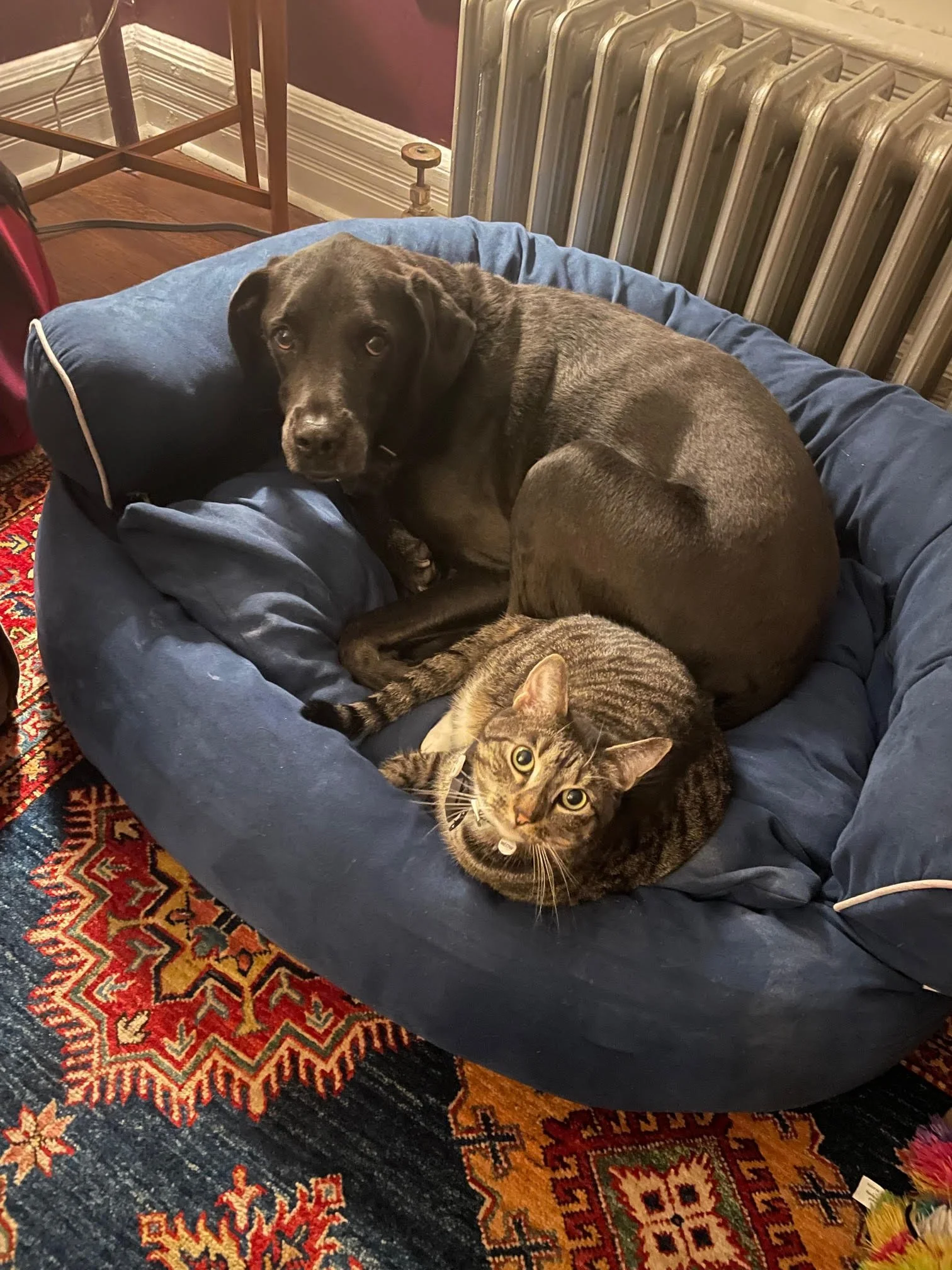
Nelson and Galahad getting cozy in the cooler weather

This time of year is also probably the one where I feel the seasonal shift most. In the northern hemisphere the world is slowing down, darkening, and entering a stage of sleepy hibernation. All I seem to want to do is sleep a little more, walk with Nelson my dog, and practice Taijiquan. I also think more of family, and of the past. The inward turning of the season is something I feel viscerally.

This makes sense to me. Later this week on Wednesday November 8th we enter the Beginning of Winter (立冬) seasonal node. By this date we are only about 6 weeks away from the longest night of the year, the Winter Solstice – also aptly called the Hibernal Solstice. While in the modern American calendar we think of Winter Solstice as the start of Winter, in Asia the seasons are calculated by the balance of Yin and Yang in the natural environment as evidenced by the relative balance of day and night. Since Winter Solstice is the darkest time of year, it is the apex of Yin, and hence mid-winter. Therefore, the early part of November is the beginning of Winter, the time of year moving into the darkest and most Yin. It is interesting to note that in many European traditions, the Winter Solstice was also celebrated as Midwinter.

Chapter 2 of the Huang Di Nei Jing says Winter is the time of “closing and storage” (閉藏). It is the season of hibernation and represents the death phase. However, this should not be construed as a bad thing. We need to enter the phase of ultimate silence and stillness, in other words the death phase, so that Yang (and Yang is life) can be reborn again. The organ associated with the Winter is the Kidney, and the phase is Water. Keeping this in mind will help us understand the basic health recommendations of this seasonal node.

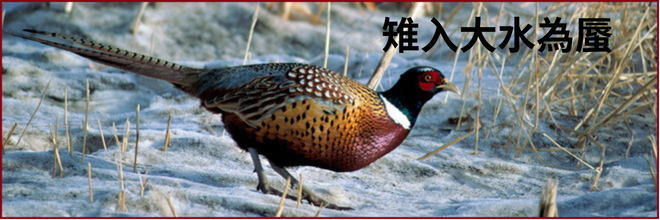
The three Material Manifestations that make up the Beginning of Winter Seasonal Node are Water Begins to Freeze (Shui Shi Bing 水始冰), Earth Begins to Harden (Di Shi Dong 地始凍), and Pheasants Dive into the Watery Abyss to Become Giant Clams (Zhi Ru Da Shui Wei Shen 雉入大水為蜃). All three contain striking Yin images, specifically images of water, of earth, and of moving deep to a hidden and quiet place. The main environmental manifestation of Winter is cold, and East Asian medicine teaches that cold creates hardness and stagnation. Thus, as expressed in these names, both water and the soil of Earth become hard and impenetrable.

The first suggestion for this seasonal node is to nourish and protect the Yang, or warmth of the body (養陽護陽). This is especially true for seniors, since as we age the body become less tolerant of temperature extremes. Be sure to dress appropriately for the cooler temperatures. Likewise, foods should be cooked or warmed when eating. This is not the time for copious amounts of raw vegetables, juices, or chilled foods and beverages. Soups and stews are winter foods! While in some seasons eating too many warming foods can trigger internal heat, this is less so in Winter. Why? For one, Winter is cold. Eating warming foods is necessary to counteract the exterior temperatures as they drop. Second, the natural Qi movement in Winter is inward and downward. As already mentioned, this is the time of “closing and storage.” Eating more warming foods in the Winter allows the body to secure and store that warm vitality, thereby strengthening the body for the seasons to come afterwards. Thus, eating more warming foods in Winter has fewer side effects than doing so in other seasons.

Another recommendation for Beginning of Winter is the consumption of tonics. These are East Asian herbal formulas, often in pill form, that have an overall strengthening effect on the body. The specific tonic should be determined based on individual need, but in general formulas such as Jin Gui Shen Qi Wan can be taken in small but regular doses.

Since Winter is the season of the Kidney, the third recommendation for Beginning of Winter is to safeguard the Kidney and the Jing-essence. According to East Asian medicine there are three things that really deplete the Kidney and the Jing: (1) excessive sex, (2) staying up late and getting too little sleep, and (3) losing one’s temper. Excessive sex is something that varies greatly from person to person. The question to ask patients is does sexual activity leave one feeling refreshed, or tired and worn out. If the latter, then it may be excessive. Staying up late goes directly against the movement of Winter, which is the movement of hibernation; Su Wen chapter 2 tells us that in Winter we need to get to bed a little earlier and sleep a little later, waiting until well after sunrise to get out of bed (早臥晚起,必待日光). Lastly, losing temper or having a generally angry disposition harms the Kidney. In the 39th chapter of the Su Wen it says that anger causes the Qi to rise (怒則氣上). Since the movement of Kidney is a movement of downward storage, anger forcing the Qi to rise depletes Kidney (i.e., it is the opposite movement of Kidney) and impairs the storage of Qi that is the natural and essential movement of Winter.

As more people move indoors this is the time of year for upper respiratory tract infections. Allergies are still plaguing some as well. In East Asian medicine this means that the exterior layers of the body are being challenged. A great basic acupressure to teach patients to help both expel and protect against wind evils is stimulation of Feng Chi GB-20. Massaging this point on a daily basis can help ward off colds and relax stiffness of the next and back that is a main characteristic of Taiyang patterns. If there is concurrent nasal congestion, they can also include acupressure on Ying Xiang LI-20. For this, have them hold Feng Chi on one side of the head while simultaneously pressing into Ying Xiang on the other (for example, their right hand presses right Feng Chi, while the left hand presses left Ying Xiang). Hold until there is a sensation of clearing in the sinuses, and then switch sides. Here’s a video I did of this for my own patients.


Diet for Beginning of Winter

The basic idea for Beginning of Winter diet is to focus on foods that are nourishing and supplementing agents. In general then we want to focus on foods that are warming and nourishing, usually meaning more animal products. We can incorporate foods that are slightly oilier, while still consuming in season fruits and vegetables while they last (we are in the very tail end of apple season here in New Jersey). Foods to incorporate more regularly include lamb, beef, chicken, sparrow, soybeans, sesame, wood ear mushrooms, peanuts, sweet potato, and persimmon (fresh or dried). Warming spices to use include ginger or cinnamon. And patients who are dry or have Yin insufficiency can take either cow or goat milk.

China is a land of multiple culinary traditions and thus seasonal eating recommendations vary from place to place. In the north of China people eat dumplings (jiaozi 餃子), especially those made of lamb and scallion (we’ll discuss a dumpling legend below). In the west of China where it is particularly cold people commonly eat more beef and lamb often in hot pots. In the areas of the high plateaus and mountains the weather is very dry and as such more fruits and vegetables that are still in season are consumed. In the south of China, where it is still relatively more warm even though it is Winter, duck, chicken and various types of fish are traditionally eaten now (i.e., foods that are supplementing but not overly warming).

One simple traditional recipe for Beginning of Winter is Ginseng Congee. To make this simply put 1 cup of rice in with about 8-10 cups water (increase or decrease based on how watery you like your congee), and 9-12g of high quality sliced and dried ginseng root. Bring to a boil and then simmer for at least 40 minutes, or until the rice starts to break up to make a porridge like soup.  Another idea that is easy to implement is adding Gou Qi Zi (Goji berries; 枸杞子) to a favorite chicken soup recipe. Doing so focuses the recipe on building the blood, and strengthening the Liver and Kidney.


Zhang Zhong Jing and the legend of dumplings…

Did you know that one of our most famous historical doctors, Zhang Zhong Jing, was not only a master of herbal medicine but also a culinary innovator? According to popular Chinese legend, Zhang was the inventor of the dumpling – jiao zi (餃子). Zhang held a mid-level government position in Changsha. The year he retired from political life he did so around the Beginning of Winter seasonal node. On his travels back to his hometown he came across many people who had suffered frostbite, and as a result had lost parts of their ears. This touched Zhang deeply as he felt sorrow for the suffering of those poor folk.

Once home he found his hometown suffering from an infectious epidemic. The people were starving from lack of food, and also suffering from frostbite. To remedy this he had his assistants set up a large pot on a public square to cook up a remedy. The formula he decided on was a combination of mutton with a number of very warm cold expelling herbs known as Qu Han Jiao Er Tang (去寒嬌耳湯) – Delicate Ears Expelling the Cold Decoction. After cooking the meat was chopped up and wrapped in small wheat flour skins in the shape of ears, and then cooked more and served to the people together with some of the soup. And thus the dumpling was born, as well as the tradition of eating them around the Beginning of Winter!

Working with your Attention Course with ToDo

Our friends at the ToDo Institute are running another excellent distance program - Working with Your Attention. This one month long course starts soon (October 20th), so don't delay. I did my certificate in Japanese Psychology with ToDo, and I think all of their programs are really excellent. If you use the code "mccann25" you'll get a 25% discount off the already really low tuition fee!

Here is the link to the class. And below is a short video done by Gregg Krech, the instructor for the course.

Autumn Equinox 秋分 Seasonal Node

An essential characteristic of Chinese medicine is that following and adapting to the seasons is a vital part of how we stay healthy. The Liu Jie Zang Xiang Lun (Treatise on the Visceral Manifestations and the Six Terms of the Year, Su Wen Chapter 6) says, “those who do not know how the breakdown of the year contributes to health, how the qi abounds and becomes debilitated, and thus how vacuity and repletion arise – they cannot serve as a practitioner.” (不知年之所加,氣之盛衰,虛實之所起,不可以為工矣。) Clearly the ancients thought seasonal harmonization was important.

Today, Saturday September 22nd, is one of the most important markers of seasonal shift in the year – the Autumn Equinox. This week here where I am located in New Jersey has felt a lot more like Autumn. Last night late in the evening when practiced outside the temperatures were in the upper 50s. The night time chill is a harbinger of the much cooler temperatures to come.

The Autumnal Equinox is the day midway between the solstices. Being the midway point, the equinoxes are times of even balance between Yin and Yang. Furthermore, today begins the next 2-week long seasonal node, also called Autumn Equinox. The smaller 5-day segments of this seasonal node are called Thunder Begins to Retract its Sound (Lei Shi Shou Sheng 雷始收聲), Hibernating Insects Reinforce their Shelters (Zhi Chong Pei Hu 蟄蟲培戶), and Water Begins to Dry Up (Shui Shi He 水始涸). The names of these 5-day segments of time all point to a similar phenomenon – this is the time of year when the Yin-contracting movement of nature is in full gear in preparation for Winter’s slumber.

During this time of year the Nei Jing suggests that we “nourish the Yin” (春夏養陽,秋冬養陰) by conforming to the Yin-contracting nature of Autumn. In practical terms one meaning is that we should start getting more sleep. As the days grow shorter so should there be less activity in our daily lives. Thus, the Nei Jing says that we can still wake at the cock’s crowing, but we should be in bed earlier.

During this seasonal node one traditional recommendation is to guard the Lungs, and in particular the Lung Yin. Autumn is the season associated with the Metal Phase and therefore the Lung. Furthermore, Autumn is associated with environmental dryness so protecting the Yin fluids of the Lung is important. Some of the foods that protect the Lung Yin are milk, peaches, pears, apples, soymilk, glutinous rice, sesame seeds, and honey. Those who are adventurous can cook rice congee using white wood ear mushrooms.

Another method for helping the Lungs is acupressure at Chi Ze LU-5 (尺澤穴). This point regulates Lung function and treats conditions such as cough, wheezing, asthma, the common cold and seasonal allergies. It is also the Water point on the Lung channel meaning that it is appropriate for both the season (Autumn relates to the Lung) and the Lunar Month (the eighth Lunar Month relates to the Kidney channel, which is the Water phase).

Chi Ze LU5 Acupressure (recorded during our online Qigong classes)

In addition to environmental dryness, this time of year sees temperatures dropping. Therefore, while we focus on protecting the Lung we should also be cautious about cold exposure. People who are cold and fatigued in general should focus on warming and supplementing the body during equinox. Wearing adequate clothing is an important part of this strategy. Additionally, certain warming and supplementing Chinese herbs can be consumed as functional foods. For example, one traditional recipe for the Autumn Equinox Seasonal Node is Angelica and Codonopsis Lamb Soup. To make this, take 1lb organic lamb meat and cook in an appropriate amount of water with 10g Chinese Angelica (Dang Gui 當歸), 10g Codonopsis (Dang Shen 黨參), 30g Astragalus (Huang Qi 黃耆), 10g fresh ginger, and salt and pepper to taste. Other in season vegetables can also be added as desired. This recipe warms the Kidneys, supplements the Yang, quickens Blood and moves Qi.

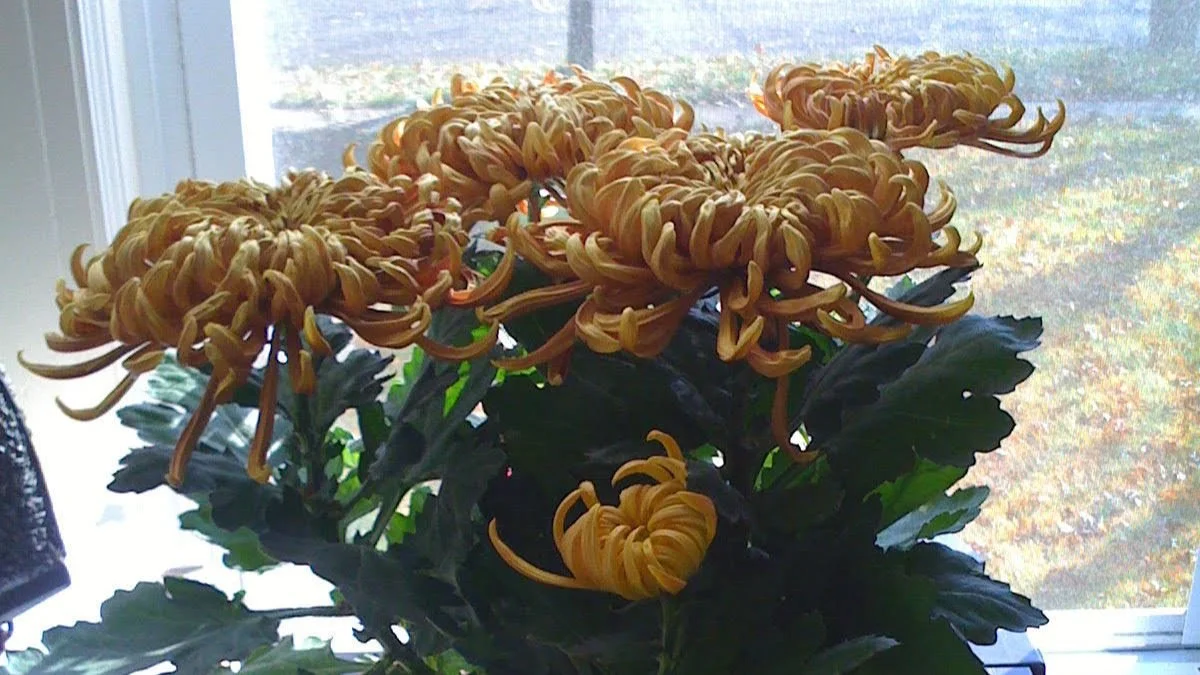
A great tea for general use appropriate to this time of year is Chrysanthemum with Honey (菊花蜂蜜茶). To make, take about 1 tablespoon of dried chrysanthemum (the kind sold as a Chinese herb). Steep in boiled water for 3-5 min and then stir in some honey to taste. This tea can treat seasonal allergies such as dry, itchy eyes or headache. This recipe nourishes the Liver, brightens the eyes, moistens the Lung and awakens the brain.

As the weather gets colder and we move to the darker days, it is the time to start preventive moxa treatment for the Winter. This is especially important for patients who are cold and vacuous. Starting some weekly moxa at Zu San Li ST-36 (足三里穴) will go a long way to keeping vitality strong the in months to come. An alternate is to apply moxa to Huo Fu Hai 33.07 (火腑海) on a regular basis.


Qigong and the Seasons

When people think of Qigong practice, or Taiji practice for that matter, there is the image of Chinese practitioners up very early in the morning in parks going through their routines. Early morning is a traditional time for practice, but not the only best time. Generally speaking, practices such as Qigong are best practiced at four possible times of day: 5-7am, 11am-1pm, 5-7pm, and 11pm-1am (all adjusted for Daylight Savings Time).

Why these times?

These four times of the day are like the four cardinal directions. The hours around high noon and midnight both respectively are the most Yang and Yin times of the day. The 5-7 hours (either am or pm) are then the midpoints of the day when the movement of Yin and Yang is most balanced. Practicing during these times allows us to ride the movement of Yin and Yang to make our Qigong practice all the more effective.

These times are also representative of different times of the year. Noon corresponds to the Summer Solstice, Midnight corresponds to the Winter Solstice, 5-7am corresponds to the Vernal Equinox, and 5-7pm corresponds to the Autumnal Equinox. As the name suggests, the Equinoxes are the most balanced times of the year in terms of Yin and Yang. As such, on these days practicing Qigong with the effort of creating internal balance is very appropriate.

So, I hope everyone is having a very peaceful and balanced Equinox! If you are interested in joining us for our online Qigong classes on Mondays and Fridays, please let me know!

Transformations Podcast Interview

I recently did a really fun interview with Mark Wiley for his Transformations Podcast. We talk a lot about martial arts, traditional medicine, and related topics. Mark is the head of Tambuli Media and he puts out some really nice books as well as his great podcast. You can either watch the interview on Youtube or download it from just about any major podcast app.

Don’t forget our next cohort of the Foundations of Clinical Qigong starts in just a few weeks. At this point I only have a few slots available if anyone still wants to participate. Contact me ASAP!

White Dew 白露 Seasonal Node

Last year around this time we were still in the tail end of a summer drought. This year it’s not been as dry, but the humidity has been really uncomfortable. And, while last week and before that we had a reprieve of heat (just in time for the End of Heat seasonal node), this week temperatures are up again. Welcome back Old Tiger of Autumn! But, despite the heat, we are now well into Autumn in the Chinese calendar, and the midpoint of Autumn, the equinox, is only about 2 weeks away.  

Autumn is one of the two Yin seasons (along with Winter), and in Five Phase theory it is associated with the Metal, the Lungs, and the direction West. Today, Friday September 8th, is the start of the next seasonal node, the 3rd node of Autumn - White Dew (Bai Lu 白露). The name White Dew is a direct reference to Five Phase association of Autumn, as white is the Metal Phase’s color.

Wagtail

According to the Su Wen, the movement of Autumn is the movement of harvest (收). All of nature is now in the stage of slowly winding down; for example, in the last few days I’ve been noticing that the mornings are not quite as bright by the time I’m waking up, and the sun is noticeably setting earlier. The names of the three smaller material manifestations of White Dew reflect harvesting of food for the Winter to come, and the return of birds in their migratory patterns: Hongyan lai 鴻雁來 (Swan Geese Pass Through), Xuanniao gui 玄鳥歸 (Swallows Go Back), Qunniao yangxiu 群鳥養羞 (Flocks of Birds Stockpile Morsels). The Japanese versions of these small mini-seasons are slightly different, but paint a picture of a similar migration of birds during the cooling weather: Kusa no tsuyu shiroshi 草露白 (Dew glistens white on grass), Sekirei naku 鶺鴒鳴 (Wagtails sing), and, like the second of the previous Chinese names, Tsubame saru 玄鳥去 (Swallows leave).

Even though we are in Autumn (a Yin time of year) it is clear that Yin and Yang are engaged in a closely intertwined dance. During White Dew, the days can still be quite warm and somewhat humid. The daily temperatures here in New Jersey this week are going to vary between the 70s and 80s, however, evenings are starting to dip in temperature. Therefore, one of the traditional prohibitions this time of year is wearing clothes that are too light or too exposing of the body. During the early morning hours or in the evening be sure to wear clothing that affords protection against the gradually cooling temperatures (last week I had to wear my fleece one night walking my dog Nelson for the first time in months). In some places the weather continues to be fairly warm and thus slightly out of sync with this Seasonal Node. In those places guard against rapid temperature fluctuations as they may trigger colds or other upper respiratory problems.

Another caution this time of year is overconsumption of cold foods. Eating cold foods burdens the Spleen and Stomach, and this is more so during the Yin and colder times of the year when the body is trying to consolidate its Yang warmth. Thus in Chinese it is said, “bai lu shen bu lu, zhao liang yi xie du (白露身不露,著涼易瀉肚) – during White Dew be sure not to overexpose the body as cold can easily lead to diarrhea.

The conceptual idea to start focusing on during White Dew is Nourishing the Yin (養陰). Now, this doesn’t mean that we should all go out and start taking Yin nourishing herbs such as Di Huang! To understand this, we need to think deeply about the real meaning of Yin and Yang beyond basic correspondences. The Su Wen tells us that the sage nourishes Yang in the Spring and Summer and nourishes Yin in the Autumn and Winter (所以聖人春夏養陽,秋冬養陰). Here, Yin means the movement of contraction/harvest (收) going towards storage (藏). These are the very defining concepts of the Autumn and Winter seasons. This time of year we should all start slowing down, going to bed just a little earlier, and taking stock of our lives (i.e., literally moving our minds inward in self-reflection).

In more concrete medical terms, some of the most common problems our patients will see this time of year are seasonal allergies and rhinitis. Here in New Jersey I’ve seen a significant rise in allergy complaints in the last few weeks. Patients can be taught simple home remedies such as using a Neti pot to keep sinus passages clear and open. Alternately, they can do a steam inhalation with eucalyptus oil. Since Autumn is the season of dryness, if patients suffer from very dry nasal passageways, they can rub a small amount of coconut oil inside their nose on a daily basis.

 When choosing treatment points this seasonal node we can focus on those that have a Lung association. In Tung’s acupuncture, some useful points include Mu (木穴; 11.17), and the Dao Ma combination of Chong Zi (重子穴; 22.01) and Chong Xian (重仙穴; 22.02). In both September and October, Mu is one of my most frequently used points. It has the association of Lung Channel in Tung’s Five Phase system, and it lies on the palmar surface of the index finger (thus placing it on the Hand Yangming – also a Metal channel). It treats a wide range of conditions of the upper burner related to Wind patterns such as the common cold, seasonal allergies, and sinus congestion. Patients can also be taught to massage these points as needed. For a more detailed discussion of these points please refer to the Practical Atlas of Tung’s Acupuncture.

Aside from Tung’s acupuncture, this is the time of year to start doing preventive moxibustion on Zu San Lu (ST-36), or other treatment of the Stomach channel. Chinese medicine has a variety of ways to match time and channels or organs. According to the Zun Sheng Ba Jian, the second month of Autumn corresponds to the Stomach channel, which is why the seasonal node exercise for White Dew is associated with it, and treats lips turned dark in color, swelling in the neck, retching, mental disorders, and flushing of the face (all Stomach channel symptoms). Finally, since Soil-Earth is the mother of Metal, treatment or supplementation of the Stomach channel has a beneficial and supplementing effect on the Lung.


Diet for White Dew

During White Dew the foods we eat should gently moisten dryness and protect the Lungs. While the days are still hot we can eat mildly heat clearing foods but again being cautious about eating very cold (or chilled) foods. In order to help build Yin in the body we also can increase mildly sour foods. White Dew is still a season of fresh fruits that fit these guidelines perfectly, such as peaches (although we are really at the tail end of peach season in New Jersey), apples and pears. Other foods to eat include watery vegetables such as zucchini. For those near Asian groceries, White Dew is the time to eat nagaimo (shan yao 山藥 in Chinese) and fresh lily bulbs (百合).

Rice congees are a perfect fit for White Dew in that they are gently moistening and, taken warm, supportive of the Spleen and Stomach. One of the traditional White Dew congees is Lily Bulb and Pear Congee. To make this take one large Asian pear and slice into bite sized pieces (the peel can be left on). Then take one fresh edible lily bulb and separate out the corms. Cook the pear and lily bulb in a medium sized pot of water and rice (with a rice to water ratio of about 1 to 6). Simmer until the rice starts falling apart and the mixture becomes like watery oatmeal. Finish by adding a small amount of local honey to taste. 

To read more about general health tips for Autumn please click here.

Clinical Qigong Starts October!

The next cohort of our Foundations of Clinical Qigong class will start this October! In this class we explore the use of Qigong and other similar practices in clinical settings. The course will provide the foundational studies in Qigong (including both theory and practice) and its application in the prevention and treatment of disease.

Aside from exploring the clinical use of Qigong, classes will also provide a sound foundation for self-practice as well as the recognition and management of adverse effects of practice. Please go to this page for a detailed overview of course topics as well as dates for each meeting.

Space in class is limited, so if interested, contact us as soon as possible!

End of Heat 處暑 Seasonal Node

It’s just about midnight, marking the change from Wednesday evening to early Thursday morning. Many of my days are long. I spent about 11 hours seeing patients today (I’ll be working about 12 hours tomorrow), and then home to make a light dinner. I’m just getting back inside from my evening practice of walking around in a circle for about a half hour (if you know what Baguazhang is that’ll make more sense), and then Nelson needed his evening constitutional, walking through downtown.  

The last few days though in particular have felt different. There’s a clear sky right now, and the temperatures overnight are expected to go down to the mid- or low-60s. Tomorrow and the rest of the week will see highs of only in the low- to mid-70s. As recently as just a week or so ago, the daytime temperatures were almost 20 degrees higher! This gradual cooling, as the days are getting slightly shorter, make my evening routing a lot more pleasant.

This summer we’ve seen some of the hottest months ever on record. But this week’s Wednesday, August 23rd, started the next seasonal node of the year. And, it seems as if it is right on time. Just as the daily temperatures are cooling, this seasonal node is aptly named Chu Shu 處暑, ‘End of Heat’.

End of Heat is the second seasonal node in Autumn, and Autumn is the time of year when Yin grows. All things are gradually moving towards the hibernation phase and many plants are being readied for harvest. This is why in the Neijing, the movement of Autumn is described as 收 – receiving, taking in, putting away, gathering in. The names of the smaller 5-day periods of this seasonal node are quite interesting and illustrative of this idea. The first is called Ying Nai Ji Niao 鷹乃祭鳥, Hawks Start to Sacrifice Birds. This time of year starts the slow march towards the death phase of nature, and many plants and animals with short life spans won’t make it to next Spring. The image of hawks harvesting or killing smaller birds then fits perfectly with this image. The next two 5-day time periods are Tian Di Shi Su 天地始肅, Heaven and Earth Become Austere, and He Nai Deng 禾乃登, Rice Plants Are Harvested and Presented as Offering. Just as this is the time of year for bringing things to harvest, it is also the time for us to start becoming quieter and more introspective, for us to take stock of what, out of the myriad things in our lives, is really important (i.e., we become austere like Heaven and Earth). In Japan, instead of Hawks Start to Sacrifice Birds, the first segment is called Wata no Hana Shibe Hiraku 綿柎開 – Cotton Flowers Bloom.

In more tangible respects there are things to keep in mind to maintain health this time of year. The first traditional recommendation for Chu Shu is Ben Franklin’s favorite – ‘early to bed, early to rise’ (zao shui zao qi 早睡早起). When Yin predominates in nature, we can mimic that in our own body by getting more sleep. In the summer it is permissible to stay up later and still wake up early because in the Yang time of year less sleep is just fine. However, now that Autumn (a Yin season) is upon us, we need to get a little more rest. My general recommendation to patients is to get into bed a bit earlier, preferably before 11pm or midnight. Here’s a little quiz for other Chinese medicine providers – why is it important to get to bed before this hour? (Hint – it is not because of the Liver hour just afterwards)

Pear and White Wood Ear Soup

The weather pattern associated with Autumn is dryness, and given that here in NJ we have been in a drought, we’ve been seeing this early this year. Thus, another caution during Autumn is not becoming too dry. One way we do this is through diet; now is the time to start focusing on shao xin, zeng suan 少辛增酸 – ‘less spicy, more sour’. Spicy flavors are mildly drying. Spicy also promotes sweating which can dry the body. To the contrary, sour foods are gently moistening and hold in sweat. Increasing the amount of foods such as vinegar, pickled vegetables, and fruits such as plums is appropriate to Autumn. Other moistening foods include milk, soymilk, and fruit juices (especially apple or pear). This recommendation should be taken less seriously for those with very damp constitutions or presentations, and can also be moderated when the outside weather continues to be damp.


One traditional recipe for this season is Pear and White Wood Ear Soup. This dish is just simply delicious, and it is effective for supplementing the Lungs, nourishing fluids, and moistening dryness (without being so cloying as to create dampness).


Pear and White Wood Ear Soup 雪梨銀耳湯

Ingredients:

  • 1 large Asian pear 雪梨

  • 2 dried white wood ear mushrooms 銀耳

  • 1 small fresh edible lily bulb 百合

  • About ½ cup white or rock sugar

 Instructions:

  1. Soak wood ear for about 30 minutes, until softened

  2. Rip wood ears into bite sized pieces, peel and cut pear into medium bite sized chunks, and separate out lily bulb into individual corms

  3. In a pot, put about 6 cups of water together with all ingredients; bring to boil and simmer for 30minutes to 2 hours on a very low heat


For those who like wood ears crisper, go for the shorter simmer time. For those who like things softer and more gelatinous, cook longer. My suggestion is to take small tastes along the way. This soup can be served warm or chilled (depending on preference and outside temperature).


The last recommendation I’ll offer is for those patients who continue to experience symptoms of damp, heat, or the combination thereof in the form of summerheat. A traditional channel-based recommendation for End of Heat is regular acupressure on Cheng Shan BL-57. This point helps expel damp and clear heat, and treats many symptoms of lingering summerheat such as headache, body aches, heavy limbs, or diarrhea. Notice that this area of the leg is one of thick flesh, and remember that the seventh chapter of the Ling Shu describes a needling method based on the five tissues and their relationships to the five viscera. One of the passages from that chapter reads:

四曰合谷刺,合谷刺者,左右雞足,針於分肉之間,以取肌痺,此脾之應也 
The fourth is called united valleys piercing. United valleys piercing is to pierce left then right from the same hole, like a chicken's foot. Pierce to the division between the flesh. This treats flesh block (bi). It is in resonance with the Spleen. 

Here we see that needling into fleshy areas of the body treats problems of the flesh as well as treats problems of the Spleen. As dampness is the disease evil of the Soil/Earth phase (and thus the Spleen), this needling technique also has resonance with its treatment. For example, over the last few weeks, patients in my office have been complaining of aching and heaviness in the joints, especially of the knees, hips and in general lower extremities. This is because dampness, as a Yin disease evil, commonly moves down in the body. One of the points I’ve been using over and over again to work with this is Jian Zhong 44.06. The point, located on the shoulder, is in a fleshy area of the body just like Cheng Shan BL-57 is. Likewise, it treats damp accumulation of the joints and extremities. Other points in the shoulder area, such as Bei Mian 44.07, are specifically indicated for digestive problems such as abdominal distension, vomiting or enteritis. This is because, like Jian Zhong 44.06 and Cheng Shan BL-57, Bei Mian is in an area of thick flesh and thus treats problems of the Spleen. This time of year as we are still experiencing summerheat and dampness, these types of points can be frequently used.

Stay hydrated, stay cool, but prepare for the cooler weather to come.

A Basic Qigong Exercise for Autumn

SI - the sound of the Lung

Autumn is the season of the Metal Phase, the phase that represents the movement of harvesting in, reading for the storage that is characteristic of Winter. In the body, the Lungs are the organ of Metal (along with the Large Intestine). In addition to diet and acupressure, we can also do basic Qigong exercises to harmonize the body with the season. In this case, we can practice a Lung Qigong form for seasonal harmonization. This same exercise can be practice to manage problems of the Lung.


Basic Lung Sound & Meditation

  • Start by assuming a comfortable sitting posture. This can be on a chair or on the floor. In either case keep the spine erect but the bod relaxed.

  • Close the eyes, and visualize that you are inhaling a clean, crisp white light into the space of the Lungs. If there is any problem of the Lungs or upper respiratory tract, visualize that as a dirty grey/white light that is exhaled, leaving more space for the clear white light to enter.

  • Inhale deeply, then exhale with the sound “Si” – this is the healing sound of the Lung, It can be said with or without vocalizing (i.e., either singing out the sound, or exhaling the syllable without vocal cord involvement. As you intone this sound, visualize any toxins or diseases in the Lungs being purged out of the body.

  • Repeat the above white light visualization and sound intonation several times, as desired.

There is a long history in China of using these types of exercises to treat or prevent disease. For more information please join in our free PDA/CEU class this Sunday, or consider joining one of our comprehensive Clinical Qigong courses.

Intro to Clinical Qigong

Please join us for an introduction to Clinical Qigong (i.e., Medical Qigong) webinar. This will be the preview of our upcoming online 30 hour Clinical Qigong course.

In this webinar we will cover a basic overview of the history and role of pre-Qigong practices in East Asian Medicine and longevity traditions, and discuss the modern application of the techniques in an East Asian Medicine clinical setting. We will focus on the original patient practice approach rather than external Qi healing. The class concludes with an experiential segment to orient participants.

East Asian Medicine professionals will receive 1.5 PDA/CEU hours (free of charge; NCCAOM approved). Class runs from 12-1:30pm Eastern Time on Sunday, August 27th. Participants will only get a certificate of CEU hours if they are a currently licensed acupuncturist / practitioner of East Asian Medicine in the United States.

Register for the class here. Participants must register at the latest by Friday Aug 25 at 6pm Eastern time. Registration will be closed after that time!

Ghost Month 鬼月

Yama, the King of Hell

Yes, it’s that time of year once again! Today is the day in the traditional Daoist calendar that Yama 閻王, the King of Hell, opens the gates of the hell realms, allowing the spirits of the deceased to wander the earth – basically a one-month vacation for ghosts. This is Ghost Month, the 7th month of the Chinese lunar calendar.

This supernatural sojourn lasts until the end of the lunar month (the 8th lunar month starts on September 15th), when the gates of Hell are once again closed. The culmination of the month is the 15th lunar day (this year on August 30th), which is known as Zhong Yuan Jie (中元節).

Throughout this month there are many taboos that Chinese culture observes. These include not allowing the elderly, the very young or generally physically weak people to do various activities outside at night. This is the time of day when ghosts are most active! Qigong should also not be practiced outside late at night during this time. Since I personally usually practice outside in the evening, during Ghost month I skip Qigong and practice martial arts such as Baguazhang instead. Martial arts are traditionally used to ward off mischievous spirits, which is why martial arts demonstrations often accompany displays such as Lion Dancing that are used to consecrate businesses, or exorcize negativity in a building or other location.

Whether or not we believe that this month is the time of ghosts, what this custom perhaps does is remind us of how the natural balance of Yin and Yang is shifting in a very real way this time of year. Not long ago we came to the beginning of Autumn in the East Asian calendar. Even though days are still hot in August, it is true that we are in the early part of the Yin portion of the year. After the Summer Solstice the days start to slowly get shorter. By August here in northern New Jersey plant growth is mostly over. Even the grass is growing more slowly than before. In the environment we are seeing a significant increase in dampness and humidity – and water is a Yin substance. Thus, one of the main pathological environmental factors our patients now complain of is dampness, or summerheat-dampness (a combination of pathogenic Yin and Yang together).

When I look at customs like the ghost month, I see other interesting health recommendations, such as the prohibition against activities outside in the evenings. Ghosts or not, there are so many mosquitoes and insects outside that there’s no way I can practice slow moving exercises like Qigong outside! These types of insects, as vectors for disease, can cause serious problems in people who might be more vulnerable – such as the elderly, the young, or the sick.

Other health recommendations this time of year also focus on counteracting the growing Yin. In some parts of China around the time of Summer Solstice there is the custom of hanging herbs such as Ai Ye and Shi Chang Pu above doors. Both Ai Ye and Shi Chang Pu are aromatic, and the aromatic nature is Yang that can disperse Yin influences as well as ward off insects.  Some people will also put powdered Xiong Huang (realgar) at the bottoms of doors to keep bugs out of the house (realgar is a very toxic medicinal).

In terms of internal herbal medicine, this is the time of year when a lot of patients benefit from formulas such as Huo Xiang Zheng Qi Tang. This formula contains aromatic and Qi moving medicinals such as Huo Xiang, Hou Po, Chen Pi and Bai Zhi to transform damp. It also includes medicinals that likewise strengthen the Spleen so as to allow for normal movement and transformation (the Yang functions of the Spleen). This idea of expelling the Yin and supporting the Yang is the same principle underlying the use of San Fu moxa (see previous blog posts).

So, please be careful out there and avoid the Yin, ghosts or not. But, just to be sure, I for one will be burning some joss paper outside later today to appease some ghosts!

Beginning of Autumn 立秋 Seasonal Node

After a very hot July, it’s nice to have August be a bit more seasonable. It hasn’t been cool here by any definition of that word, but the weather has cooled off compared to the last few weeks. This year again the slight cooling is on time as yesterday, Tuesday August 8th, was the the beginning of Autumn (and the seasonal node of that same name) in the traditional calendar.

Although in the modern western world August is a summer month, the Chinese calendar is concerned with the relative balance of Yin and Yang in the natural environment over temperature as a marker of the seasons; this is closely tied to day length. Summer Solstice in June was the longest day of the year. By now the days are getting gradually shorter, and we are only 6 weeks away from the Autumnal Equinox, a day of balanced light and dark. Therefore, even though August weather can still be hot we are in the time of growing Yin and contraction in the natural environment.

In the Lü Shi Chun Qiu (The Spring and Autumn Annals of Lü Bowei; 呂氏春秋), the classic text of Chinese philosophy from the 3rd century BCE, it is said that the Emperor Shao Hao (少昊), and his son Ru Shou (蓐收) are the sovereigns associated with the three months of Autumn. This obscure statement sheds tremendous light on the essence of Autumn, and eventually allows us to understand how to stay healthy this season.

According to some legends (since they do vary), Shao Hao was one of the Five Emperors (五帝) of ancient China. His mother was a weaver goddess who fell in love with the planet Venus, and the result of that union was Shao Hao. Together with his son Ru Shou, Shao Hao settled on Chang Liu Mountain where they ruled over the Western Heavens and controlled the setting of the sun. Remember, the west is associated with the Metal phase, and therefore Autumn. Certainly, Autumn is the time of year that corresponds to sunset during the day, and in Chinese astrology Venus is the planet of the Metal phase, and thus too corresponds with Autumn. Even the son’s name, Ru Shou, has the word “shou” (收) within – the word meaning “to harvest” or “to collect,” an attribute of Autumn. The Neijing says that when we move and behave in a way that allows us to resonate with Autumn, we are in the state of Nourishing the movement of Harvest (養收). 

In early Autumn (August is the first month of the season) we experience the ongoing but very gradual shift to shorter days and, eventually, cooler temperatures. In other words, we are shifting more and more to the Yin phase of the year. Yet, August in particular can still be damp and humid. It is also the time of tropical storms which bring moisture and wind – an external event. In Chinese medicine, weakness in the Spleen and Stomach leads to damp accumulation – an internal event. In early Autumn we therefore should avoid dampness externally and simultaneously strengthen the digestive organs internally. One way to accomplish this is to eat light and clear foods, increase the amount of seasonal vegetables, and eat a little less meat. Vegetables can be consumed lightly steamed or stir-fried, or in the case of light salad greens, raw. In general avoid overly hot, spicy foods. Congees are appropriate to help strengthen the digestive organs and one traditional congee recipe for this seasonal node is Euryale Seed and Discorea Congee (Qian Shi Shan Yao Zhou 芡實山藥粥).

Euryale Seed and Discorea Congee 芡實山藥粥

Ingredients:

  • 1 cup rice (use glutinous rice if available)

  • 200g Euryale seed (Qian Shi )

  • 200g Discorea (Shan Yao )

  • 200 g sugar

 Directions:

  1. Grind rice, Euryale seed, and Discorea to a powder. Mix the three together with sugar and blend well so evenly mixed

  2. In a pan, add 50 – 100g of blended powder to cold water, enough to make a thick soupy consistency

  3. Put over medium flame and warm for several minutes, stirring occasionally

  4. Enjoy in the morning on an empty stomach (consume warm)


This congee strengthens the Spleen, stops diarrhea. However it is contraindicated for patients with diarrhea due to infections, or with damp heat type diarrhea.


In addition to dietary recommendations we can perform acupressure on supplementing points such as Zu San Li (ST-36). If patients tend to cold and vacuous patterns of the Spleen and Stomach, gentle direct thread moxa at Zu San Li is also applicable. According to the noted moxibustion scholar Lorraine Wilcox, the time around the beginning of Autumn is also a special time for applying prophylactic moxibustion in an effort to strengthen the body for the cold season to come. Those familiar with Tung’s acupuncture can needle the Zu San Tong (足三通) Dao Ma group, consisting of Tong Guan 88.01, Tong Shan 88.02 and Tong Tian 88.03. These points are the main Dao Ma group for Heart, but really they function like Pericardium channel points, which is why they are indicated for Spleen and Stomach problems. Furthermore, in terms of Five Phase theory, supplementing Heart will strengthen Spleen because of the engendering cycle relationship between Fire and Soil-Earth.

Autumn is the season associated with the Lungs, and thus even though we should avoid very spicy foods, mildly acrid foods are good this time of year for Lung function. These foods include ginger, scallion, leek, and black pepper. Mildly sweet and slightly sour fruits also help moisten and benefit the Lungs, including the now in-season stone fruits (i.e., plums and peaches). This recommendation however should be based on individual patient characteristics. For example, if patients have Spleen vacuity with dampness they should avoid overly sour foods.

As August continues through the rest of August and into September and the weather does become cooler, we need to be cautious of sudden returns of very hot and humid weather, a common weather pattern here in New Jersey. In Chinese this is called “The Old Tiger of Autumn” (Qiu Lao Hu 秋老虎). When the old tiger rears its head again Summerheat pathogens are a risk – symptoms of this include headache, dizziness, nausea or vomiting, poor appetite, stuffy chest, heavy or fatigued limbs, and possibly diarrhea. If intense hot and damp weather returns, focus the diet on foods that are cooling and moistening. Foods to consider adding on a daily basis include all sorts of sprouts (e.g., mung bean or alfalfa), cucumbers, muskmelon, winter melon, tomato, and loofah. Mung beans are very cooling, and in hot weather they can be made into a sweet dessert soup. For more serious conditions consider giving patients formulas such as Huo Xiang Zheng Qi San.

Here’s a formula from the Zun Sheng Ba Jian (遵生八箋) – the Eight Treatises on Following the Principles of Life. Written by a scholar by the name of Gao Lian at the end of the Ming Dynasty (1368-1644), the text is an almost encyclopedic collection of all manner of Nourishing Life (養生) recipes, techniques, theories, etc… One of the formulas specifically for Autumn is called Conserve the Spleen Pill (攝脾丸). It treats damage to the Spleen that happens during the Autumn months that leads to abdominal distension and diarrhea. The ingredients listed are Mu Xiang, He Zi, Hou Po (ginger fried), Wu Bei Zi (slightly toasted), and Bai Zhu (earth fried). These ingredients would be ground to a powder and made into pills the size of a Tung Tree seed, and 10 pills would be a daily dose.

I hope everyone is having a great end of Summer and start of Autumn!

Great Heat 大暑 Seasonal Node

We are in the hottest time of the year in the northern hemisphere according to the traditional calendar – the San Fu 三伏 period. Aside from the traditional calendar, most likely due to human driven climate change this past June was the hottest ever on record for the planet, and preliminary data suggests the first 2 weeks of July were also the hottest ever for planet Earth since records have been kept (for almost 200 years now).  Appropriately, the name of the seasonal node that starts today, Sunday July 23rd, is Great Heat (Da Shu 大暑). In some parts of the world this segment of the year is also one of the dampest.  Today as I write this blog, where I am located in NJ had a high temperature of 89 degrees with a high humidity of 88% - and it was actually one of the nicer feeling days we’ve had recently!

As we’ve discussed before, each of the 24 seasonal nodes (jie qi 節氣) can be further broken down into 3 five-day periods of time, known as the 72 Material Manifestations (wu hou 物候). The 3 periods within Great Heat are Decaying Grass Transforms into Fireflies (fucao hua wei ying 腐草化為螢), Earth Lies Wet Beneath Sweltering Heat (tu run ru shu 土潤溽暑), and Heavy Rains Fall Intermittently (da yu shi ying 大雨時行). The Japanese versions of the first of these is Paulownia Trees Produce Seeds (kiri hajimete hana o musubu桐始結花). In these rather poetic names we see the images of plant life coming to an end of growth (in particular, delicate plants such as grasses), and we also see references to the combination of both dampness and heat in nature.

The health maintenance guidelines for Great Heat are to focus on clearing heat, boosting qi, and treating winter diseases ahead of time (冬病夏治).  Clearing heat seems to be intuitive – too much heat in the body needs to be removed to keep us in balance. But why should we also boost the qi? The Yin Yang Ying Xiang Da Lun (Su Wen Chapter 5) says, “the qi of strong fire weakens” (壯火之氣衰), “strong fire feeds on qi” (壯火食氣), and “a strong fire disperses qi” (壯火散氣). The reason we need to boost qi this time of year is because too much heat in the environment drains and weakens the qi internally. Likewise, excessive sweating damages both the qi and the fluids. One potential general maintenance herbal formula this time of year is Sheng Mai San, the combination of Ren Shen, Mai Men Dong and Wu Wei Zi. When giving this formula during Great Heat, my suggestion to use either plain Chinese white ginseng, or American ginseng, as Korean red ginseng will be too hot. Sheng Mai San in small doses builds qi, clears heat, and nourishes the fluids with herbs that are not so cloying that they would worsen internal dampness.

As already mentioned, now is the San Fu period. This time of year we have a tradition of applying mustard plasters to acupuncture points on the back, a practice known as San Fu moxibustion. While called a type of moxibustion, the heat source for this treatment is not burning mugwort, but the heat derived from the mustard (and other herbs) plasters that are placed on the skin.

In addition to San Fu moxa, we can also start utilizing regular moxibustion as well for disease prevention. The Bian Que Heart Classic (扁鵲心書) suggests that every year at the transition between summer and fall we should moxa Guan Yuan REN-4. As part of the recommendation the text suggests the application of 300 cones every 3 years for people over the age of 30, every 2 years for people over the age of 50, and yearly once age 60 is reached.  While 300 seems like a lot of cones, we don’t have to do them all in one sitting. Break up application of moxa into smaller amounts of cones and proceed daily for several weeks; in other words, we are looking for a total of 300 over time, not 300 all at once. Additional points to consider for moxibustion include Zu San Li ST-36, Shen Que REN-8 and Qi Hai REN-6.

The caution for Great Heat is to be on guard against damp-heat and its ability to damage the Spleen-Stomach, thereby hampering appetite and digestion.  One way to do this is through diet, which we discuss below. Another traditional recommendation to accomplish this during the current seasonal node is herbal foot bathing.  One effective Great Heat footbath recipe includes Pu Gong Ying 30g, Su Mu 30g, Gou Teng 25g, Fu Ling 25g, Bai Fan 15g, Fang Feng 15g, and Han Fang Ji 15g.  Boil these herbs in about ½ gallon of water for 20-30 minutes. Then, cool until able to be used as a warm soak, and soak feet for about 30-40 minutes. These herbs are also effective for treating athlete’s foot, a common problem of this time of year, and a very obvious manifestation of excess damp-heat. For this condition use the same soak frequently, at least twice daily, with 3 days (of twice daily) being one course of treatment.

For practitioners of Tung’s (Dong’s) acupuncture, we can apply these same principles for general maintenance or preventive treatments. Consider using points that have a general qi supplementing function such as Ling Gu 22.05 and Si Hua Shang 77.08. We also can choose points that generally clear heat such as Zhong Kui or the Wu Ling and Shuang Feng points along the back. In my bloodletting book I also detail another Taiwanese method of treating excessive summerheat by bleeding. Click here for more information on the book. For patients who tend towards being deficient, after bloodletting in the clinic, administer one dose of Liu Wei Di Huang Wan in tablet form (this was Master Tung’s practice in his own practice).


Diet for Great Heat

Along with the guidelines described above, during Great Heat we should simultaneously clear heat and drain damp, while boosting the qi and protecting the Spleen and Stomach. Avoid overly spicy foods and foods that are overly heating. This is the time of year to eat in-season vegetables, especially those that clear heat and nourish fluids such as cucumber, raw tomato, and bitter melon. Gentle heat clearing herbs can be added to the diet such as mint and Huo Xiang (agastache), and this is the seasonal node when Huo Xiang congee is traditionally consumed.  In China people drink winter melon juice during Great Heat. I honestly don’t find this too appealing so I suggest in the west we drink watermelon juice instead.

One fun recipe for Great Heat is stir fried lotus root…


Stir Fried Lotus Root

Ingredients:

  • 1 lotus root (about ½ lb)

  • 1” piece of ginger, chopped

  • 1 cup roughly chopped scallion

  • 2 cloves garlic, peeled and chopped

  • 1 tablespoon sesame seeds

  • white vinegar

  • cooking oil (sesame)

  • soy sauce or tamari

 Directions:

  1. Peel lotus root and cut into slices about ¼ inch thick, submerge in water with a small amount of white vinegar to prevent discoloration

  2. Heat some cooking oil in a large frying pan, add ginger and garlic and cook until fragrant

  3. Drain lotus root and place the slices in pan in a single layer; cook until they start to change color and become slightly translucent and then turn over and cook a few minutes longer

  4. Add in sesame seeds, a splash of soy sauce or tamari, and the scallions and fry a short while longer until the scallions start to wilt

  5. Remove from heat and enjoy


This recipe stops thirst, expels heat, and clears heat to engender fluids. Furthermore, it also supplements the center and nourishes the shen-spirit. 

I hope everyone is staying cool and dry!

Preparing for the Seasons to Come – A Medicated Liquor

One of the maxims in Chinese medicine is that it is usually best to treat disease before it arises, and part of that is being well prepared ahead of time. The second chapter of the Su Wen says, “Thus, the Sages did not treat disease that were already manifest, they treated disease that had yet to arise. They did not treat what was already in a state of disorder, they treated before disorder arose” (是故聖人不治已病,治未病,不治已亂,治未亂). It goes on to explain that doing this was akin to digging a well after one is thirsty, or forging weapons after war has already broken out. Both are too late to do as much good as possible.

In this spirit we can use this time of year to start preparing formulas to use in a few months, once the weather becomes cold again. A very traditional format of herbal formulas that is particularly suited to the colder weather is medicated wines (also called medicated liquors since they are made with distilled spirits, not actual wines). Ethyl alcohol is warm, acrid and sweet. This combination means that it can warm and course the Qi and Blood, as well as supplement at the same time. When herbal formulas are prepared in alcohol (i.e., ethanol) the functions of the ingredients are amplified in this therapeutic direction.

One very useful formula that we can start preparing now for use in colder weather is Song Ling Tai Ping Chun Jiu (松齡太平春酒), a formula I will simply translate into English as Great Harmony Eternal Spring Wine. Here are the ingredients…


Great Harmony Eternal Spring Wine 

Ingredients:

  • Shu Di Huang 250g

  • Dang Gui 125g

  • Hong Hua 15g

  • Gou Qi Zi 125g

  • Fo Shou 15g

  • Gui Yan Rou (i.e., Long Yan Rou) 250g

  • Song Ren (pine nuts) 125g

  • Fu Shen 50g

  • Chen Pi 25g

Directions:

  • Choose as best quality possible for each of the above medicinals. Place in a clean wide-mouthed jar with about 2.5 liters of vodka, or another distilled spirit of similar alcohol content. Allow the medicinals to soak for at least a month (although up to three months is preferable). Periodically the mixture be stirred with a clean spoon, or simply shaken a little to agitate the liquid. Once ready, take one or two shots per day as a dosage (spread out if two).


This formula was a favorite of the Emperor Qianlong (1711 – 1799; r. 1735 – 1796), one of China’s most important Emperors and one of the longest reigning monarchs in world history. The formula, crafted by Imperial physicians, was one of the Emperor’s longevity tonics. While we find a few variations on the formula today, in general the major ingredients and thus therapeutic thrust of the formula is the same. Overall the formula strengthens the Spleen, benefits the Qi, and nourishes and quickens the Blood. It is contraindicated for patients with significant internal heat patterns, and for those who normally cannot consume alcohol.

The very interesting name of the formula is deserving of a short discussion. The first word Song (松) means a pine tree, and the second word Ling (齡) means years of age. At first glance this is an odd combination of words – age of a pine tree. Put together it is a reference though to long life. The pine, as an evergreen, is a symbol of enduring life and youth, which is why pine nuts are seen as a longevity food. These two words are also reminiscent of the Chinese phrase Song He Yan Ling (松鶴延齡) – “live as long as the pines and cranes.” Both of these are powerful symbols of longevity in Chinese culture. Finally, going back even to the works of Confucius, in the Analects there is a passage that says, “The Master said, "When the year becomes cold, then we know how the pine and the cypress are the last to lose their leaves” (子曰:歲寒,然後知松柏之後彫也). Thus, in old age (when the year becomes cold) it will be apparent who maintains youthful vigor. We know from history that Emperor Qianlong certainly did!

I hope everyone is staying cool and dry, and that we are all thinking of how we can start preparing for the colder months a little ways off in the future.

Minor Heat 小暑 Seasonal Node

This time of year seems to always be a mix of events. I just returned earlier this week from a trip to Ireland teaching part two of a course on the fundamentals of Tung’s acupuncture, and it’s just great getting back to in-person teaching. We calculated that it was 16 years ago when I started teaching in Ireland, and every time I’m there it’s always a great trip with great East Asian medicine practitioners.

The down side of course is yet once again our Supreme Court here in the US continuing to reverse years of precedent that protects the weak, protects minorities, and ensures a fairer system of law. We’re also already a year out already from the Court’s abomination that was the gutting of 50 years of legal precedent for personal privacy and legal access to essential women’s health services. So yet once again, this July 4th was a bit less celebratory for us here.

Despite our cool Spring and start of Summer, we are now experiencing weather that has been very hot, and quite humid. Even indoors with air conditioning there is an oppressive feeling. The heat of Summer has definitely arrived and it is right on time, as today July 7th, starts the next seasonal node of 2023 - Minor Heat (Xiao Shu 小暑).

The Minor Heat seasonal node marks an important change in the movement of Qi in the natural world. Summer Solstice (Xia Zhi 夏至) began the transition from Yang-expansion to Yin-contraction in the environment. Therefore, Minor Heat is the first seasonal node in the nascent Yin time of the year. However, although we are transitioning into the Yin time of the year, it is still hot and getting hotter. Weather change happens slowly. Think of it like a train barreling ahead at high speed. Once the conductor decides to stop the train and put it in reverse, she first puts on the breaks. Even though the breaks are applied, it takes several hundred feet before the train actually stops. Only then will it very slowly start moving in reverse. The movement of the seasons is just like this. Once we have flipped the switch from Yang to Yin, the weather still continues to warm for some time before the very slow movement in the opposite direction begins.

The smaller segments of the seasons for this Node are Warm Winds Arrive (温風至), First Lotuses Blossom (蓮始開), and Hawks Learn to Fly (鷹乃学習).  These three are the traditional Japanese version of the mini-seasons. The Chinese version is slightly different, with the second being called Crickets Take Up Residence in Walls (蟋蟀居壁).  Personally, I’d rather have lotuses rather than crickets invading my house!

The most important “to do” recommendation during this time is to nourish the Heart by maintaining an optimistic outlook – something I’m personally trying to do despite what I mentioned in the introduction above. Why is this? June and July are the months associated with the Fire phase. Also, if we overlay the 12 time periods of the day with the 12 months of the year (i.e., the 12 two-hour periods of the day that each correspond to one of the primary channels), June is the time of the Heart channel and July the Small Intestine channel - both are Fire. Since this is the Fire Phase time of year, it is the time of the Heart Zang. We nourish the Heart by keeping a calm mind and being optimistic. Pessimism or other negative emotional states can lead to patterns such as Liver stagnation, which in turn can transform into heat and harass the Heart. We can also nourish the Heart and regulate the Fire phases by doing some specific Qigong exercises (we are doing some of these in our online practice sessions).

As mentioned above, the first 5-day period of Minor Heat is known as Wen Feng Zhi (溫風至), - Warm Winds Arrive. This certainly describes what is happening in the weather right now, especially in the Northeastern United States! The weather has been hot and humid. Therefore, we need to be careful about environmental dampness damaging the body. As clinicians we should instruct patients who are prone to damp patterns on how to eat, dress, etc… In this light the main “to avoid” this time period is undue exposure to cold and excessive consumption of cold items (both cold temperature and cold thermal nature). While it may seem logical to be in cold places in cold weather, there is certainly a problem in the west with using air conditioners to cool rooms to temperatures lower than we’d feel comfortable with in winter! Furthermore, the overconsumption of cold (and especially cold and sweet) food and drink damages the Spleen leading to more damp accumulation. Instead, we should drink beverages that are cooling, as well as either bitter (to drain), or acrid (to move). This will cool the body without developing damp stagnation. Examples include green teas, or chrysanthemum and mint herbal teas. In China summer is the season to drink green teas such as the famous Dragon Well – Long Jing Cha 龍井茶.


Diet for Minor Heat

Because now is the time of significant dampness and heat, in general we should consume foods that are cooling and either bitter or acrid (which can drain damp). For example, this is the time of year to consume in-season fresh greens. In addition to chrysanthemum and mint we can also consume lotus leaf tea; lotus is a plant with a summerheat cooling nature that is also slightly bitter to drain heat and dampness. Advise patients to sip fluids throughout the day so they don’t dehydrate rather than drinking copious amounts of iced beverages all at once that may exacerbate damp conditions. If patients have damaged fluids, they can consume cooling and moist vegetables (such as cucumber) or fruits (such as watermelon).

One traditional recipe for this time of year is congee made from Yi Yi Ren (pearl barley) and adzuki beans. This basic combination is mild and neutral in temperature, and both the Yi Yi Ren and adzuki beans drain dampness. Yi Yi Ren strengthens the Spleen and adzuki beans clear heat as well.

This time of year it is also a great idea to start preparing herbal formulas that will be used in the colder weather. My next blog post coming soon will discuss making a medicated wine for the cold seasons to come.

Duan Wu Festival 端午節

The Duan Wu 端午 Festival, also known as the Dragon Boat Festival, is a traditional Chinese holiday celebrated on the fifth day of the fifth lunar month which this year is today, June 22nd. Unlike the Seasonal Nodes, which are based on a solar cycle, Duan Wu is tied to the lunar calendar. With a history that dates back over 2,000 years, this festival holds great significance in Chinese and greater East Asian culture.

At its core, the Duan Wu Festival commemorates the life and death of Qu Yuan, a renowned poet and statesman during the Warring States period. Qu Yuan was deeply devoted to his country and expressed his frustrations through his poetry. However, when his counsel was ignored and his state fell into turmoil, he was overcome with despair. In 278 BCE, he drowned himself as a final act of protest against the corruption and injustice rampant at that time.

Dragon Boat in Okinawa, Japan

Duan Wu's rituals and customs are partially rooted in the belief that Qu Yuan's spirit could be protected and honored. One of the most obvious customs during the Duan Wu Festival is dragon boat racing. These races involve teams of paddlers rowing in long, narrow boats decorated like dragons, a very Yang and auspicious creature. The act of racing dragon boats on rivers is not only fun to watch but also a way of warding off evil Yin and preventing bad luck, much in the same way that Lion dancing does.

Another Duan Wu custom is the consumption of zongzi, sticky rice dumplings wrapped in bamboo leaves. Legend has it that when Qu Yuan drowned himself, villagers threw rice balls into the river to prevent fish from devouring his body. To this day, people eat zongzi as a way of paying homage to Qu Yuan and as a symbol of warding off evil spirits and disease during the hot summer months. Aside from this practice, during Duan Wu people frequently hang aromatic herbs on the outside of their houses, such as Mugwort 艾草 or garlic. These Yang substances also serve to ward off Yin negativity and disease (such as dampness related conditions, or conditions caused by insects such as mosquitos).

Mugwort 艾草

Beyond the history and the customs associated with the festival, Duan Wu carries an inner meaning. This is the time of mid-summer as we discussed in the previous post on Summer Solstice from yesterday. It is the time when Yang has come to its apex and Yin starts the slow progress towards becoming the dominant movement in nature. Thus, it is an opportunity for cleansing and purification so that while we can embrace the movement of Yin, we can also avoid the negative aspects of that phasic movement. In the clinic this means watching our patients for patterns such as damp turbidity, especially in the digestive system. As the weather becomes more and more hot and humid this will be a commonly seen problem. We can treat this by supporting the Spleen and Stomach with acupuncture and gentle moxibustion, or by the consumption of slightly warm aromatic herbs when appropriate. An example of a seasonal formula along these lines is the Cardamom Powder in the Summer Solstice blog post.

Enjoy the day, hang some garlic, and eat some zongzi if you can. Happy Duan Wu, Dragon Boat Festival!

Summer Solstice 夏至

June just seems to be flying by.  This past weekend was Father’s Day in the United States (happy Father’s Day to all of you out there), and this week also marks the third year Juneteenth is a federal holiday in the Unites States! Aside from all this, June is Pride Month. My hope is that over time our societies continue to become more accepting of all the people and voices that comprise them, and that equality someday will truly be a reality instead of an ideal.

This week is also a tremendously important seasonal shift with Summer Solstice arriving today, June 21st, at 10:58am Eastern Daylight Time. At that moment, the Northern Hemisphere reached the astronomical Summer Solstice with the North Pole will at its maximum tilt (about 23.5 degrees) toward the Sun, resulting in the longest day and shortest night of the year. This means that tomorrow the days will slowly start getting shorter, heralding the cosmic transformation from Yang to Yin that has just been triggered.

In addition to being one very important moment in time, the Summer Solstice (Xia Zhi 夏至) is also the name of the seasonal node that starts today. This node marks the apex of Yang in the natural world as well as the rebirth of Yin that will eventually culminate with the longest night on the Winter Solstice in December. In relationship to the times of day, Summer Solstice corresponds to high noon, the Wu (午) hour, and is the time of the Heart channel. When we break down Summer Solstice into the smaller five-day periods of time, it includes the time periods know as Deer Shed Antlers (Lu Jiao Jie 鹿角解), Cicadas Begin Singing (Tiao Shi Ming 蜩始鳴), and Pinellia Grows (Ban Xia Sheng 半夏生) In Japan the names for the 72 Material Manifestations (七十二物候) differ slightly. The names of these three mini seasons for the Japanese are Prunella Dries (乃東枯), Irises Bloom (菖蒲華), and Pinellia Grows (半夏生 - this one is the same as the Chinese calendar). Notice that this time is when Ban Xia is growing, the king of drying damp and getting rid of phlegm turbidity (a Yang herb to treat a Yin pathology). Likewise, in China this is the time of year to harvest Aconite (Fu Zi 附子) to enhance its Yang nature.

In Yijing (I Ching) symbolism, this time period is represented by hexagram 44, made up of Qian-Heaven trigram (3 solid yang lines) over Xun-Wind trigram (1 broken yin line under 2 solid yang lines). Thus, the complete hexagram is 5 solid Yang lines over one broken Yin line at the bottom – Yin is being birthed once again. One of the translations for the name of Hexagram 44 is “The Queen,” also showing that this time of year begins the transition towards returning inward to the hidden, the Yin, the Blood, and the Dark Mother that is referred to in the first chapter of the Dao De Jing.

Practically speaking, although this is a time of transition to Yin, this is still a hot and damp season (although this year it seems to be a little less hot than usual in NJ). Thus, the first health recommendation for Summer Solstice is to focus on clearing summerheat and draining dampness. For example, various skin problems due to external contraction of summerheat damp are commonly seen now. It is also common to see other symptoms of summerheat strike such as malaise, fatigue, low-grade fever or heat effusion, low-grade headache, nausea, etc… There are several ways we can help ourselves as well as our patients when they present with summerheat damp symptoms. First, is to regulate diet, which we will discuss more below. We can also counsel basic lifestyle recommendations, such as dressing appropriately to the weather (such as wearing light clothes made of natural materials that breathe well), staying in shade in the midday when temperatures are highest, and drinking plenty of light and clear fluids. This is especially important for our older patients, since as we age we lose the normal ability to adapt to more extremes in temperature. Furthermore, seniors are more likely to be on prescription medications or may have chronic medical problems that inhibit perspiration or make extremes of temperature less tolerable. Some medications also increase sensitivity to sun raising risk of sunburns (examples include tetracyclines, quinolones such as Cipro, Celebrex, and some chemotherapeutic agents).

The next recommended “to do” during Summer Solstice is Shui Hao Zi Wu Jiao 睡好子午交. This means sleep well during both the Zi and Wu hours. Certainly, sleeping well is something we should be doing all year long. Zi and Wu refer to the time periods of midday and midnight, with Zi being the 11pm – 1am hour, and Wu being the 11am – 1pm hour (to be adjusted for standard time in locations that observe daylight savings time). In general it is important to get into bed before the Zi hour. Remember, the Zi hour is the time of transition from Yin to Yang, representative of the Winter Solstice. After this time period our bodies are already in a state of Yang expansion, the movement contrary to good sleep. Getting to bed and sleeping through this hour ensures that we really rest, that we really go into the state of storage that replenishes our vital substances.

The Wu hour is also a time of transition, and like the Summer Solstice, represents the change from Yang to Yin. The traditional recommendation is to take a short nap during this time to harmonize the body with this movement of Yang to Yin. That said, the recommendation is just a short nap of maybe only 30 minutes time (this is just the beginning of Yin after all). After that, don’t linger. Get up and back to normal activity.


Diet for Summer Solstice

As already mentioned, Summer Solstice is the time of transition from Yang to Yin in the natural world. That said, Summer Solstice is still a time of damp and heat in many places. Therefore, the basic strategy of clearing heat and draining dampness can help guide us in our diet strategy. It is important to keep in mind that during summer over-sweating and prolonged exposure to heat can deplete the Qi and fluids of the body. So, once we are clear of heat and damp, if there is vacuity we can focus on supplementation. However, since this is a hot time of year, cool supplementation is best.

In summary we can generalize this is the time to eat foods that clear heat (especially summerheat), drain dampness, nourish the Qi and boost fluids. Examples include cucumber, winter melon, luffa, tomato, honeydew melon, star fruit, peach, plumb, and mung beans. This is also a good time to eat bitter melon (ku gua 苦瓜). When I lived in Okinawa as a graduate student, bitter melon was a basic staple of food since Okinawa is a very hot and damp climate.

Here’s a formula from the Zun Sheng Ba Jian (遵生八箋) – the Eight Treatises on Following the Principles of Life. Written by a scholar by the name of Gao Lian at the end of the Ming Dynasty (1368-1644), the text is an almost encyclopedic collection of all manner of Nourishing Life (養生) recipes, techniques, theories, etc… This is a seasonal formula for summer from this text.


 Cardamom Powder 豆蔻散

Ingredients:

  • Cao Dou Kou 草豆蔻 120g (toast until yellow together with 120g of fresh ginger, then remove the peel for use)

  • Mai Ya 麥芽 300g (dry fry until yellow)

  • Shen Qu 神曲 120g (dry fry until yellow)

  • Zhi Gan Cao 炙甘草 120g

  • Pao Jiang 炮薑 30g 


Grind all ingredients to a fine powder. Take a small amount daily with water or tea. During summer as heat and dampness increases, occasionally this will negatively affect people’s digestive function and appetite. This formula opens the Stomach, increases appetite, treats abdominal distension and is particularly useful if weather is cooler or damper than usual.

I hope everyone is staying cool and dry. For those who would like to read more about Summer seasonal recommendations in general, please click here.

I also have a more comprehensive course on acupuncture and the seasons, including how to use diet, acupuncture (even Tung’s acupuncture) and other lifestyle recommendations to harmonize with all the seasonal nodes. For more information on that class, click here.

I hope everyone is having a great Summer and staying healthy!

Bearded Grain 芒種 Seasonal Node

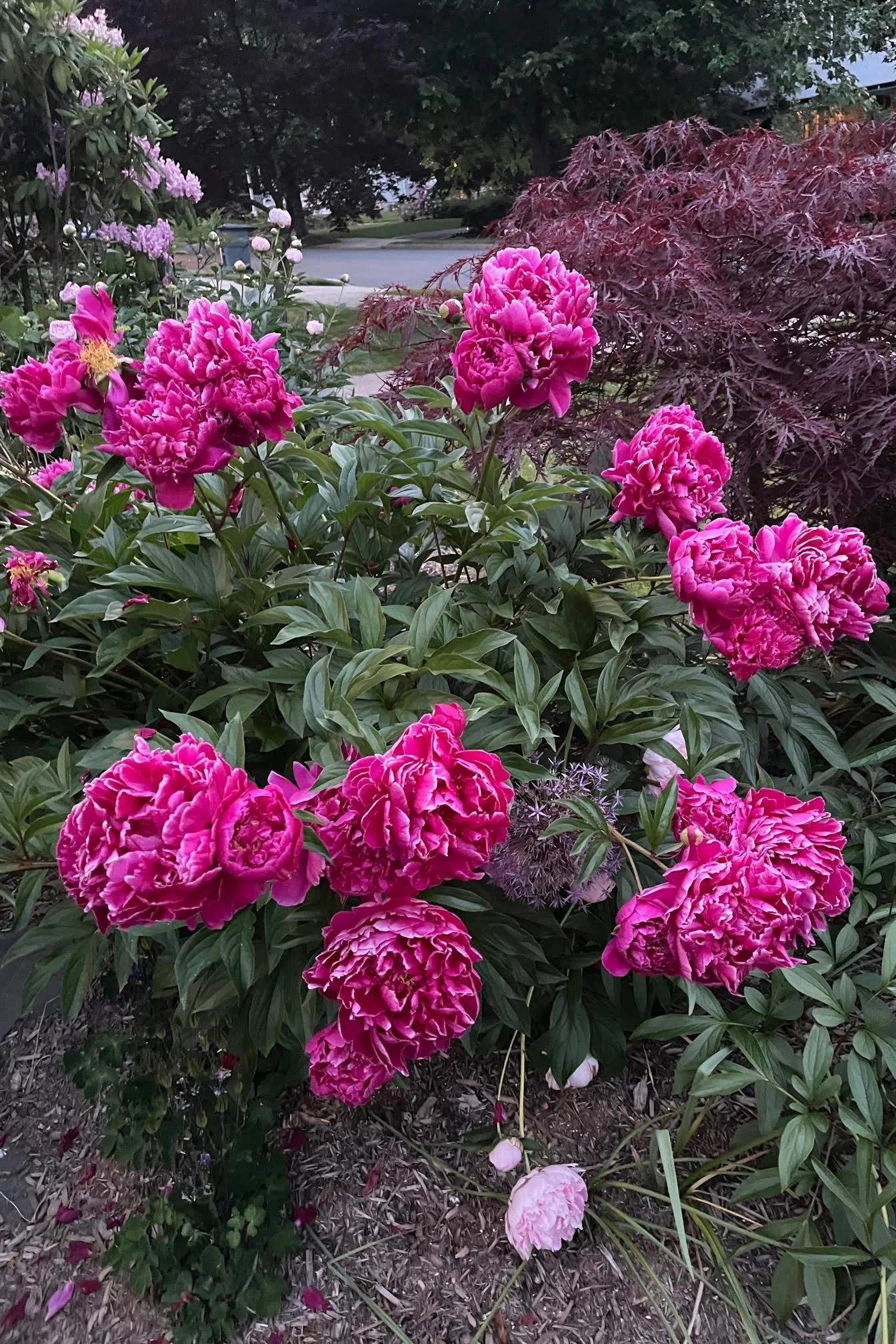
Some of this year’s herbaceous peonies 芍藥

It’s hard to believe that June is already here as this year has practically flown by. One nice thing this year is that the last month or so has seen very mild and overall slightly cooler weather than usual for the Northeastern United States. That means the peony season – both tree peonies and herbaceous peonies – was particularly long. We actually still have blooms of herbaceous peonies that are continuing to hold on.

I also recently noticed that I haven’t posted the current seasonal node, Bearded Grain (Mang Zhong 芒種), since the early part of the pandemic in 2020. Looking back, it’s hard to really digest all the things that have happened over these last few years, and how many changes have happened since then.

Today, June 6th, is the beginning of Bearded Grain, the ninth of the year. Bearded Grain is also the last node just before Summer Solstice, the most expansive and Yang time of the year. The name, ‘Bearded Grain,’ is a reference to crops. The word Mang (芒) refers to the maturing crops, especially the winter wheat, which is harvested about this time of year, and the word Zhong (種) is a reference then to the new rice crops that are planted at this time. This gives us the image of one thing coming to maturity (as in the growing Yang of the season) so that it can eventually perish (i.e., be harvested), allowing a new crop to be started. The image of transfer and renewal is characteristic of the transition period of the solstice that fast approaches.

The three smaller 5-day material manifestations of this node are Tanglang sheng 螳螂生 (Praying Mantises Are Born), Ju shi ming 鵙始鳴(Shrikes Begin to Sing), Fanshe wusheng 反舌無聲 (Mocking Birds Cease to Vocalize). The first two are dramatically illustrative of the current node. Praying mantises are notorious for females killing males just after mating. And shrikes are about the creepiest birds I know! These birds are known for catching their prey, usually large insects or small mammals such as rodents, and then impaling them on some natural spike-like plant for them to come back later and consume after the creature has died. Both images are images of the death bringers. Eventually Summer Solstice is the time of Yin’s rebirth – days will get shorter again. It is the reminder that all life cycles back towards quiescence, towards winter, towards death, towards Yin.

But we must get back to more practical concerns… During this time of year there are several things traditionally recommended for healthy living. The first is taking a siesta – in other words an afternoon nap (in Chinese, Wu Shui 午睡). During this time of year damp and heat evils in the environment start to predominate. In Chinese medicine the Spleen is susceptible to dampness, the disease evil associated with the Soil-Earth phase. The Spleen governs the flesh and the four limbs. Damp evils encumber the flesh of the four limbs making them feel heavy and weary, leading our body feeling fatigued and without strength. Napping is a way to recuperate vitality, especially when done during the most Yang/hot time of day. Napping traditionally allowed people a rest from the summer heat and dampness, and offered a way to support the Latter Heaven (hou tian 後天) of the Spleen.

The second recommendation is to regularly clear toxins. Toxins in this case refers to both heat toxins and water toxins, since, again, this is a time of increasing dampness and heat in the environment. In much of Asia, this is the rainy season. Likewise, here in New Jersey, last week we saw rain and this week we will see more. During this time period it’s important for us all to be sure we stay cool and dry inside. Be cautious of overexposure to the heat, especially during the middle part of the day. Patients who are prone to internal damp conditions should reduce salt or other similar dietary intake that can lead to accumulation of fluids and swelling.

Our next admonition is both a “to do” and a “to avoid.” Mang Zhong is the time of the year to really keep our environment sanitary to avoid molds, as warm, humid, and rainy weather is the perfect combination for toxic molds to start growing. Keep houses clean and dry, and quickly patch up any areas of water leaks that may lead to mold growth. Natural products such as Tea Tree Oil and even plain white vinegar are effective anti-mold cleaning agents and people should be encouraged to make use of them! This is important for just about all our patients, but especially so for people with various environmental sensitivities, breathing difficulties, or damp patterns.

Remember, much of our treatment goes way beyond the time we spend putting in needles or writing formulas. Basic concepts of public health and hygiene are some of the most important things we can help teach our patients.

Diet for Bearded Grain

As already mentioned, the Bearded Grain seasonal node is characterized by dampness and summer’s heat, and this is especially so in parts of the world where this month is rainy season. In general, this time of year one should avoid eating too many sour foods, instead focusing on bitter flavors. For example, in China there is one type of famous tea called Qing Shan Lü Shui 青山綠水 – “Clear Mountain Green Water.” This wonderful tea from the Sichuan region is not an actual tea plant and has no caffeine.  Rather, it is the first flush of an herb called Ku Ding Cha 苦丁茶, “bitter spike tea.” The taste of the young plant is very mildly bitter at the beginning with a faint sweet aftertaste. It is the perfect damp draining and mildly cooling herb for this summer that replenishes Qi as well with a mildly sweet nature. The other side of this is that mild sour flavors are good for people who are dehydrated or who live in climates that are too dry this time of year. A simple refreshing and rehydrating drink is water with just a little lemon juice squeezed in.

Since this a hotter time of year, during the warmest days in have patients focus on mildly heat clearing and bland foods. Also eat foods that expel summerheat and nourish fluids to stop thirst. These foods include melons and fruits, leafy greens, rice, beans, and bean products (such as tofu). The foods that should be minimized in the diet include greasy foods and meats. This is the time eat more vegetarian for sure. Patients who are slightly cold or Qi deficient can eat more mildly warming fruits such as cherries, lychees, longans, coconut milk, and apricots. Patients with warm patterns can focus more on cooling fruits such as watermelon, bananas, pears, tomatoes, persimmons, and cucumbers. Balanced temperature fruits for just about everyone are pineapples, grapes, apples, peach, coconut flesh, oranges, and ginkgo nut.


Recipe for Bearded Grain – Licorice and Mung Bean Congee (Gan Cao Lü Dou Zhou 甘草綠豆粥)

Ingredients:

  • Rice 150g

  • Mung Beans (lü dou 綠豆) – 50g

  • Chinese licorice root (gan cao 甘草) – 50g

  • Rock sugar to taste

 Directions:

  1. Rinse the rice and mung beans, wrap gan cao in teabag to make removing easier (optional)

  2. Place gan cao in about 1750 ml (about 7 cups) of water, bring to a boil and simmer until water is a yellow color

  3. Add in mung beans, bring to boil again and then simmer on low for about 40 minutes until beans soften

  4. Add in rice and continue cooking for about 30 minutes until the rice starts to beak apart and mixture is the consistency of congee

  5. Remove from heat, add in rock sugar to taste (optional)


This recipe aromatically opens the Stomach, strengthens the Spleen and transforms damp, and clears heat and disinhibits damp. It should be used with caution in patients with Spleen and Stomach vacuity cold, or patients with chronic diarrhea. The source text for this recipe was the Ming Dynasty encyclopedic work, the Pu Ji Fang (Prescriptions for Universal Relief).


My best wishes for everyone’s health. Stay cool and dry!

Free Introduction to Clinical Qigong coming soon!

This September I am planning on running another cohort of my Clinical Qigong online course. To give everyone an idea of what we cover I will teach a free introductory course this summer. The best part is that if you are a licensed East Asian medicine provider in the United States, you’ll get 1.5 PDA/CEU hours (NCCAOM pending) free! Stay tuned for more information on the introduction course, and if you’d like to read more about the 30 hour class please go here.

The full 30 hour course is already NCCAOM approved. To be placed on the list of potential participants for September please email me.

Beginning of Summer 立夏 Seasonal Node

This years early tree peony 牡丹花 blooms

The last few weeks have been somewhat chilly and rainy here in New Jersey, but despite that we’re seeing some really great tree peony blooms – one of my favorite parts of early May. Today through is an absolutely beautiful day with sun and temperatures in the 60s.  And, despite the recent cold temperatures, today, May 6th is the beginning of Summer in the traditional Chinese calendar, and thus the start of the Beginning of Summer (立夏 lì xià) seasonal node. By now the days are getting significantly longer, and the bursting out of life in nature is incredibly palpable (evidenced by the aforementioned tree peonies). At this point in time, even though it’s a horrible thought, in only about 6 weeks the days will start getting shorter again. Right now the Yang of the natural world is close to its fullest, and correspondingly the hexagram that represents this time of year is Qian Gua (乾卦) – six solid-Yang lines.

Summer is associated with the Fire phase, although the 4th lunar month belongs to the Spleen (the 4th month in the Chinese calendar is May, since February is the first month). This is interesting as in ancient times the Heart was associated with both the Earth phase and the Fire phase. For example, in the Shuo Wen Jie Zi, the Han Dynasty dictionary that gives the etymology of ancient characters, the definition of Heart is 人心土藏 – “human Heart, the Earth zang-viscera.” The Spleen channel also has a direct connection to the Heart Zang. Many of you who practice Tung’s acupuncture will notice that the main Heart Dao Ma group is located in the space between the Spleen and Stomach Channels; this Dao Ma group is the Zu San Tong consisting of Tong Guan 88.01, Tong Shan 88.02 and Tong Tian 88.03. In Tung’s acupuncture all of the major Heart points have some relationship with Pericardium channel, the original Heart channel from the Neijing (e.g., the Source point of Heart in the Ling Shu is Da Ling PC-7, not Shen Men HT-7). One needling technique we can use during this time of year with otherwise healthy patients is to incorporate Pericardium channel points (such as Nei Guan PC-6) or the Zu San Tong Dao Ma group into point prescriptions. These points help the body harmonize with the movement of the season right now.

This year one thing to keep in mind (for those of you on the East Coast of the US) is that the weather has been chilly, and recently more wet. Normally this is the time of rising Yang in the natural world, although I can say that it seems to be lagging behind a bit. The second chapter of the Su Wen says that when we don’t follow the guidelines of Spring then there is change to cold in the season that follows. Zhang Zhicong interprets this as the development of cold diseases (i.e., cold patterns). This is also the case though when the weather doesn’t behave – not just we humans not behaving. The continued cold and damp (both Yin evils) effectively restrict the Yang movement in our bodies. Thus, clinically I’ve been seeing a lot more joint pain, general aching, fatigue, digestive weakness, and diarrhea. For these patients consider doing moxa on points such as Zu San Li ST-36, or needling points such as Zhong Jiu Li 88.25 for general joint pain. Encourage patients to dress adequately for the weather on days where cold lingers.

To remind everyone, each of the 24 Seasonal Nodes has a traditional set of health guidelines where we should focus on certain things and avoid others. For Beginning of Summer the traditional things we focus on are preserving a good mood, nourishing the Heart, and thereby entering stillness (保持良好情緒,養心入靜). The things to avoid are allowing Heart fire to become too exuberant and intemperance in food and drink (心火過旺,飲食沒有節制).

As we just mentioned, the Heart is the fire organ. This means that occasionally it is prone to excess heat, signs of which include insomnia, irritability, dry and hard stool, red eyes, and thirst for cold beverages. One way to avoid excess Heart Fire is to dress appropriately for the warmer weather as it starts to come. Avoid strenuous work in direct midday sun, instead taking advantage of the slightly cooler temperatures in the early morning or later afternoon. Be sure to consume plenty of clear fluids such as water or herbal teas. Mint tea and chrysanthemum tea are both gently cooling to the body, and additionally they help with allergies that are so prevalent right now in northern New Jersey. These days I’m drinking my daily Pu Er tea mixed with organic Ju Hua flowers.

Another way to avoid problems of Heart Fire is closely tied in with traditional meditation and body cultivation practices (such as Neidan, or in modern terms, Qigong). Early medical texts such as the Ma Wang Dui manuscripts taught the importance of sinking the Qi down to the lower part of the body, a place in cultivation literature known as the Dan Tian (丹田; Tanden たんでん in Japanese). This idea later became vitally important in meditation schools such as those of Internal Alchemy, and then was inherited by modern Qigong practitioners. The flaring up of fire is seen to be an extremely harmful problem, and one of the main ways to counteract this is by focusing on the space in the abdomen – the Dan Tian.  This can be done during standing meditations, such as standing post (站樁), or in seated meditations (坐禪). Doing these types of practices regularly is perhaps one of the best ways to deal with the upflaring of Heart Fire. For those in New Jersey or New York, we discuss these techniques frequently in our weekly Neigong/Qigong and Taijiquan classes (and we do the same in our online pandemic Qigong classes, which are still ongoing).


Diet for Beginning of Summer

With the new seasonal node come new dietary suggestions. One of the first is to avoid intemperance in food and drink. Overeating, especially of very heavy, sweet or greasy foods, places a burden on the Spleen. Overeating these foods, and overconsumption in general, also create internal heat that can worsen Heart Fire. If patients experience digestive upset, as a temporary measure we can needle points such as Ling Gu 22.05, Si Hua Shang 77.08 and Men Jin 66.05. If there is Heart Fire bleed the ear apex.

In terms of flavors, this time of year we should focus on eating slightly more sour, a little more bitter, and light or gently cooling foods. Eating sour foods helps build fluids and blood so as to nourish the Heart, and bitter can drain fire. As heat in the environment increases it is understandably important to eat more light / fresh vegetables and other foods that will gently cool the body. Specific foods to consider this Seasonal Node include bananas, peaches, plums, umeboshi (Japanese salted plums), asparagus, cucumber and corn. Since this time of year is associated with Fire and Heart, red foods are also good to incorporate – think of strawberries, tomatoes and hawthorn berries.

It is appropriate to increase slightly intake of water or herbal teas. Patients who tend towards excess heat can drink chrysanthemum tea. Even though the beginning of Summer means more heat, some patients still may be cold and vacuous internally. Since Summer in many places also has increased environmental dampness, these people can drink a very light ginger tea or fennel seed tea, sweetened if desired local honey. Allergy sufferers (right now in New Jersey we are in the middle of a allergy season) can take mint tea with local honey, as local honey is used as a traditional allergy remedy.

Two traditional Beginning of Summer recipes are Celery Congee (芹菜粥) and Suan Zao Ren Congee (酸棗仁粥). For Celery Congee take several stalks of celery, remove the leaves, clean and cut into small pieces. Take an appropriate amount of white rice and cook in water to make a porridge (i.e., congee), and then add celery for the last 10-15 minutes of cooking. Add salt and pepper to taste. This recipe clears heat and extinguishes fire, reduces blood pressure, and eliminates vexation. However, it should be avoided by those with Spleen-Stomach vacuity cold patterns. Celery Congee can be taken daily in the morning as a warm breakfast. This recipe originally comes from the Ben Cao Gang Mu.

For the second recipe, Suan Zao Ren Congee, use about 50g of Suan Zao Ren 酸棗仁 to about 100g of white rice. Add an appropriate amount of water and boil until you have congee. At the end, add a small amount of sugar or honey to taste. This recipe can be taken as an evening snack as it can treat Heart vacuity and vexation to help sleep.

And one last recipe for Beginning of Summer…


Pickled Cold Lotus Root

Ingredients:

  • 1 lb. lotus root

  • 3 cups rice vinegar (or white vinegar)

  • ½ cup sugar

  • ½ tsp salt

  • 1 small red chili pepper

Directions:

  1. Peel lotus root and then slice into VERY thin slices; soak for a few minutes in a bowl of cold water with a little white vinegar to keep from discoloring

  2. Slice red chili pepper in to very thin slices, or julienne; if whole pepper is not available then substitute with red pepper flakes if desired

  3. Combine vinegar, sugar and salt in a small saucepan, bring to a simmer for just one minute, and stir to be sure salt and sugar have completely dissolved

  4. Bring another pot of water to boil and parboil lotus root for several minutes; then drain in colander and cool with cold running water

  5. Put cool lotus root and sliced chili pepper in a clean bowl and cover with the vinegar solution; cover and then refrigerate at least overnight or up to a few days before eating; to eat, remove from liquid and serve chilled


This recipe nourishes yin, clears heat, supplements vacuity and awakens the Spleen. It is good for those with poor digestion as well as those with dryness symptoms.

I hope you are all enjoying the gradually improving weather. Happy Summer!